- Published:
- Friday 12 June 2026 at 9:00 am
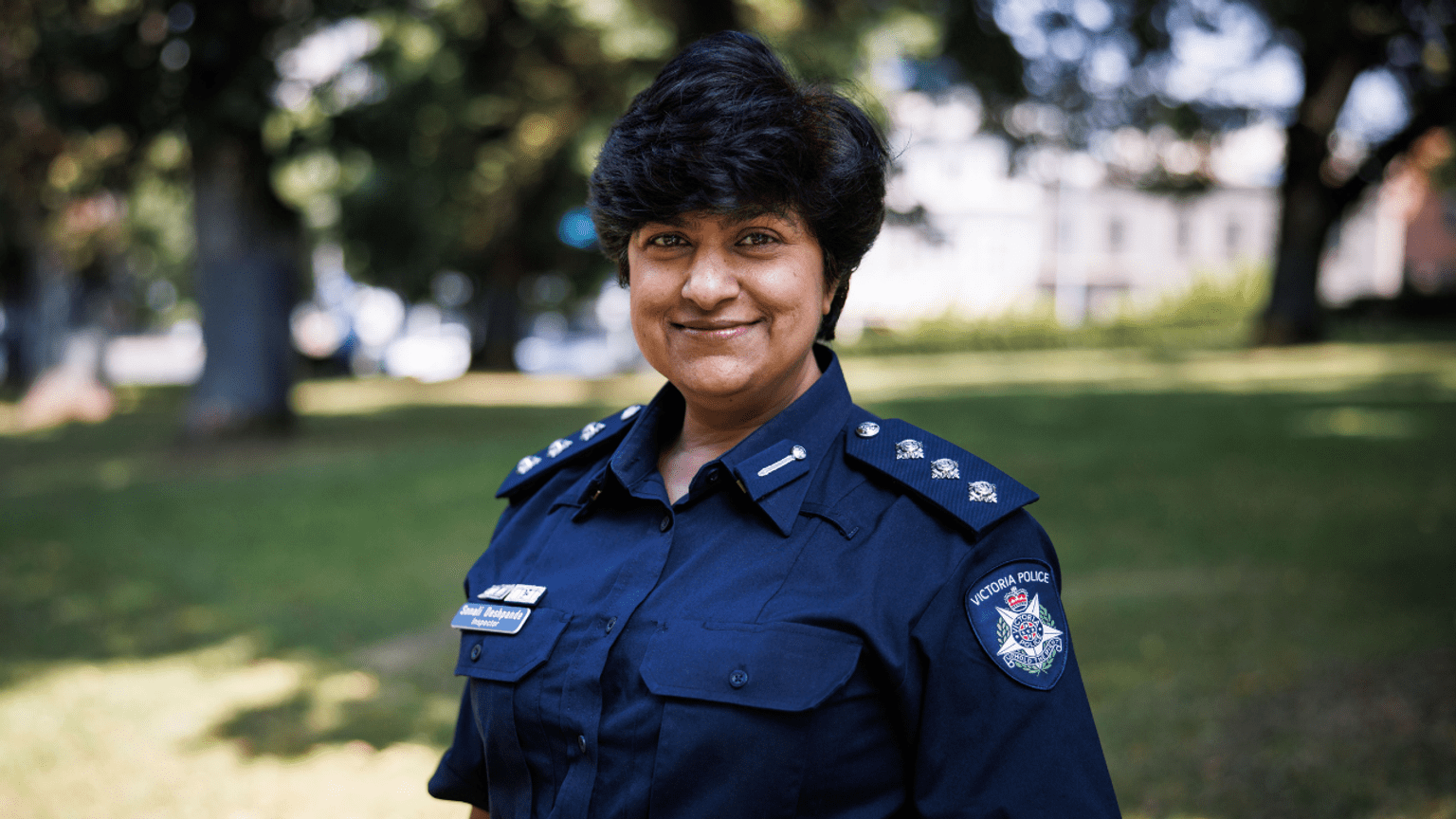
| Insp Deshpande was one of the first women of Indian descent to join Victoria Police. |
Police officers come from many different walks of life, but there are not many who have made the change from doctor to police officer.
But Inspector Sonali Deshpande, who grew up and was educated in India, did just that.
After successfully completing her internship and beginning a career in preventative medicine, Insp Deshpande made the move to Australia to explore career and further education opportunities and soon after secured a job at a multicultural centre for women's health.
“Everyone knows English in India because we learn it in school. But I was struggling with the language and the accent. I still do sometimes! So I registered myself with the Adult Multicultural Educational Society,” she said.
It was a pivotal decision for Insp Deshpande, because it was there that she came across a group of Victoria Police Recruits and the seed of thought was planted. She wanted to become a police officer.
“My father is a retired assistant director of police and public prosecutions so that law field was always of interest. Medicine was never my cup of tea. It's absolutely a noble profession, but I could not see myself being confined to a room and scribbling prescriptions for the rest of my life,” she said.
After acing the entrance exam for Victoria Police, Insp Deshpande was brought to earth when she hit a hurdle during the selection process.
“I failed my first two attempts at the fitness test. I had never failed a test in my life, so it was a shock to the system.”
Undaunted, she hit the gym every night after working at the medical centre all day and finally hit the mark.
A new beginning
Graduating from the Academy in October 2005, she was one of the first women of Indian descent to join Victoria Police and would later become the first female Inspector of Indian descent.
Melbourne West Police Station was Insp Deshpande’s first training station and it wasn’t long before she was presented with a number of opportunities to help investigators from Crime Command.
“My heritage and being proficient in four Indian languages and English gave me an advantage over others,” she said.
“I had the chance to do secondments with other work areas including the Homicide Squad, and Arson and Explosives Squad when they were doing investigations involving offenders with Indian backgrounds. Opportunities that would not normally be available to junior members.”
Insp Deshpande’s language skills catapulted her into further secondments, including the Security Intelligence Unit.
Finding her calling
In 2010 she got her first job as a detective.
One of the first investigations she worked on was with the Melbourne Sexual Offences and Child Abuse Investigation Team.
“A woman had alleged she had been raped,” she recalled. “When investigating rape cases you have a certain window of time in which the victim can be examined to see gather any DNA evidence.”
In this case the window had closed, but because of Insp Deshpande’s training in the medical field, and her knowledge of women’s health in particular she thought they still had a good chance of getting the evidence needed to secure a conviction.”
Insp Deshpande approached her officer in charge at the time.
“I put forward a pretty solid argument in favour of proceeding,” she said.
She got the greenlight and sure enough the examination provided them with the offender’s DNA.
When the matter went to court, she was faced with intensive questioning from the defence.
“They questioned my credibility, and asked why I thought I was an expert, and I was able to answer – because I am.”
Insp Deshpande was able to use her medical qualifications to defend her position and back up her reasoning. The offender was convicted and sentenced to more than five years imprisonment.
Without the DNA found during the swab the man would have likely been able to escape conviction. Her tenacity and knowledge were directly responsible for getting the evidence to bring the offender to account.
Insp Deshpande had found her calling as a detective - getting justice for victims.
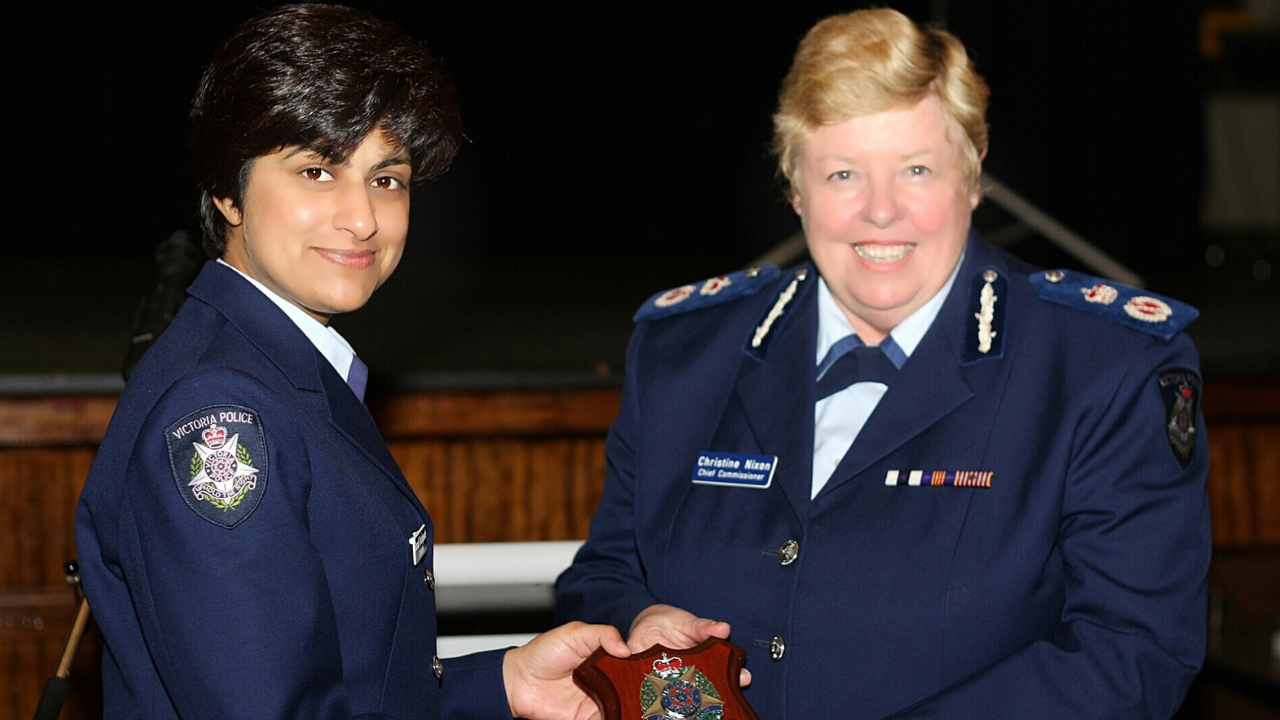
| Insp Deshpande on her graduation day at the Victoria Police Academy with former Chief Commissioner Christine Nixon. |
A move to the country
By 2023 she had been promoted to Inspector, but the chink in her armour was that she had not had experience in country policing.
“I got the call to say I had been promoted to an inspector role in the Gippsland area covering Bass Coast PSA, Baw Baw PSA and Latrobe Valley PSA. My first reaction was ‘where’s Bass Coast?’”
After trying to commute from Melbourne for the first few months she relocated to Warragul.
“My time there changed my perception of country policing. Every rank pitches in to get the job done because of the distance. I loved every aspect of it and it was a great opportunity to connect with the community. Community is a big part of country policing”
In January 2024, while still working in the Bass Coast PSA, Insp Deshpande’s cultural background was again of benefit, when four people from India tragically drowned off Phillip Island.
“I was pulled in to communicate with relatives and the Indian government officials. I helped to arrange funerals, the repatriation of their bodies and to organise passports and visas for the family. At one point I was talking to the minister in India and he could not speak Hindi and I could not speak Punjabi. So, I said to him, ‘I understand Punjabi’ and he said, ‘I understand Hindi’ so we were still able to communicate.”
After that tragic incident, the drowning toll hit home for Insp Deshpande.
“The migrant community is hugely impacted. It's a cultural thing. Before applying for Victoria Police, I didn't know how to swim because swimming has never been part of my upbringing. India is a landlocked country. But Australia is an island so learning to swim here is essential.”
Since that time Insp Deshpande has been a passionate advocate for promoting water safety within the Indian and other diverse communities.
Connecting with the community
After almost two and a half years in the Bass Coast PSA Insp Deshpande returned to Melbourne as the Local Area Commander for the Moonee Valley PSA.
“I'm enjoying my role here. I like working closely with the community, which I have loved doing since I was a constable.
“It's a very multicultural and diverse community. I see my heritage as my superpower, because it helps me to connect with the community. I think they relate to seeing an Indian face or a face from another cultural background.”
For Insp Deshpande, a career with Victoria Police is a lifelong commitment.
“While I could return to my medical career at any time, I choose to stay. Working with Victoria Police has profoundly changed me for the better – both personally and professionally.”
Editorial Nadine Lyford
Photography Jesse Wray-McCann and supplied
Subscribe to Police Life: Our people, our stories
Get real police stories delivered straight to your inbox. Come behind the scenes and get a rare insight into the life and duties of Victoria Police's workforce of more than 20,000 dedicated people.
Email policelife-mgr@police.vic.gov.au to unsubscribe at any time.
To find out more about our privacy policy and how we store information, visit our Privacy page.
Updated