When a prolific money laundering syndicate found a new way of cleaning cash for criminal clients, police needed to be on the cutting edge of investigative techniques.
Their pioneering efforts took down the syndicate and stopped tens of millions of dollars flowing back into the hands of organised crime groups.
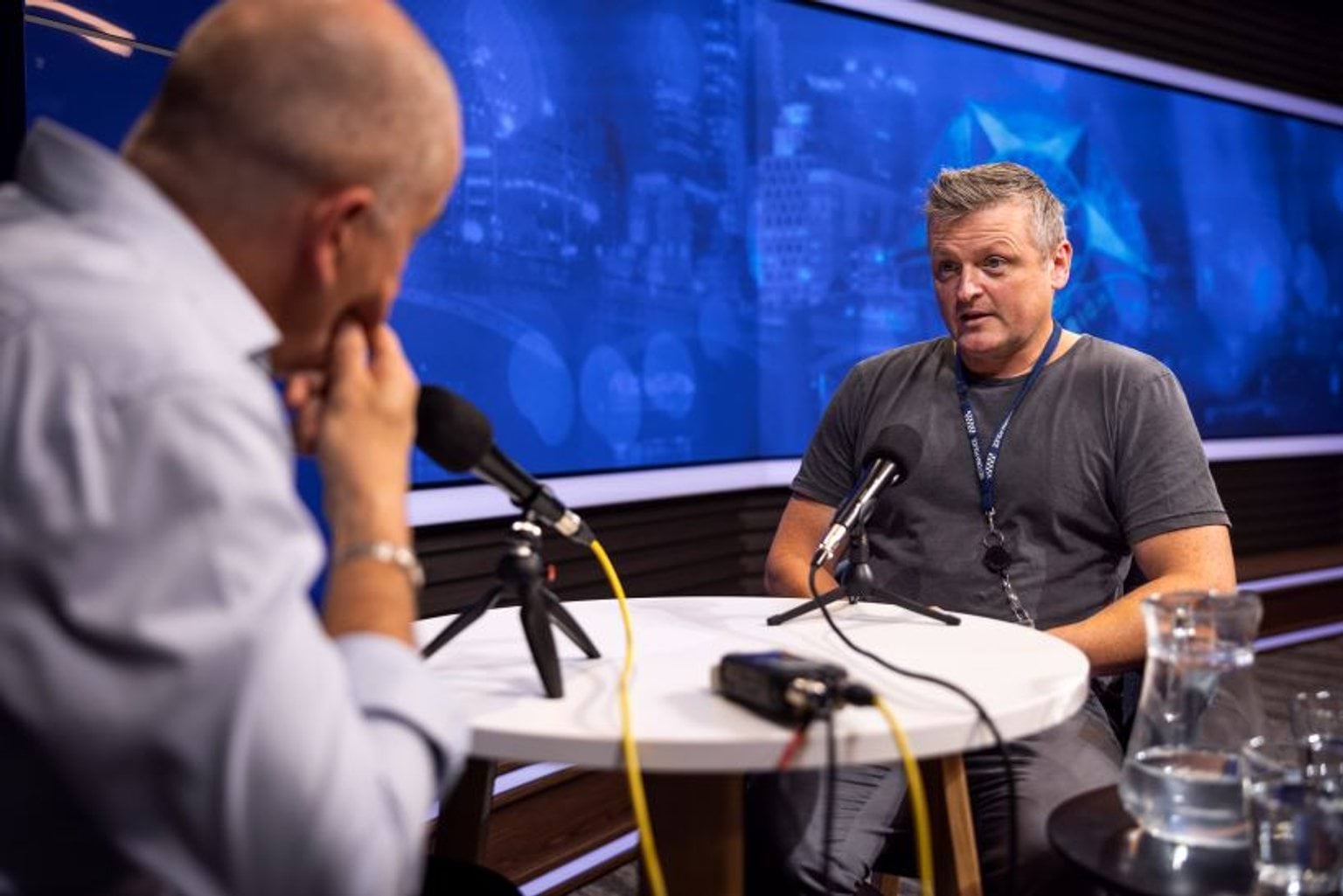
Listen to this episode and other episodes of Victoria Police's official podcast, Police Life: The Experts.
Transcript of Police Life: The Experts podcast, Season 4 Episode 2: Cleaning up a money laundering syndicate
[Quiet night sounds with crickets play]
Voiceover: In the dark of night, at a suburban shopping centre, a man stands at a bank ATM with a backpack for an hour with no one else around…
[ATM sounds play]
Voiceover: Putting tens of thousands of dollars of cash into the machine. As soon as he makes the deposits into various accounts, he turns his phone on, makes a call, turns it off and disappears into the night.
This man is believed to be a money runner for one of the largest money laundering syndicates in Australian history – a syndicate being investigated by a small team of Victoria Police detectives.
Detective Acting Inspector Andrew Beans said the man was incredibly disciplined in avoiding police surveillance, both physical and electronic.
Detective Acting Inspector Beans: The challenge for us was he was almost a ghost. It was a very frustrating period for us. We had someone that would essentially turn up to an ATM anywhere on the southern side of the metropolitan area of Melbourne and just pump money into it. He would sometimes be there for an hour, and so, you know, a phenomenal amount of money.
[Suspenseful music plays]
Voiceover: Andrew at the time was the sergeant supervising the detectives of Operation Taipan, which pulled together investigators from the Organised Crime and Financial Crime squads and was launched in February 2021.
The lead investigator on the job was Detective Leading Senior Constable David Crowe, who is now a sergeant. David and his colleagues had spent months chasing the money runner.
Sergeant David Crowe: It's not normal for a person to take a backpack full of cash to certain ATMs every single day and stand there for hours funnelling cash into accounts. That's not normal human behaviour.
And most people would want to go into the bank and get it done quickly if it was legitimate, but it's not legitimate. So the reason they're using ATMs is because it's not legitimate money, it's tainted. They don't want their faces to be seen in a bank and having to verify identity.
[Suspenseful music plays]
Voiceover: The frustrating thing for the Operation Taipan team is that they know who this man is… a Chinese national named Thao Zhou. Zhou first came to their attention thanks to the Australian Transaction Reports and Analysis Centre, a federal government agency also known as AUSTRAC.
Sgt Crowe: So key to the genesis of the job is an organisation that AUSTRAC set up called the Fintel Alliance. It was designed to be a place where government, so AUSTRAC, law enforcement, such as police forces, and private enterprise, so the banks, can all interface together and exchange information and so forth.
It was through Fintel that the money runner in this investigation, Thao Zhou, became noticed as the single largest recipient of ATM deposits by amount of deposits and the value of deposits in Australia in 2020.
Voiceover: Across just six months at the end of 2020, Zhou had used ATMs to deposit a staggering $9.5 million.
It was strongly suspected that this money had come from organised crime groups that needed a way to make their illegitimate cash legitimate. It was clear that a Melbourne-based syndicate was moving millions of dollars through seemingly legitimate channels for groups involved in crimes such as drug trafficking.
Operation Taipan was following in the footsteps of another money laundering investigation, Operation Saintly by the Western Australia Police Force in 2019. Saintly was a breakthrough case where detectives were armed with the rich intel provided through AUSTRAC’s Fintel Alliance.
Natasha: So the WA police, they had a great idea of when these individuals would be turning up with the cash to deposit it into the ATMs, and therefore they were able to stop them there and arrest them.
My name's Natasha. I'm a director within AUSTRAC's Intelligence Branch.
Voiceover: To protect the identities of Natasha and her intelligence operative colleagues, we’ve chosen not to use her full name.
Natasha: So Operation Saintly, it was a relatively short investigation. It was over a six-week period. The outcomes of the investigation over that six-week period was that approximately $5.5 million in cash had been deposited into bank accounts, and the analysis of the cash activity revealed about 167 separate bank accounts where this cash had been deposited into.
We could see that by sharing our knowledge, sharing our resources as well, we could really start to just get some results a lot quicker than through traditional means. And I think the police started to see that as well.
So off the back of Operation Saintly, it was WA Police that referred the Fintel Alliance function through to Victoria Police. They were the ones that said, ‘This is really good. We've got a relatively small population in Perth or in WA. You've got a much larger population in Victoria. Perhaps if you start to apply this methodology of investigation to what you're seeing down in Victoria, you really might start to make a bit of a dint on crime.’
And so that's how it all came about.
[Ominous music plays]
Voiceover: Crooks get into the business of crime for two reasons: money and power. Money laundering helps them get richer and more powerful, which they then use to commit even more crime. And some of the crimes linked to money laundering are among the most heinous there are.
Natasha: Yeah, there are certain types of crimes that we see regularly, but money laundering is related to all types of crime. So whether it be child sexual exploitation, human trafficking, firearms related, also tax evasion as well. I'd say at the moment, the two biggest crimes that we're seeing where funds are being generated from would be drugs as well as scams.
Voiceover: The syndicates in Western Australia and in Melbourne were both exploiting previous weaknesses in what was new ATM technology at the time.
Natasha: So I think when we talk about ATMs, everybody thinks they're, it’s just this one thing. It's an automated teller machine that receives or spits out cash. So with these particular ones, they were a new technology, and they're called IDMs, and that stands for intelligent deposit machines.
And what was different about these IDMs was that they allowed for large volumes of cash at a really high, rapid pace to be deposited into accounts. And that could be done over a 24/7 period, so you no longer needed to go into a bank branch. The restrictions in terms of how much you could deposit had been greatly increased, so there were instances where you might be able to deposit up to $10,000 in about a 1.5-minute period. So that was what's different between the new technology or IDMs and the older ATMs, as most people would have known them.
When we were investigating this particular syndicate, it was during the pandemic, and so we didn't expect to see a lot of activity occurring during those lockdown periods, particularly in Victoria, which had some of the toughest restrictions in Australia.
What we did start to see though was that in Victoria in particular, there was significant amount of cash being deposited over very short periods. I think it blew us away just how much money we could see being deposited into the ATMs.
[Action music plays]
Voiceover: Zhou was the Taipan team’s way into the Melbourne syndicate. But despite knowing his name and having hours upon hours of CCTV footage of him, David and the Taipan team still had to physically find him.
Sgt Crowe: It was really, really hard early on because we weren't sure how many people were in the syndicate themselves, the crime syndicate. We knew that this guy was running money and we knew where he was coming to and from, but he was practicing sort of countersurveillance. For example, he’d only turn his phone on when he's going to communicate with his boss and then he’d turn it back off. So we couldn't tell where he lived, even. So where do you start surveilling someone that you don't know where they sleep at night?
Definitely he was security conscious, or countersurveillance conscious. No lease, no registered address. So his car, his license, he doesn't live there. Very hard to find someone that doesn't want to be found and, you know, with good reason, in his case. He was very hard to work on.
When they first started, I think they hadn't figured it out yet. So he put a lot of money into accounts held in his own name and to businesses that he had set up with himself as the manager, director, so forth.
What was happening is as the banks under the Anti-Money Laundering and Counterterrorism Financing Act, Commonwealth legislation, the banks have reporting requirements and they must take action if they suspect, it has very stiff penalties on the banks.
So if the banks now realise or get wind that criminals are starting to pour tainted money and funds through accounts, they'll close their accounts and tell them they're not welcome to be a customer anymore. And that's what happened for these guys, so after a while it became apparent to them that they needed to acquire other bank accounts. Which is where it just made things harder.
At one point we identified 220 bank accounts that they were using to receive money. That's not necessarily 220 different ATM cards, but for each account we identified, there might be five subaccounts, thus leading to 220.
What we didn't know are all the names that each of the account holders that he's putting the money into the accounts - are they part of this? Are they members of the scheme and recipients of the tainted cash, or have they had nothing to do with this whatsoever? We don't know. All we know is that this guy is depositing money into lots and lots and lots of people's accounts.
How do you acquire 220 people's bank accounts? So we identify. They're using a Chinese Diaspora app which is like, Chinese uni students in Australia use it. They were advertising in there saying, ‘Have you finished your degree, you've got an Aussie licence, you've got Aussie bank accounts, you don't need it anymore. We'll give you five grand. We're totally legit, don't worry about it. It's totally good.’
So they were acquiring accounts that way. Uni students will sell their account, buy themselves a new iPhone and leave the country.
Voiceover: From the early stages, it was clear the magnitude and complexity of this money laundering scheme would demand a lengthy and specialised investigation.
It would be the first money laundering investigation on this scale for Victoria Police.
[Suspenseful music plays]
Det A/Insp Beans: Now in order to start off the team, it was decided that members would be drawn from both the Financial Crime Division and the Organised Crime Division. So pulling members from both of those areas was essentially going to lead hopefully to some sort of success.
Now the investigators were chosen due to their expertise in investigating high-level drug trafficking, serious organised crime, frauds, deceptions and some money laundering and certainly the proceeds of crime.
We knew that being a large-scale level of offending over a six-month period, that it was essentially going to be quite a long, protracted investigation that would take, potentially take up to 12 months.
Sgt Crowe: So we had to we had to put our heads together as a team. There was a sergeant and three detectives and try and figure out on our own how do we investigate this? How do we prosecute this? What are the offences?
Voiceover: The Taipan detectives suspected their crooks were prodigious, moving tens of millions of dollars.
It was then that they identified newly created Commonwealth legislation aimed at cracking down on large-scale money laundering across Australia. This included the especially helpful new charge of dealing with proceeds of crime of more than $10 million. So they approached the Commonwealth Director of Public Prosecutions, or CDPP.
Sgt Crowe: Normally we would just do it because we know that as Victorian police officers, we're empowered under, and we have a mandate to operate under Victorian legislation. But in this one here, we're seeking to operate under Commonwealth legislation, which is not normally our remit. There are some offences that that we do dabble in, but this is a major prosecution, so we had to seek approval for it to occur first.
So we approached the CDPP and asked them if we could, because they would have to prosecute it for us, we asked them to make an assessment based on what we knew and would they take the case on as a prosecuting agency if we were to go ahead. And the CDPP were great, they were very good, very invested. You know, this is the nascent, early stages of the investigation though, they were really good. I couldn't speak highly enough of the CDPP.
So we were the first people to utilise those new laws and offences in Australia at that point in time. So they were, they were keen to, I think, give it a go. It definitely helped because we were up until that juncture, we were pretty lost. Well, what do we do? No one had ever done anything like it before.
[Ominous music plays]
Voiceover: But for the investigation to even get off the ground, they still needed to find the ghost that was Thao Zhou.
The Taipan team would regularly get CCTV footage and reports of Zhou, but it was always a day or two old, only after the banks had calculated the cash deposited into their ATMs.
Through analysing these reports, Andrew said the team began to piece together a very loose pattern of Zhou’s movements and would stake out potential locations.
Det A/Insp Beans: Well actually it was just persistence, you know, and hard police work of, you know, all different times of day and night and just being ready to go when we thought he was going to move. You could use different techniques around electronic devices all you like, but essentially, it's good old fashioned police work and just being there when they move.
Zhou was predominately the biggest of the depositors. He was your primary depositor, but there were others as well that perhaps needed money or were involved in family connections or just acquaintances. So anything essentially that was deposited on a large scale into a wall of an ATM, we were paying attention to.
Voiceover: Zhou was depositing so much money into ATMs that some bank branches had to schedule extra cash-in-transit trucks to collect the money.
Reports from the Fintel Alliance showed that the amount of money the syndicate was moving had exploded since the investigation began. In the month of July 2020, the group had deposited $464,000, but within the month of April 2021 it deposited an astonishing $8.6 million. This accounted for 16 per cent of all ATM cash deposits in Victoria that month.
After months of searching and many surveillance shifts, the Taipan team was wondering if they’d ever find Zhou. But then came a breakthrough.
[Energetic music plays]
Det A/Insp Beans: We had to do many different types of techniques to try and uncover his movements. And essentially it was just that one moment when he turned up and we just happened to be there in some format and we're able to get a rego and we were away.
Voiceover: This was music to the ears of Natasha and all involved in the Fintel Alliance, because their months of hard work, analysis and intel had paid off.
Natasha: We'd come into work eight o'clock start on a weekday, and we'd be very eager to hear what the events were from overnight. One of our banking partners, the analyst that had been assigned to support this piece of work, he was working all the time. And first thing in the morning, he was on the phone to us. ‘What have you heard from Victoria Police? This is what I've seen at night. We've got more backpacks. I can see them moving from one ATM to the next.’
There was a little bit of a buzz, particularly from those of us that sit behind a desk and analyse financial transactions. Working with the police and sharing those real-time investigative leads was really good for us, it was really good feedback and really bolstered the vibe of the project that we're working on.
So most of the liaising that I did was with Andrew. He was, I would say, not your typical policing partner. He was very, very relaxed and engaged. And he was the one that really brought all the Fintel Alliance partners together. And so previously, police and the banks didn't often work closely together. There was a little bit of distrust. And I'd say Andrew did his absolute best to make sure that that distrust was broken and that we really developed that close working relationship.
Voiceover: After the detectives found where Zhou lived and followed him around, they quickly discovered he was indeed only a money runner working for someone else above him.
A 33-year-old Burwood man named Boliang Liu had now become the prime target of Operation Taipan.
[Eccentric music plays]
Sgt Crowe: Zhou would come and go from Liu's place with a backpack full of money, not knowing where the money comes from, whose money it is, but we know that he does that aspect of the offending. But it makes obvious inferences about what Liu’s up to, and he's the boss.
And Liu is very brazen. So whereas Zhou was getting around in a nearly-worthless hatchback and just average Joe clothes and so forth, Liu was getting around in multiple luxury cars.
[Car noises play]
Sgt Crowe: He had a 2019 Porsche 911 Carrera, Toyota Landcruiser Sahara and he bought it with cash. He had a BMW X5, BMW X7.
Getting around in this, this – we'd know him from, he had this was like a Louis Vuitton, we called it the bird shirt. It looked like a sort of like a Hawaiian shirt, but it had like a Toucan Sam-looking bird on it. And we found out it's worth $2000 or something, this shirt. And he loved it about showing off his wealth.
No issues about portraying, ‘I'm wealthy, you know, I've got a $2000 Toucan Sam shirt on and a Rolex and I’m driving a Porsche Carrera.’ He didn't care. And people, witnesses who’d give statements, going, ‘There’s a bloke in a horrible shirt,’ and you're like, ‘Yep, that's him.’ And he loved that shirt, he wanted you to know that he had a heap of money.
Voiceover: There’s a phrase in policing called “unexplained wealth”. When someone is living a life of luxury that goes well beyond the income they legitimately earn, that unexplained wealth can be a huge red flag for investigators.
And being unemployed, Boliang Liu was the poster child for unexplained wealth.
[Suspenseful music plays]
Det A/Insp Beans: If there ever was a better example, come and see me because, for me, that was absolutely serious criminal activity and unexplained wealth.
We also, through conducting extensive surveillance on him, that he was attending premises with a view to either purchasing or engaging in a property development enterprise. And most likely the money that he was acquiring was being funnelled through organised crime.
The property that he was purchasing was predominantly unencumbered. No mortgages, no loans, no loans affiliated with any of the properties. He was essentially buying things for cash. The money was being used and it was just another way to clean the money.
And that was probably his downfall was he would expose himself by, you know, driving the flashy cars, buying the properties, unemployed, living the life, travelling around, moving money overseas and back again. There was just no credibility to his daily life whatsoever. So for us, it was picking the right moment to move, but making sure that we had sufficient evidence.
Voiceover: That evidence came in the form of an intercept of Liu’s mobile phone.
Sgt Crowe: And it was solid gold. As soon as it came up, we knew we needed it. This is, its electronic offending and although the communication was in Mandarin, as soon as it came up, Liu was bragging to his dad about, you know, ‘I need $30,000 cash a week to sustain my lifestyle. I've got to keep up appearances. I've got to, you know, look rich and look successful. And what's a bloke supposed to do other than money launder these days?’ He was saying all these things.
We couldn't believe it. His dad said at one point, ‘Should we be talking about this on the phone?’ This is during the COVID time. And he's like, you know, ‘These guys are idiots, don't worry about it, we're all good.’
Voiceover: In one phone call, Liu’s father speculated that the source of the cash was “Russian black money”, to which Liu responded, “We don’t worry about where the shit is coming from. I never asked, save the trouble.”
As the detectives looked at Liu, they also discovered another man, 32-year-old Wei Wang, was also involved in the scheme, working closely with Liu and Zhou.
Sgt Crowe: We were starting to see some unusual things through the forensic accountant’s work. So the money would bounce from account to account to account. Sometimes money, though, was going out into different things that we didn't know what that is. Turns out that's cryptocurrency exchanges.
We started making proactive enquiries with cryptocurrency exchanges and they proved to be pretty, you know, provident because it turned out that Wei Wang had had a Binance account held in his own name that had received $39 million Australian dollars’ worth of cryptocurrency in a five-month period in 2021.
Bear in mind, none of these guys had legitimate jobs. Although, money laundering is hard work particularly for Zhou. And the enormous risk he bore. And they talk about that in the telecommunication intercept. It’s an absolute wonder that he didn't get rolled by other criminals.
[Action music plays]
Voiceover: It was time to arrest the syndicate. But Zhou had again turned into a ghost. He changed his address, changed his car and changed his phones.
Sgt Crowe: He was so hard to work on that we had to change the resolution of the investigation from being a – normally we'll prep for our orders at, you know, ‘Friday morning, 0600 hours we will conduct the resolution, we’ll attend this address, we’ll go through the door, hopefully catch him asleep and we'll make the arrest there.’
Because we could never find him, we actually had to do it as an event-based resolution instead. So the orders were, ‘We will sit at an RV point in an area where we think they will appear,’ so somewhere around Box Hill and we'd have to wait and wait and wait until he surfaced. So we couldn't do anything until we could figure out where this guy was because we thought if we arrested the others first, he'll be on a plane to China and we'll never see him again.
Voiceover: On October 14 2021, the intercept on Liu’s phone again paid dividends, this time capturing a brief but vital call between Liu and Zhou.
[Energetic music plays]
Sgt Crowe: The boss man, Liu, called him up and said, ‘Yeah, get around my house and clean my bins now.’ So we were like, OK, great. And then we had surveillance operatives in and around the area, and that was what triggered the resolution and arrest.
It was a very long day. I think I worked like 20, 22 hours that day I did. But it’s just how it had to be because of the, I think we were maybe 10 hours into the shift when Zhou surfaced to wash the bins.
So we got them all at different locations. Wang, surveillance picked him up in Mount Waverley. He just came from a known money launderer, convicted money launderer’s house and on intercept, I think he had $100,000 in a shoe box in the boot of his car. He’d just done a pick-up as part of his side hustle.
I think they are all surprised. I think that, particularly like Liu, they were so cocky about what they'd gotten away with. So they'd been doing it for quite a while, I think they thought that they weren't going to get touched.
Voiceover: A search warrant at Liu’s home uncovered more than $900,000 in cash. In their interviews with police, all three denied any involvement in money laundering.
With the syndicate in custody, it was decided to move all the members of Operation Taipan, except for David Crowe, on to other pressing investigations. But in such a complex and ground-breaking job, David had a mountain of work ahead of him. The click of the handcuffs only signalled the start of the bulk of the investigation. He needed to build a case with irrefutable evidence.
He would rely heavily on the expertise of other parts of Victoria Police, such as Crime Command’s forensic accountants and Cryptocurrency Team. This was crucial for Taipan in targeting the laundering done through Wang’s Binance account.
Sgt Crowe: Other people have seized crypto. That's great. What we're looking at is not necessarily seizing crypto, though we did do I think the first direct seizure off a crypto exchange. When we got Wang, we wrote to Binance and put got a legal document served on them asking them to freeze his account, which contained about $350,000 worth of assorted crypto assets in there at the time.
And we managed to effect the seizure of that off the exchange with the assistance of the crypto team at Crime Command. So that's a first.
But what we knew then is if you look at Wang's Binance account, it's not just going in there and staying there. He had $350,000 worth. We knew that it had $39 million worth go through it. But where does it go? I can't do a warrant on Binance to produce account statements. It’s crypto, it doesn't work like that.
And at that time, Victoria Police did not have the capability to do the tracing of where that money went, which is just what you want to know. Whose wallet did it go to? To what exchange? And so forth. Because they were laundering via stablecoins. So USDC, US Dollar Coin, and USDT – each of which is tethered, so USDT is Tether by another name, each of which is tethered to the value of the United States Dollar. So that's what the crooks want.
They don't want a risky Dogecoin or Trump Coin that goes up and down, and you could be a millionaire in the morning and broke in the afternoon. They want, if I give you $1 million, I want to get $1 million back. That's what they want.
So those assets move on the Ethereum blockchain. Victoria Police didn't have the capability to do that. So that's where we build a provident, good external relationship. We engaged with a new and up-and-coming blockchain investigation firm from the United States called TRM Labs to give expert evidence about the tracing of where the crypto assets went to and from Wei Wang's Binance account. Irrefutable evidence. It's blockchain. It's there forever.
[Energetic music plays]
Voiceover: Now, if words like blockchain, Dogecoin and Ethereum go over your head, don’t worry, because cryptocurrency is complex. But the important thing to know is that David could now see where and how the money was being moved. But his biggest challenge was proving who was moving it. The suspicion was that Boliang Liu was in control of the accounts, but he needed proof. It came in the form of GPS data relating to the usage of the accounts. This was well and truly in David’s wheelhouse.
Sgt Crowe: Before I was in the police force, I was in the army full time. And my first job in the army full time, is what's called a geomatic technician, which is geospatial analysis, and it’s manual like surveying with theodolites. So actual survey, through to geospatial analysis of remote sensing through satellite imagery and extrapolating information from mapping and satellite imagery, digital mapping. And also what you could call digitising analogue maps. So putting scanned maps and putting features in there and creating coordinates in there. And that's to name a few, there's quite a bit to it.
Voiceover: With this experience under his belt, he started to think how he might use the GPS data.
Sgt Crowe: We got this data in, you know, electronic form. If we can prove where that's occurring will tell us who's doing it. And we can also use that as evidence that that person is the one that's doing it.
So what we had to do there is cross-reference the coordinates, because all it is at that point in time is a spreadsheet. It doesn't mean anything to look at. So that’s where I thought back to like my early army years where I was a geomatic technician, and thought what I need here is digital mapping that has what we would call in the army is geo-reference. It's not just a dumb image, it has metadata of coordinates inside the thing.
So we started liaising with different agencies within VicPol that we thought might have the ability to procure or make such imagery. And it turned out that Major Collision Investigation Unit have drones that they put up in the air that they use to surveil map collision scenes.
So we said, ‘OK if that's the case, you've got these drones and the drones have the metadata in there of the coordinates, can you just do that for us, to fly over the criminal’s house, capture some imagery?’ They did that for us, which is fantastic of them. Easy job for them.
I then liaised with a little obscure police unit called the Specialist Data Insights Unit, and they do a job similar to what I had done in the in the army early in the day.
They put the two datasets together and produced a map that showed little colour coordinated, for each, different symbols for each different sort of person's bank account smack on top of the Boliang Liu’s house. It's all been done from that location. He's the only person living there. We've surveilled him extensively. How do you argue that away? It's good evidence.
[Ominous music plays]
Voiceover: The sheer amount of transactions, accounts and overall complexity of the offending resulted in a mammoth four terabytes of evidence… far too large for the usual printed-out brief of evidence.
It would also be the first time the Commonwealth Director of Public Prosecutions had ever presented a trial for cryptocurrency money laundering.
This meant even more innovation was needed for the job, with David and the CDPP creating a digital brief of evidence.
Sgt Crowe: It was built as a standalone website with a custom sort of bespoke, I guess, interface that was built by a VPS employee called Sylvia Pho from Judicial Support Unit. And she put in a power of work to put all that together, but in the end, you know, you end up with a four-terabyte standalone brief and really, really good and good interface is very intuitive. You could find everything you just click on suspects, witnesses.
But another significant contributor to the brief is forensic accountant Paul Spence. A huge amount of work, massive, that's what - we had to get several adjournments of the brief service date to enable him to pour through all these transactions from 220 accounts. Flow charts and all that like, obviously that only an accountant could do. I can't do that. I don’t want to do it.
Voiceover: All three offenders eventually pleaded guilty – Liu to charges of dealing with $33.65 million in proceeds of crime, Zhou to dealing with $30.14 million and Wang to dealing with $33 million.
They were sentenced in the County Court of Victoria in late 2024.
Liu was imprisoned for five years and six months with a minimum of three years and six months, Zhou for three years and four months with a minimum of two years and two months, and Wang for three years and nine months with a minimum of two years and six months. All three face deportation at the end of their sentences.
The CDPP praised Operation Taipan as one of the most complex matters ever presented in court in Australia.
[Emotive music plays]
Det A/Insp Beans: When we all came together at the end, it was a very special moment to know that there had been a successful investigation and that's what we wanted to achieve right at the beginning.
These prolonged investigations, there’s peaks and troughs. There's areas of frustration. There's times when you just want to throw the towel in and you admit, ‘We've been beaten, there's nothing, it’s too big for us, this is going to have to be.’
But we stuck to the task. We maintained possession of it and different people came at different times and managed and oversaw, supervised and had a great input into that as well. So I think it was a big team effort, but predominantly David was the one key person that managed to get it all the way through to the end.
Voiceover: David was recognised for his work on Operation Taipan by being named as the 2024 Mick Miller Awards Detective of the Year, Victoria Police’s highest accolade for investigators.
Operation Taipan has since gone on to become a blueprint for future large-scale money laundering investigations, not just in Victoria Police, but across Australia.
Natasha: It really opened up quite a few avenues for AUSTRAC in terms of what we understood about money laundering in Australia. As part of the insights that we got from Operation Taipan, we knew that this was a much larger problem than just in Victoria or WA.
AUSTRAC decided we really need to establish a capability that will be able to look at this type of problem into the future. How can we start to work with our banking partners as part of business as usual rather than these individual projects?
And so that's where the Collaborative Analytics Hub was established. It is an ongoing data sharing arrangement between the private sector and AUSTRAC, and we take all of the separate banking partners' information, we ingest it into AUSTRAC, and then we overlay some of our technical technological capabilities, and it starts to generate ongoing insights into cash activity on an ongoing basis.
And so there's been all sorts of outcomes that we can now attribute to the analytical work of Fintel Alliance. So we've had policing agencies seize cash, we've seen illicit tobacco being seized, as well as some luxury vehicles. So once you start to see that, particularly in the nightly news, that's very rewarding for anybody working with data.
Voiceover: The operation also showed the banks where they could tighten up the controls around IDM deposits, meaning that other criminal syndicates cannot launder money in the same way.
And Victoria Police, with its Fintel Alliance partners, are now even better at disrupting and dismantling organised crime.
Det A/Insp Beans: Knowledge and expertise would have grown tenfold, really. We were starting from the ground up. It was literally ground zero because the team that we brought together didn't have really any experience in terms of money laundering.
I guess, post the investigation and having discussions with the banks, I think they learned a lot. We learned a lot of their processes. We learned a lot around what services they could provide us. For me, that was the key, was what we can learn from them by building those relationships early, identifying what they can do for us, what we can do for them, work together collaboratively, to achieve that common goal of identifying these high-level offenders.
Voiceover: Police Life: The Experts is a Victoria Police production.
Your host is Belinda Batty.
Special thanks in this episode to AUSTRAC.
It was written by Jesse Wray-McCann.
It was produced by Jesse Wray-McCann and Cassandra Stanghi.
The senior producer was Ros Jaguar.
Audio production and original music by Mat Dwyer.
Theme song by Veaceslav Draganov.
Executive produced by Charlie Morton.
This podcast was created by the Media, Communications and Engagement Department at Victoria Police.
To learn more about the work of Victoria Police, go to police.vic.gov.au.
Police Life: Our people, our stories
Police Life: Our people, our stories is where you'll find Victoria Police’s podcast and in-depth articles about police, protective services officers and support staff across the state.
Updated