It has been 30 years since the worst mass shooting in the history of modern Australia, where 35 people were murdered at Port Arthur in Tasmania.
Members of the Victoria Police Special Operations Group answered the call of Tasmania Police to help catch and arrest the offender. This is their story of that fateful day.
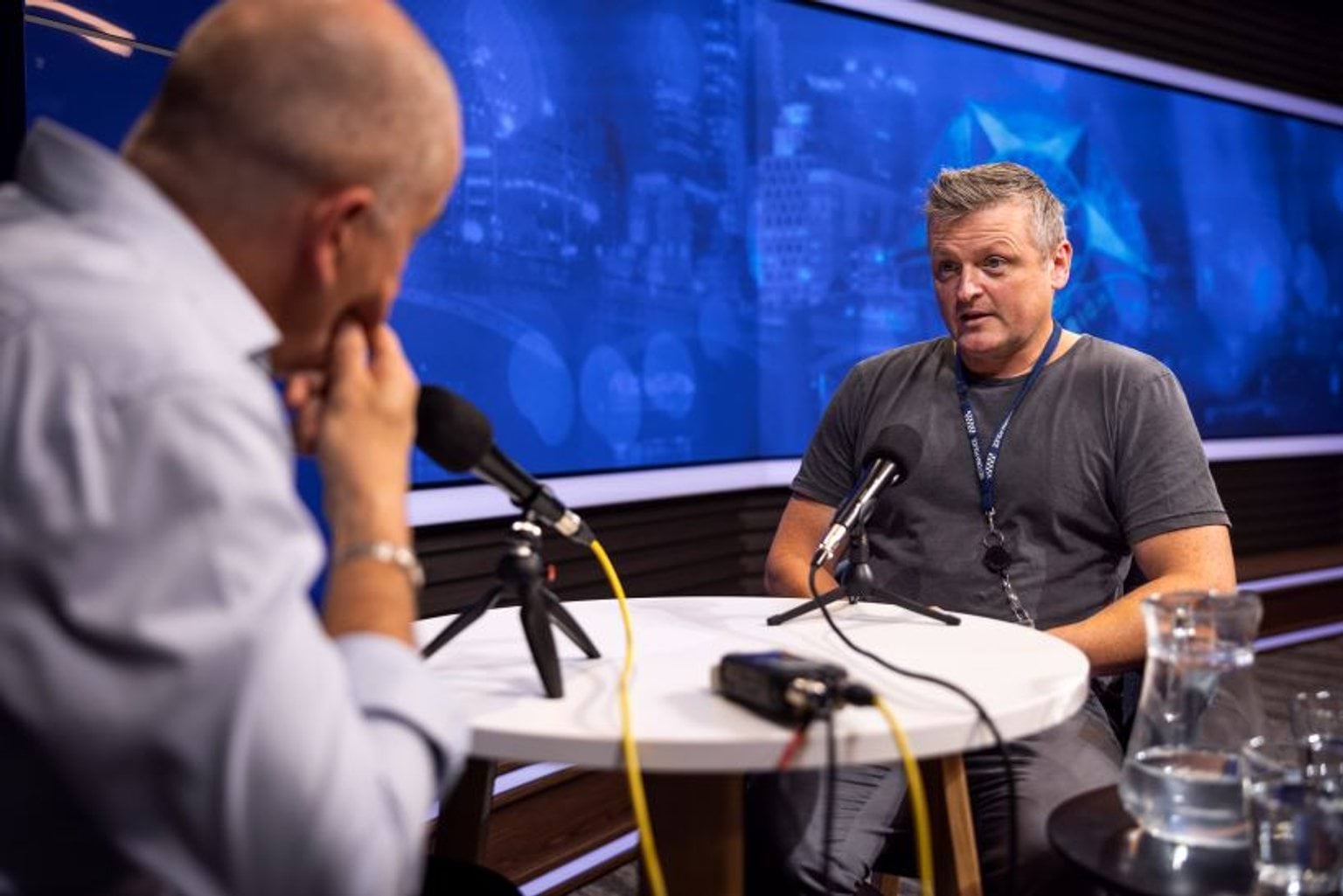
Listen to this episode and other episodes of Victoria Police's official podcast, Police Life: The Experts.
Transcript of Police Life: The Experts podcast, Season 4 Episode 3: The Port Arthur siege
Voiceover: This podcast episode contains references to mass murder and other potentially distressing content. Listener discretion is advised. If this causes you difficulties after listening, you can call Lifeline on 13 11 14.
The recent mass shooting at Sydney’s Bondi Beach has served as a reminder of how police and other first responders put their lives on the line in such tragedies, and indeed every single day. This episode is dedicated to them and to the communities impacted by these events.
[Pensive music and outdoor sounds of a lawn mower and birds chirping play]
Michael Hayes: Well I was at home at my place in the eastern suburbs of Melbourne, and it's got a backyard and it’s got some long grass, and on a Sunday afternoon of the 28 of April in 1996 I was out mowing the lawns.
And my wife who is a first responder and a long serving member of the Victoria Police came to the back door, heavily pregnant with our second child, and she indicated to me that there was an incident unfolding in Tasmania, and there were several people that had been shot and killed.
And I didn't really give it that much thought at that time and thought, ‘Well, that's not a good incident to be unfolding’. But then she came out and said there's more that have been killed, and she kept coming out on a number of occasions. And I paused and stopped what I was doing and thought to myself, and intuitively, I felt that, I think I'll be going to that particular event.
And sure enough later on in the afternoon at around about six o'clock right when the news was coming on, my pager that I was carrying as the on-duty team sergeant went off.
[Pager sounds play]
Michael Hayes: …and we eventually deployed as a result of that.
Voiceover: 30 years ago this year, Michael Hayes was a sergeant with Victoria Police’s Special Operations Group. He, along with fellow on-duty team leader Acting Sergeant Craig Harwood and tactical operator Senior Constable Scott Grenfell, were part of the two Victorian SOG teams that answered Tasmania Police’s call for help.
The news reports that afternoon were horrifying.
[7 News theme plays]
Audio from 7 News report: Good evening. A siege is underway in the Tasmanian town of Port Arthur, where at least 25 people have been shot dead in Australia’s worst massacre.
Another 26 are wounded. The gunman is holding police at bay. He’s believed to be holding at least one person hostage.
Most of the victims are reported to be tourists visiting the historic penal colony at Port Arthur.
[Tense music plays]
Voiceover: 10 SOG members - making up the Alpha and Bravo on-call teams, alongside two commanding officers - rushed to Essendon Airport.
For the first time in Australia’s history, a police tactical team was crossing the border to help another state’s police force. Scott Grenfell explains they hoped to take all their equipment with them to help deal with such a massive event.
[Sounds of car tyres coming to a stop and car doors closing play]
Sergeant Scott Grenfell: We arrived at had a hangar in Essendon Airport with all our gear ready to go, and got a rude shock from the pilot when we were unloading all these equipment and bags and stuff to take down there, when he sort of said, ‘No chance boys, you're not getting all that on my aeroplane. We won't get off the ground’.
Because they weren't, you know, the planes we went over on weren't big commercial sort of aircraft. They were tiny little, they were twin engine but they were very small, little light aircraft and they weren't conducive to taking lots of equipment.
You want to take everything you can, you know, all the equipment for every contingency, anything and everything that might happen.
So that just wasn't possible to get all that equipment on the aeroplane and obviously it was urgent, it was, there was a requirement for us to get there quickly to, you know, stop the killing if there was any more.
[Ominous music plays]
Voiceover: The latest information Victoria Police had was that a lone gunman was holed up at a bed and breakfast property called Seascape, five minutes’ drive from the Port Arthur Historic Site on the Tasman Peninsula.
As the leader of the Alpha team, Craig Harwood had a prime role in the tactical decisions for all that they would face down at Port Arthur.
Craig Harwood: So you start making command decisions then. What information do we have? What's happening on the ground? What environment are we in?
And we didn't have a lot of information of where Seascape Cottages was, or what was going on, so we just had to really cull our equipment. Obviously one of the reasons that they'd said to us by the time the command element got to Essendon Airport was we had just been issued night vision equipment for our weapons systems.
As soon as we got equipment like that, we would rapidly integrate it onto our weapons systems, make sure that they were operational, make sure that we knew how to use them properly, and that they are accurate and all that sort of stuff.
Obviously, key elements to sniping equipment and observation equipment. We'd done that pretty quickly and TasPol, for whatever reason, hadn't fully integrated that. So they had a gap in their night vision capability. And that was one of the reasons they'd asked us, so they'd stressed to make sure that we bring all that down.
Voiceover: When choosing which equipment to take, Scott recalled an important lesson he had learned two-and-a-half years earlier on his training course to get into the SOG.
Sergeant Grenfell: Probably the toughest time I had on my training course was when the directing staff at the time were saying there would be a water component, at one stage, where we'd be operating in the water and he kept on looking out the window and saying, ‘Today's not the day, it's too nice a day’.
And one of the days it was freezing, there was sleet coming in sideways and raining, and he said, ‘Today's the perfect day for our water exercise we'll be doing’.
And we ended up at the beach in this freezing, horrible day, and then into the water and they just kept us there to the point where hypothermia was setting in on me and my body begun to shut down.
And I thought, this is gonna be the day where I'm gonna be off the course because if I don't very soon declare that I can't cope anymore, I'm gonna drown. Because my body was shutting down on me, it was just so cold, hypothermia was setting in and I was starting to gurgle underwater and think, I'm in a bit of trouble here and I'm gonna have to declare and I'll be off.
And it was at that time that he said, ‘OK, that's enough, everyone out’. And we were back out onto the beach and started running, and I think five Ks later I was still shivering.
So I had that experience of things shut down and no matter how firm your mindset is, if your body shuts down on you, you can't function. So for me, the cold was something I like to be protected against. So when the pilot said, ‘You can't take all that equipment’, I prioritised stuff to keep me warm.
Even though it was a nice day that day, I was always conscious of the cold and what it could do to you. So I grabbed all my battle equipment, basically, and made sure I had provisions to stay warm.
And back then we had two polar fleece type jackets and thermals and things like that and I had, one was a black polar fleece jacket and the other one was a green one for camouflage, and I put both of them on and sat in that aircraft and just about boiled all the way over there, but I still I had provisions for the cold.
[Suspenseful music and sounds of aeroplanes play]
Voiceover: Two aeroplanes carrying the Victorian SOG teams were wheels-up around 8.30pm and racing across Bass Strait, 600 kilometres south to Hobart Airport.
About seven hours earlier, the tactical commander and second in charge of the Tasmania Police Special Operations Group, Senior Sergeant Jim Morrison, was outdoors, tackling some odd jobs.
Jim Morrison: It's absolutely crystal clear to this day. I had a property just outside of Hobart, so many acres, and I was repairing or doing something to a wire gate that joined our property when I received the first of many mobile telephone calls.
And these were people that, being a small organisation in police numbers, everyone knew me, everyone knew I was in the Special Operations Group and had been for so many years.
[Suspenseful music escalates]
Jim Morrison: And so the first call came in from a sergeant, he was one of my SOG sergeants but on that day, because we were a part-time unit, he was working his primary role and he was a uniform sergeant and he was proceeding down to the Tasman Peninsula. And so the first reports he gave to me was to the effect that there's been reports of five to six people having been shot at the Port Arthur site, details were sketchy and unclear, and there was a massive response going down there.
It's very busy on that particular time of the day, tourist buses, a lot of tourists. And if those reports were correct, and if it was at the Historic Site in that area, this was going to be particularly difficult.
Anyway, it wasn't long, and I'm literally talking minutes, and I just stayed poised looking at, keeping on what I was doing because you need to verify these sort of facts and this was raw information that people were trying to give me a heads-up start so I could appreciate what may be coming.
Then the mobile calls came in thick and fast, you know, it went from five to six to eight to ten to twelve to sixteen and it just kept on going. And so it became quite apparent that we were going to face our most difficult day.
Voiceover: The state of Tasmania at the time had a population of about 450,000 people, just a tenth of the population of Victoria. So while Victoria Police’s SOG was a full-time unit, Tasmania had a far lesser need for a specialist tactical unit and its operators worked part-time in the SOG and part-time in other police units.
But on this catastrophic day, Jim quickly called every single SOG member into action.
Jim Morrison: I then went to the Hobart Airport. Knowing the Peninsula, knowing the lay of the land, it's very forested, it's undulating, and not knowing where we'd actually be deployed to eventually, I needed to get a good appreciation from the air.
So most helicopters were taken up, there was medevacs already underway, the response was well, not well underway, but certainly the first stages of, it seemed to be the medevac of injured, or at least attending there to deal with people that had been injured.
So pretty much there was a helicopter made available and we flew down to that general location. It was then, after putting on the earmuffs and the comms set in the helicopter, that you heard the airwaves just alight with information as to, you heard it from the police communications network.
[Dynamic music plays]
Jim Morrison: We then heard the calls of pilots that were going in on helicopters and as part of medevacs to get critically injured people out and then ambulances going in. And still a lot of police responders, and other first responders, unsure just how wide this event was going.
Was it just there? Are they putting themselves at danger by going down there? Like, who did this? How many people were involved? Where are the offenders? What's the reports about them trying to make a safe area?
So that was part of our plans as a tactical group for the Special Operations Group to make a safe area for the first responders to respond to and operate from.
As we were flying in in the helicopter, with no visuals at that stage, we were quickly drawn to the Seascape property which was a bed and breakfast. I wasn't totally aware of where that was but the, as we flew in, the reports were coming in that a car had been stopped, someone had been abducted and a car had been stolen and had been driven to this property.
The police had responded to the property, to the events at that property, some kilometres from the Port Arthur historic site, and they had come under fire from the Seascape property. Gunfire was coming in their direction. And allegedly the car was on fire.
So as we flew closer, you know, we could see quite clearly a plume of smoke coming out of this car. So, you know, validated the fact that the car was right next to the property. We could see the police car some two, three hundred metres away. Couldn't actually see the police at that stage who said they were pinned down by gunfire.
And so the pilot didn't want to go anywhere near that, and I didn't want him to go any further. We had seen all we needed to see and it was quite apparent that that was the only information we had at that point where the offenders or offender may be.
[Reflective music escalating in tension plays]
Voiceover: The helicopter landed at Taranna, a township several kilometres north of Seascape, where a police forward command post had been set up. Jim was briefed on the latest information while the rest of the Tasmanian SOG arrived by car.
Jim Morrison: So we all pretty much got there at the same time and we had, our priorities at that stage were to isolate, contain, evacuate that Seascape property.
Whatever was happening down there we needed to lock that area down and not let anyone else go in and/or escape and then just try to ascertain what we actually have there. Reports sort of came in at that stage concerning an elderly couple that were residents of the Seascape property, that ran the B&B, and so didn't know where they were, couldn't verify their location.
One of the things that came out was that the different calibre of weapons that were being fired from the property, which we didn't know at that early stage on deploying and doing a reconnaissance before deploying personnel. The couple, the elderly couple, were they engaged in a gun battle with people trying to break into their property?
And so, you think about best case and worst case. Worst case was we got multiple offenders with multiple weapons of different calibres and they appear to be, on the basis of where the gunfire was coming from, at that property.
But then other reports came in that when this car was stolen and taken to the Seascape property, a person, a male person had been abducted at gunpoint, his partner shot, and he had been taken to the property. So at that very earliest, rawest information, we certainly needed to develop hostage rescue plans for that particular property.
[Dynamic music plays]
Voiceover: They also needed to rescue the two young constables pinned down near their police vehicles.
Jim Morrison: One particular tactical plan of our groups was for the welfare of those two officers, was to keep them there, reassure them, don't let them get up and try to get out, and us to try and get there and get them out, and we couldn't do that ‘til darkness. So those guys were stuck in that, in for the best word I suppose, a ditch or a culvert area where they could have some cover whilst their car was being peppered with gunfire.
And then eventually, in the early hours the of the evening when it was dark and under the cover of darkness and still receiving spasmodic gunfire, indiscriminate gunfire coming from the house, we executed a tactical plan to rescue those two guys and got them out from that ditch.
And then we just went back to our original plan of isolate, contain and evacuate to assist negotiation of what was occurring inside that Seascape property for the remainder of the night.
Voiceover: A police negotiator had been in contact, via the phone at Seascape, with a man they believed was the offender.
Throughout a series of calls in the afternoon and evening, the offender told the negotiator that he had hostages with him in the main house at Seascape and that he had been preparing them food and drinks.
But those negotiations broke down after the portable phone the offender was using seemed to run out of battery.
With the entirety of the Tasmanian SOG deployed and no one in reserve, Jim was worried early on that their capabilities would soon be stretched too thin.
Jim Morrison: The capability was only going to be for a limited time. And then, and it was being whittled away by all the things that we were required to do. And that was still not just putting all our eggs in one basket that all the offenders, or the offender, was at that property and so making sure we had a ready reaction capability to go anywhere on the Tasman Peninsula to reports that may come in after that.
The whole group was deployed and I could foresee straight away going into a protracted incident, which it was going to be, and we were going in, we were still in the hours of daylight that, it was at that point, that I foresaw the need to get support from other states.
We had a beautiful relationship with the Victoria SOG, I had personal friendships there, had done some training with the Victorians, been on counter-terrorism training with them, knew a lot of them. I made a phone call to a friend of mine who was a senior sergeant in the Victoria Police SOG and I just sort of in the brief moment said, ‘This is what we've got. You know, it's as bad as you're hearing on the news. And we're going to make a formal request to get your members come to support us. We're going need it. We're gonna need it’.
For all the other plans that we'd need to develop going into the night just for the relief of personnel that have been on the ground, and it was quite easy to see straight away, early on and forward thinking that we need to get something in motion which hadn't been done before, but that didn't matter.
We need to make it happen, and to get our colleagues from Victoria to come down and work with us to make it a safer place and get control of this.
Voiceover: While this would be the first time a police tactical unit would operate interstate, it wasn’t the first time the Victorian and Tasmanian SOGs had worked side-by-side.
For many years, each state police force would send members of its top tactical units to national training courses each year.
Jim Morrison: I formed some really good close friendships with the Victorians during those early courses. Subsequently, I went back to those courses that happened every year where the police tactical groups would put the best of their personnel towards it.
It was all about skills enhancement and it was all about interoperability training.
So Craig Harwood was a, became a friend of mine. He was a Sierra or sniper instructor, and I was an assaulter or tactical operator instructor for one particular course, and we became good mates during and after that.
This is well before Port Arthur and then subsequent to that, coming out of that training, we put forward proposals to our commissioners to have interchange with Victorian Special Operations Group.
So I was the first team, took my, it was called a red team, took my red team to Victoria. We trained with the Victorians, jumped out of your helicopters, did all the training, did some appreciation on the Spirit of Tasmania, did some joint things that we could possibly see under a counter-terrorism theme where we'd be coming together.
Very impressed with what the Victorians had done. There was a lot of international experience and studies that they had been a part of, including the hostage rescue team in, you know, the FBI, GSG9 in Germany where Craig had gone to. So there's a lot of good international experience that we could, you know, drill into and to enhance our capability in Tasmania.
So, even our vehicles, our tactical vehicles, it just seemed to make sense that, and we put in a proposal that was accepted, that they would be purchased and then go to the Victoria Police garage in Melbourne to be fitted out, pretty much like the Victorian ones were.
So if there was an interchange or, you know, during live operations or training that then that's pretty important.
Voiceover: Craig Harwood remembers the national training courses being intense and extremely competitive, bringing together the best of the best.
Craig Harwood: I was lucky enough to do that three times. So, I went over as a sniper and did really well over there. Went back later on as an assaulter. So I was lucky enough to do it twice, which was quite unique at the time.
And then I went back as a national instructor. And you do develop a lot of friendships and just prior to the Port Arthur issue, I'd been over there as the national sniper instructor coordinating all the police sniping teams, and Jim Morrison, who was a senior sergeant at that stage, was the assault team instructor.
So we had formed a really good relationship because, you know, you're over there for a considerable period before the course starts and courses are two-week course and you know we're there for two to three weeks before that, and then you're liaising, you know, 12 months before that, you know, to make sure that you've got the best and most relevant course to get the most out of what you're trying to achieve.
So we had developed great relationships and as it was, developed a great relationship with a guy that was going to be deployed operationally.
And you know, obviously also there's the brotherhood too. You know, you're a fellow police officer and your fellow tactical officer. So there's a lot in common as individuals anyway.
Jim Morrison: We're on the same wavelength. We both thought the same about the way that we were instructing that particular course and the people. And we both have a brutally honest approach to life. I don't tolerate fools and neither does he and that's the strength of our relationship.
Voiceover: At the time Jim made the call for Victoria’s help, he didn’t know that Craig would be sent down.
And not only was he getting one of his friends, he was also getting two of the very top tactical operators in the country.
Craig had long been recognised as one of the best, if not the best, police snipers in Australia and had earned the codename “Sierra One”. Mick Hayes was also given top accolades at national training courses for the discipline of close quarters battle, or CQB.
[Tense music plays]
Michael Hayes: Craig was over there doing the sniper element of that particular training program, I was doing the close quarter battle component and in amongst all of the national teams – Victoria, New South Wales, Queensland, Western Australia – Craig won the J.W. Matten Top Shot Trophy and I happened to be the winner of the CQB trophy and there's a fantastic photo that we've got of each of us receiving those awards and one of my treasured items.
Voiceover: After the Victorians arrived at Hobart Airport, more than an hour’s drive from Seascape, they were sworn in by Tasmania Police Commissioner John Johnson as special constables of Tasmania Police. This was to give them the authority to operate within this different jurisdiction.
Craig Harwood: They had their traffic operations group cars there waiting to take us down. These traffic operations groups, it was their moment to shine and they're old, I can't remember whether they were Fords or Holdens or something, and it's a windy road, it's a thin road, a lot of off-camber turns and stuff like that and you're filled up with, you know, the driver and then it was the sergeant – myself – in the front seat and you've got three operators crammed in with all their gear and then the boot full of gear.
So the cars are pretty overloaded and they're going at you know, 120, 30, 40 kilometres an hour and by the time we got there the brakes were smoking and the car was nearly had it and, you know, we thought we'd die a few times but to give credit, none of us did and we didn't lose any vehicles and we got down there in a record time.
Jim Morrison: So to see them turn up in your state to assist you during our time of need, it's very reassuring, but then you're in operational mode. It's just like another team's coming in, but it's deep down inside, it's deeply rooted that these are people who I know, you know, I know how we're going to work together now.
We've worked together before in a training environment. Now we've just got to put it into practice.
Michael Hayes: Unlike the movies that you often see where law enforcement agencies in America, when you've got the FBI and a local police department and a sheriff, so maybe even throw in a state trooper, and they'll all be arguing at the scene about who's in charge, we certainly didn't have those sorts of experiences and it was done very, very well I thought.
Jim Morrison: And I think that, I know that happened very well. I know that the comments coming from, you know, my brothers in the Victoria Police, that it was like the two units had been working together for years.
And so there was just this coming together, and there was no difference in our, you know, our approach or mentality or the psychology of what we're actually trying to achieve. So that was particularly good, but it was rooted years ago before in those early years.
When they arrived, they came straight to our holding area, which was pretty close to the Seascape property, just out of visual. Look, it was dark. So I was pretty buggered, I've got to say, I'd been pulled from pillar to post and, you know I really felt sorry for our SOG commander, he had only been in the job a couple of weeks and hadn't been a previous SOG operative.
And so at that particular point when the Victorians arrived, we already had, we obviously had our cordon in place. We had it in during the day, and so we had moved our cordon around the property closer under the cover of darkness, and we were still receiving gunfire at that stage, you know.
There were many reports and statements over 200 to 300 rounds of indiscriminate gunfire came from the Seascape property, just in various directions.
And sometimes an indiscriminate gunfire can be the catalyst for one of your members getting wounded without even, you know, the gunman or the gunmen seeing the person. So it was particularly dangerous for the guys.
It wasn't much chance of relief for them because, once you're in position, it's too dangerous to move in and out, certainly during the hours of daylight. They'd been there since early afternoon or mid-afternoon.
Craig Harwood: So when we first got there I was met by Jimmy and their senior ranking officer, and obviously, they gave us a bit of a situational overview of what had happened.
And basically the offender had moved from Port Arthur, taken a further hostage and moved to where it originally started the incident, at Seascape Cottages, and had used a car and burnt a car there, and a police car had seen that on the way to Port Arthur, come under fire, and TasPol SOG had already rescued those guys.
And then we pretty much had the classic siege. You know, we had a stronghold, we knew where the stronghold was. We had an offender, we didn't know how many people were hostages, how many of the people were alive or deceased within the stronghold. And then we got a brief about what they’d deployed, their assets they had.
[Sounds of the bush and gunshots play]
Craig Harwood: But we came under fire whilst we were getting that brief. And we were within view of the strongholds that we'd obviously told them to move back the command element, the command post. So they moved that back a couple of k's. And we maintained our overview from that position, pretty much on the road.
So we laid out all of our equipment, in the open on the road. And they moved back. They had what's like a command post van, large truck, they moved that back a kilometer or so, and then we, that was our forward operational base, and we operated out of there.
The road sort of went, if you imagine a road going down at twelve o'clock, on the three o' clock, or your right side, was a mountainous forest. And then to the left, so on your nine o'clock side, if you use the road as your twelve, it dropped away to Seascape cottages, quite open.
It had, you know, gardens around it. It was a Cape Cod type place with a few out buildings that they'd just built that were similar, smaller versions. Cape Cod for a bed and breakfast, which is what that Seascape Cottages was, or the owners operated it as, and then there was water and the bay came around, it's quite picturesque. So we operated out of there, off the road.
[Ominous music plays]
Voiceover: The SOG operators at that time didn’t know the full scale of the offender’s atrocities some 12 hours earlier. But they knew they were dealing with a mass murderer and they needed to stop the killing.
It would later be confirmed that 35 people had been murdered and 23 injured that day at Port Arthur, the majority within the Broad Arrow Cafe.
As team leaders, Craig and Mick joined Jim in planning out their tactics for the siege. Craig took on the role of assault commander.
Craig Harwood: So, the first thing I did at that time was deploy our snipers, and we had several of them, and augment their sniper teams. And that was, you know, twofold, to reinforce the inner perimeter, and keep whoever's in Seascape Cottages in there, but also deploy our night-vision capability.
Voiceover: It was now about 2am and Scott Grenfell was moved into the bush surrounding Seascape.
Sergeant Grenfell: What that looked like for me was to deploy initially as a containment. So I was deployed to basically the front left of the property to, to contain him into that area. And I was told that there was a Tasmanian member already there, an SOG member, and he was already in that position and I was to go in and, and relieve him from that position.
And, even though it was a nice day in Victoria, it was dark down in Tassie and it was near the water.
And it was, it was cold. And when I moved down into his position, I think I was probably thirty, forty metres away and I could just about hear his teeth chattering. Because, obviously for the Tasmanian members, they were deployed really quickly and they grabbed what they could and they were trying to find this, this offender.
And I remember he just had his camouflage fatigues on, so the standard Australian military uniform, which is just a, like a long sleeve shirt and cam pants, and that was all he had on apart from his, you know, his weapon system and armour and things like that.
And he was, he was really cold. And when I got to his position, I mentioned the green and the black polar fleece I had on that I boiled in in the aircraft on the way over.
I ended up taking my green one off and giving that to him and, and said, ‘I'm here to relieve you. You can move out and recuperate a bit’. So I ended up being in that position for an extended time and just watched and listened to the offender firing the gun every five, or his guns, every five seconds.
Seascapes Cottage was a double story building, and it was windows all around on every side of the house, and he had good vision out everywhere. And he appeared as though he had weapons set up on every window, and he was just running from window to window to window to window, and just firing out the windows in every direction.
And it was clear that he was intent on shooting more people, as many as he possibly could, including police.
Or anyone that was around, it wouldn't have mattered, you know, he would have hurt, if he saw anyone, he would have tried to shoot them. But yeah, he definitely had an arsenal of weapons just set up, and on the window, and thousands of rounds that enabled him to just fire out all of those windows.
But, you know, like the coward he was, and is, he would not expose himself. He would shoot from the darkness through the window, you know, you'd see a muzzle flash, boom boom, and then he'd run to somewhere else and, and there was no pattern, he would just run anywhere and everywhere.
Look, you're definitely elevated. There's an element of self-preservation, you know, you don't want to, you don't want to indicate to him where you are or give him a chance to take a shot at you.
Over the course of my time at the SOG I'd been fired and shot at multiple occasions. But, you know, you're trained. It's the training that you do and, and it's what you do every day you go to work when you're at the SOG.
If you're not involved in operational deployments, you're training and you're preparing yourself. And you find yourself in environments that are harsh and difficult but you're trained to kind of deal with it.
It's difficult to stay still for a long period of time in an uncomfortable position. So, you know, you're moving and you know, doing what works for you to stay alert and stay focused on what you're doing. And a good polar fleece jacket helps, yeah.
There was open ground between our cover positions or concealment positions to the house, from all directions, basically. So, some to a lesser degree than others. But the challenge for us was, if there is hostages that are alive into, you know, still in the building in Seascape Cottage with him, and he's about or intent on killing those people, how do we get there across that open ground without being shot ourselves, given that he had these high-caliber weapons set up in all of these windows and he had vision out all directions.
[Tense music plays]
Voiceover: It was Craig’s job as the assault commander to take the lead in formulating both an emergency action plan and a deliberate action plan.
Craig Harwood: An emergency action plan is pretty much if we get information that he's killing hostages or something dynamic requires us to go in and resolve the issue, arrest him or breach the stronghold. So that's pretty down-and-dirty type plan, you know. In this case, it was basically drive up a number of vehicles and hit the stronghold from various directions.
Voiceover: With the long driveway through open ground to Seascape, and tactical operators riding exposed on the side of the vehicles, it was estimated that up to a third of the assault force could become casualties in the case of the emergency action plan.
Craig Harwood: If we're driving up, and we're not using any distractions, what's his ability to put rounds on target? You know, and if they’re travelling at say, 80 kilometers an hour and slamming their brakes right next to the house, what’s their chances of being hit? Still not clear enough that we wouldn't lose someone.
And then it's against why. Hostage, no problems. That's our job. You know, we risk our own existence for somebody else's we don't even know.
So then it was, ‘Have we got a tank?’ No. ‘Is there any armoured regiments in Tasmania?’ No. ‘Is there are any armoured museums in Tasmania?’ No. OK. So, and you go through this logic, chain of logic, and that's what my job was. OK. ‘Can I have a Chubb armoured vehicle?’ They made that request. No. Cause I suppose they didn't want to get it shot up. OK, ‘Can I have a grader with the biggest blade on it that you can find?’ And they found one, but it was on the other end of the spit of land, and that was in play.
Voiceover: But the preferred option is always a deliberate action plan, where police themselves initiate the end to the siege. Craig, and the other SOG bosses from both states, left no stone unturned in trying to make the deliberate action plan as successful as possible.
Craig Harwood: We're trained, obviously, in how you make life and death decisions. You know, you don't get into consequence-based decisions or, you know, rush your decision making if you don’t have to.
We want to get as many, as much advantage as we can when we initially breach, and that's usually by distraction, the speed, violence of action, there's a whole lot of factors that come into that. But that comes back into us, you know, we’re more proactive about that rather than reactive, where a emergency action plan is just a totally reactive plan or initiation of that.
And then, you know, there was various elements of what we decided to do with the deliberate action plan. And I was a bit of a student of history, and one of my roles in the training cell was always looking at overseas and the Dutch had used an aircraft, at sonic boom speed. So I had an F-111 on its way down that we were going to use to fly over at sonic speeds and basically blow out every window and cause a huge sonic boom above the house.
So we had a whole lot of things. We had our own armoured vehicle in Victoria. So we had a C-130 coming down to pick that up, and was gonna take that from, from Essendon or Tullamarine or wherever they could land and then bring that over to us. So we had all those logistical things happening, you know.
It's all about distraction. So, you know, if you’re running through a door and you know there's someone on the other side of it pointing a gun at that door, you wanna make sure, you're gonna rely on your personal skills, your speed, your fitness, your visual acuity, your reaction time, and then your ability to put rounds on target and ability to react.
But you want to distract that person. So how do you do that? Well, you know, there's obviously noise, violence of action, speed of action - all those type of things. And if you can make him duck, flinch, you know, we had various distraction devices. We'd often lob into rooms, you know, for those type of incidents to put them off.
And you just, you’re working in very small time and space, and then ultimately you're relying on your armour. And if you do get hit, hopefully you get hit in an area that’s protected. You know, and if the worst comes to worst, you'll be able to put rounds when he’s missing, you know, if he does get some off.
You've got to be quite confident in your training. We had a very experienced team, we'd been under fire before and a lot of us had fired our weapons before in operations so we were quite confident that if it got down to that we had enough in our favour that we'd win with minimal losses, or no losses, is the objective.
But there's always the randomness of life. And that's just one of the risks of the job.
It then became, you know, yes, OK, we knew what his capability was, but quite confident we’d contained the area and then it was a matter of how we're going to resolve it. And are we going to push resolution or are we quite happy to sit and wait? And if there's no hostages, there's no real imperative to go in because you're risking the team members’ lives for what outcome?
You know, it's just overtime bill, really. And money doesn't come into it. You're dealing with life and death and you're trying to safely arrest the offender without further loss of life, anyone's life.
Voiceover: While they couldn’t be sure if there were any living hostages inside, they now were confident they were dealing with a single offender. Thanks to witnesses at the Port Arthur Historic Site, police now also had the offender’s identity and a photo of him was shared around the SOG operators.
The photo showed a man aged in his late 20s with long wavy blonde hair.
As the night wore on, with sporadic gunfire still coming from the stronghold, Scott was rotated out of his containment role in the bush.
[Tense music plays]
Sergeant Grenfell: And then, I was taken out of that position and ended up on the assault team, on the vehicles, or the arrest team, if you want to call it that.
You go through levels of readiness when you're part of the arrest team. So they call it high level and low level. So when the threat's not escalated, you can be at a low level. But low level will mean you still, you might have your armour off, as an example, to stretch your body and relax a little bit and you know, stay functional. But you're still ready.
When the threat escalates, things might happen, you move to a high level, so that's your armour on, your weapon systems ready, you check all your equipment. And then the next level of that is being ready to go, you know, if it happens. So that's standing on, you know, you're on the side of the vehicle, ready to go. So throughout the night, that's what it was, a mixture of all of those, those three things.
[Dynamic music plays]
Voiceover: Just before 6am, Craig also changed roles.
Craig Harwood: I had just come back from the national sniping instructor, so I knew that my skill set was, you know, it's a perishable skill, but I fired hundreds of rounds under stressful situations and training and demonstrating and stuff in the months prior.
And I thought personally that, because we weren't going to assault and there was no indication of hostages or any other party within the stronghold, that maybe the best resolution of the incident may be a sniper shot. And I thought that I might be the best one to apply that due to my skill set.
[Sounds of the bush play]
And all our snipers are great but, you know, you can’t have too many out there behind the rifle if you need to, because, you know, it could be small nuances in angle and foliage and location that negate a sniper taking a shot.
I handed over the assault team leadership role to Mick and then deployed as Sierra One out into the field.
[Sounds of the bush continue with sounds of someone moving through foliage]
I moved in with a junior TasPol guy, I think it was his first week on the team, and we moved out for extra coverage, and moved another team around to another angle to get better coverage.
[Sound of distant gunfire plays]
So rounds would often come through the forest canopy. They weren’t directional fire, they were just sort of random cover all over the place. So I built a small rock wall and laid down using my camouflage and the TasPol operator had a different weapon system to me.
I had a rifle and a handgun and he had an assault weapon and his job was to protect me should someone come up on me from behind or something like that while I concentrate on the stronghold. So that was his role, so he was slightly back from me. And he wasn't a trained spotter, so I had to be on the rifle the whole time.
In that position, I'd seen him come to the front door, but behind a fly screen door, a silhouette, and fire, fire through the door, a weapon, but I couldn't take a shot because I couldn't tell if someone was in front of him, because all I had was a silhouette and then muzzle flashes.
[Reflective music plays]
Voiceover: As highly-trained as all the SOG operators were, they couldn’t help but think they could be added to the long list of victims. For Craig, his thoughts briefly turned back to his wife and newborn son.
Craig Harwood: There might have been a moment at the command post under fire or something, you think, oh, I think I did have that moment where I thought, you know, might not come back from this. And then you go ‘What? Don't think like that, get back on task’.
And you squeeze it out. Because it's not, then you start becoming about you and your survival rather than what you're there to do. And you train yourself to do that.
[Dynamic music plays]
Voiceover: As the sun began to rise for day two of the siege, Mick kept strengthening the emergency action plan, known as an EA, and the deliberate action plan, known as a DA.
Michael Hayes: Jim and I were starting to look at could we get what was called a Rakel phone, getting a landline phone down to the premises as safe as possible to try to re-enter negotiations.
The option of using PA systems that people might see on the TV is not necessarily a good one, because it gives away a position and noise direction is as good as sight direction in starting to direct fire at some individuals.
We had a rapidly changing situation as dawn approached. The stronghold was coming into greater view, we were able to get a little bit more detail about where we would drive up to make an assault on the stronghold.
So we started to formulate what might be the drop-off points, the attack points, the ladder assault points on the stronghold when Craig and other snipers started to call in the observation of smoke coming from the premises. And that was enough for us to stand to the EA. And by standing to the emergency action, the tactical teams, the assaulters onto their vehicles, weapons systems at the ready, method of entry systems at the ready, vehicles turned on and ready to go.
And so the adrenaline goes up a little bit, the heart rate goes up a little bit, and you’re starting to prime yourself for what might be an intense period of activity. And as we stood to the EA, the snipers, and particularly Craig as Sierra One, started calling in the increased level of smoke, the engulfing of flames in the top areas of the main Seascape Cottage.
[Sounds of fire and tense music plays]
Craig Harwood: And because it was the nature of the house, it was made of wood, it went up really, really quickly, really fast, within minutes. It had gone from like streaming smoke to the whole of the upper storey, level one, was consumed in flames and no one could live in that.
So I could hear the vehicles fire up and I was giving commentary when an individual who was on fire popped out into my view and that individual was on fire from head to foot.
Called it, ‘blonde hair’. So there was a possibility, but could have been a female blonde hostage. So clothes burnt off, individual was screaming, and a high-pitched scream, too. No weapon at all. No weapon was visible to me.
But then he comes out on fire, identified him, he turned around and I saw that it was a male, saw he had a penis because basically all his clothes burned off.
And called the assault, but instead of saying, “Go go go”, which could be in the static or something interpreted as, “No no no”, we use a command-initiated word that is unique.
So we used that word, and they initiated the assaults, so the vehicles drove down the freeway and turned left into the main road, an exposed road down to the stronghold. And I was in my breathing cycle, I had my safety off, I had his head quartered, you know, could have taken the shot and I did think about it.
But we're not justified. If he had a weapon and he was firing, it's a different situation. But it wasn't that situation. And we get paid to act professionally and we're supposed to be the most professional in the police force in that area. And our role was to arrest that individual.
So I actually thought of the Dunblane massacre that had happened weeks before in Scotland, and the offender shot himself in that incident, and killed a lot of children in a school.
And the parents were saying, ‘We don’t understand it. If he’d been alive, we could understand it.’ So all that goes through your head while you're there, but ultimately not justified. Like I said, no problems resolving it another way if he’d been armed and a threat to the teams.
Voiceover: Scott, along with Mick and Jim, was part of the assault team tearing down the driveway on the side of four-wheel-drives.
[Dynamic music with sounds of vehicles driving fast on a dirt road plays]
Sergeant Grenfell: I remember those cars took off as quick as they could go down that winding driveway. And I remember thinking, ‘This incident is bigger than Ben Hur’. This person has killed … it turns out he killed thirty-five. Whether I knew that was how many at the time I can't remember now, but we knew he'd killed a lot of people, and he would have no qualms, if he was still there, shooting any of us.
So I remember thinking on the side of that vehicle, perched with my weapon pointing in the direction of the house that, ‘I'm not going to go down without fighting if bullets come my way’.
But I remember pulling up just at the front of the Seascape Cottage there. I jumped off the the side of the vehicle initially with my weapon trained on the inferno, thinking that's where the offender would be, but then quickly realised that it wasn't survivable in that inferno and turned to the person who was on the ground and very quickly realised from the photo that I'd seen that that was the offender, but he was completely naked.
So he'd torn off every item of clothing he had and he was just sitting on the grass with his hands out by his side, no weapon, he'd obviously left all weapons inside the premises, no weapon anywhere near him, and whimpering sort of in front of me and it's a memory I'll have for the rest of my life.
[Crackling sound of a fire and sound of ammunition exploding plays]
Michael Hayes: It was a moment where time sort of stood still. The Seascape Cottage was absolutely engulfed in flames and I recall the radiant heat coming off that.
And I've not experienced a bushfire, but that radiant heat is something which will stick with me forever, it was just intense. There were ammunition rounds cooking off, or firing off, inside the burning cottage.
It was surreal. And that moment where there was these SOG operatives with their firearms trained on this individual who I would describe as being naked, unarmed, partially on fire, skin coming off them, pathetic. But it was that all of a sudden - time stood still and the cooking of the rounds in Seascape seemed to disappear, the heat you couldn't feel and there was a moment in time in amongst those milliseconds where the professionalism, the ethos of those individuals, shows why interoperability and training is so important.
Because no one did fire at this pathetic, naked, unarmed individual. There was no immediate threat. There needed to be no further loss of life. And the offender was arrested appropriately and professionally.
I recall barking instructions regarding the clearance of the houses. Throughout the whole night we still had three unaccounted for individuals and they were the owners and occupiers of the Seascape Cottages and the victim who'd been kidnapped in the BMW and driven back to Seascapes Cottages.
So notwithstanding that we didn't have proof of life and notwithstanding that we didn't have any information that they may have been alive, we still had to make sure that we looked for them just in case.
[Reflective music plays]
Voiceover: Tragically, the bodies of all three would later be found in the burnt remains of Seascape Cottage. It is believed the offender killed each of them before the siege began.
Craig Harwood: So we then hand over to detectives and make sure while the assault team element clears the other structures of which there was a number of structures. So we did that and I went down and obviously the offender was on the ground and he put up a bit of struggle, was babbling on.
But I remember – it's funny what you do remember – he looked up and he had this stupid look on his face and extremely blue eyes and you know the eyes are the window to your soul and you see a lot about a person's, you know, nature and what their intent is through their eyes and it's one of the things you learn in policing. And his eyes were like those blue marbles that ladies put as decorative items in bowls on tables, right? They just, there was nothing there was no life. It was, it was just glass to nothing.
Called in the fire brigade to put out what was left of the stronghold. We moved back to our forward operational base and started packing up.
Did a bit of a debrief and then moved back to Hobart Airport at a leisurely pace, thank goodness. You know, and we'd been awake then, you know, 24 hours plus straight, 36 hours, whatever it was, and then caught our aircraft back to Victoria. And did our debrief back there.
It was pretty limited because we wanted to get back out and out of the way. We'd done our role. There's no other offenders, you know. The focus, you know, was and needed to continue to be with the wounded and then the investigation to establish, you know, what went on and why.
So we needed to just get out of the way, go back to Victoria and then obviously wrote statements and stuff there that became part of the brief.
[Eerie music plays]
Voiceover: The offender would later plead guilty to 35 charges of murder and 20 charges of attempted murder. He was ordered to serve 35 life sentences, plus 1652 years in prison with no possibility of parole.
In keeping with their renowned professionalism, the SOG operators treated the Port Arthur tragedy like any other critical incident. But the magnitude of the event – the deadliest mass killing in modern Australian history – meant it was impossible for each of them not to be changed by it. For Mick Hayes, the significance of Port Arthur only truly sunk in after they returned to Victoria.
Michael Hayes: The interesting thing about Port Arthur for the Special Operations Group members from Victoria that deployed was that it was a siege. It was a barricaded gunman, potential hostages, unlikely to be alive, no proof of life.
It was a barricaded gunman situation and I, and the other members of the team, had dealt with many of those on many occasions. Not so much the hostages. And not so much the gravity of the event, but when we broke it down, it was a siege situation that we needed to resolve.
The magnification of the event afterwards is probably when it hit home. The amplification of media across the globe. The amount of attention, the amount of press, that's what makes it a seminal event for me.
Voiceover: Craig Harwood had to deal with some confronting questions from friends and family.
Craig Harwood: Everyone rings you then and I had my own mother say – she knew my role and knew that I'd gone over – and yeah, your family and all that are obviously concerned that you might not come back.
But she asked me why I didn't shoot him. And you process that, you think about that a lot. But you're a professional, right? And you can't let emotion get involved there at all. It's unprofessional. It's not how you should, it's not how you're trained and your reputation is the only thing that you have. And that could destroy the team.
People often slide into revenge or their sense of justice and we were trained to operate within the law. We're not judge, jury and executioner, we are just the pointy end of the spear that risks our own existence to put these people behind bars or before the court so they can be judged appropriately.
Voiceover: And for Scott Grenfell, Port Arthur still stands out among all the critical incidents he has attended.
Sergeant Grenfell: A lot of people ask me in my career, 'Have you ever been involved in incidents that have affected you emotionally?' And I suppose every incident you're involved in has an effect, but I tell people, there's a couple of incidents, but one of the most significant ones was Port Arthur affected me at an emotional level.
It wasn't until I got back to Victoria that I read and heard about, you know, the victims.
The worst thing I could have done is, which I did do, is pick up the paper and read the stories about what happened and who was murdered and how the events unfolded and getting engrossed in that sadness, you know.
Voiceover: The SOG operators each needed to process the trauma of the tragedy but for Scott, he had something tangible he needed to let go of.
Sergeant Grenfell: When we pulled up with the brakes smoking, we were initially in a little shed sort of thing, and we were getting briefed about where what was going on and who the offender was.
And by that stage, they'd had a picture of the perpetrator, and they handed this picture around to all of us so we knew what he looked like and I happened to be the last person who the picture was handed to and I had a look at it.
It's actually the picture you see a lot in the media. And I didn't have anyone else to hand it on to because I was the last person that received it. I ended up putting it in my pocket and after the incident was all over and we got back to Victoria, I realised it was still in my pocket and I felt wrong about having this picture of this person.
I just didn't want to acknowledge him. So I ended up ripping the picture up and throwing it in the bin.
Voiceover: But for Jim, and all his fellow Tasmania Police officers who dealt with Port Arthur, the trauma of the event was near-impossible to escape.
[Reflective, sad music plays]
Jim Morrison: You know, in Tasmania, unfortunately, being a holiday island that everyone loves to come and have holidays and still does, but our innocence was taken away that day.
What's frustrating, I guess, for all of us is that we're so highly-trained, you know, Craig and I being instructors, and yet there's not a thing that we could have done to prevent this, you know, all the, all of the events that day had occurred before we got funneled into the Seascape property.
As a force like we were combined together between Victorians and Tasmanians with a common purpose and being the ultimate consummate professionals, we didn't have the opportunity to stop anything from occurring.
I guess at very least to have an impact, to save one life, to stop it happening. We weren't given that opportunity and that's sometimes hard to face.
So from our perspective, it's exceptionally frustrating. I mean, I lived and breathed and stayed in the police force for another five years after that, became the SOG commander.
It changed me. It changed my perspective when I became the SOG commander and thinking about that. We have a job to do, it just made us train harder to try and mitigate those risks more. But, yeah, it changed the way that I certainly lived and breathed both off duty and on duty after, after that tragic day.
Jesse Wray-McCann: How so?
Jim Morrison: [Jim gets emotional briefly here]
Jesse Wray-McCann: If you need a moment.
Jim Morrison: No, no, that's fine. I carried a pistol 24-7. I mean, I wasn't going to let, I was not going to let another, let that happen again where I could have intervened or interjected and stopped something where we weren't allowed, that didn't happen for us on that day, so it made me think about what could have been but wasn't, and it was never going to be.
But from that point on until I resigned and went into the commercial world, my intent was never, both if I was going to the supermarket, shopping centre, anywhere, I was more alert than I ever had been to the events that those poor people faced that day in the Broad Arrow Cafe.
[Slow, hopeful music plays]
Voiceover: Although that day 30 years ago was undeniably one of Australia’s darkest, much good has come from it.
It united politicians to bring about sweeping gun controls for automatic and semi-automatic weapons like those used in the tragedy.
It was also the first of what would end up being many deployments where one state’s police tactical team has answered the call of another.
Just last year, Australia’s largest ever tactical police operation took place in Victoria.
Tasmania, along with each state and territory and even New Zealand, sent tactical operators to take part in the search for a man believed to be responsible for the alleged shooting murder of two Victoria Police officers in the town of Porepunkah in the state’s north-east.
It turned out to be a full-circle moment for Scott Grenfell. After working in the SOG, he has now spent 15 years as a tactical flight officer in the Victoria Police Air Wing. His SOG expertise has been pivotal for the air wing, which works regularly on operations with the SOG, including on August 26 last year, when reports came through of the shooting in Porepunkah.
Sergeant Grenfell: I was part of the operational police crew on that day and I was working with a more junior member and we were going to do some winching training at the You Yangs, which is quite close to Avalon, when the incident occurred and we were called to attend that incident.
I thought to myself, this is SOG territory. I immediately called our office and said, look, notify the SOG and see if they want us to get a team up there. And the response back was really quick, ‘Yes, land at Avalon and collect an SOG team and take them up there’. So yeah, we landed, put a team on board and departed straight away and straight to Porepunkah. We got there probably in about an hour.
We got overhead and we provide that aerial fire support to the members still on the ground. Then we conducted an insertion of the SOG who then moved in and extracted the members with other personnel and whilst we remained overhead providing that aerial fire support.
I've done a lot of training courses with the SOG in the helicopter where we've had interstate and overseas equivalents come and train with the SOG in our helicopter. And that's turned out to be really beneficial for when incidents like this have happened and that interoperability with other states and agencies is required.
So it's been really good. I think Port Arthur was the beginning of all of that.
Voiceover: But perhaps one of the most positive things to come out of the Port Arthur tragedy was the Alannah and Madeline Foundation. Among all the deaths that day, the murder of the young Mikac sisters shocked Australia the most.
[Reflective music plays]
Six-year-old Alannah and three-year-old Madeline were killed alongside their mother Nanette while trying to escape the Port Arthur historical site.
A year later, their father Walter Mikac established the foundation as a charity to care for children who have experienced or witnessed violence.
Michael Hayes: The Alannah and Madeline Foundation is probably the epitome of what good can come of such a tragedy. Walter Mikac is just an amazing individual.
And he could have gone back into society with hate in his heart, and he could have withdrawn. But he chose to do something in memory of his children, in memory of his wife. And in memory of all of the victims and try and put good back into the community.
Craig Harwood: You can look at a lot of the environments that the Alannah and Madeline Foundation operates in and those kids can take different paths. And the impact on society is profound, I think. You know, when we focus on those youth and those children that need it at a time that they're forming their own views on the world and love and hate and their own character, I think the Alannah and Madeline Foundation not only saves those kids but maybe stops, ironically, the type of individuals that did the event.
Voiceover: Both Craig and Mick left Victoria Police many years ago and forged successful careers in the corporate world. But the work of the charity has been so inspiring that five years ago, on the 25 anniversary of Port Arthur, they both walked 410 kilometres across Tasmania over 10 days to raise more than $100,000 for the foundation.
With the help of Jim in a support car, they also wanted to honour the efforts of the first responders at Port Arthur.
Craig Harwood: Just like we integrated with the TasPol police there was a lot of moving parts to that incident that some didn't get a lot a recognition, you know. Obviously, we're in the spotlight because we wear black stuff and carry guns and it's all pretty James Bond-ish. It has an appeal, right?
But you know, you had the general duties that were on traffic duties and first responders under fire from the offender and then the ones that got to the actual side of the incident. You had the medical staff, the ambos and then the hospital staff and the orderlies and everyone that was exposed to that horror.
You had the firies, you have the helicopter pilots, you know, you had security personnel, you had all of these components of first responders. And you look at the size of that state, its capability and what it was confronted with and it did an amazing job. The Tasmanian people and the Tasmanian first responders should be rightly proud to this day of how everyone stepped up.
Everyone, and even members of public, and everyone that helped.
Because without that we probably would have had a lot of other casualties and the incident would have been a lot worse than it was and a lot of people owe their lives to those first responders. It's not celebrated enough in today's day and age.
Michael Hayes: The people that responded in that environment, to me, are the ones I sit back and stand in awe of. We played a small part, we were privileged to do what we did. And I like to think that we can now contribute back to the good that can come from it.
Voiceover: Police Life: The Experts is a Victoria Police production.
Your host is Belinda Batty.
A special thanks in this episode to Tasmania Police.
This episode was written by Jesse Wray-McCann.
It was produced by Jesse Wray-McCann and Nadine Lyford.
The senior producer was Ros Jaguar.
Audio production and original music by Mat Dwyer.
News content courtesy of the Seven Network.
Theme song by Veaceslav Draganov.
Executive produced by Charlie Morton.
This podcast was created by the Media, Communications and Engagement Department at Victoria Police.
Police Life: Our people, our stories
Police Life: Our people, our stories is where you'll find Victoria Police’s podcast and in-depth articles about police, protective services officers and support staff across the state.
Updated