Twenty-year-old James Donnelly is walking home from a party when he is hit and killed by a car, with the driver fleeing the scene.
There are no witnesses and all that is left at the scene are some small fragments of the car, but it’s all that two investigators need to hunt the killer, find answers for a grieving family and help change Victorian law forever.
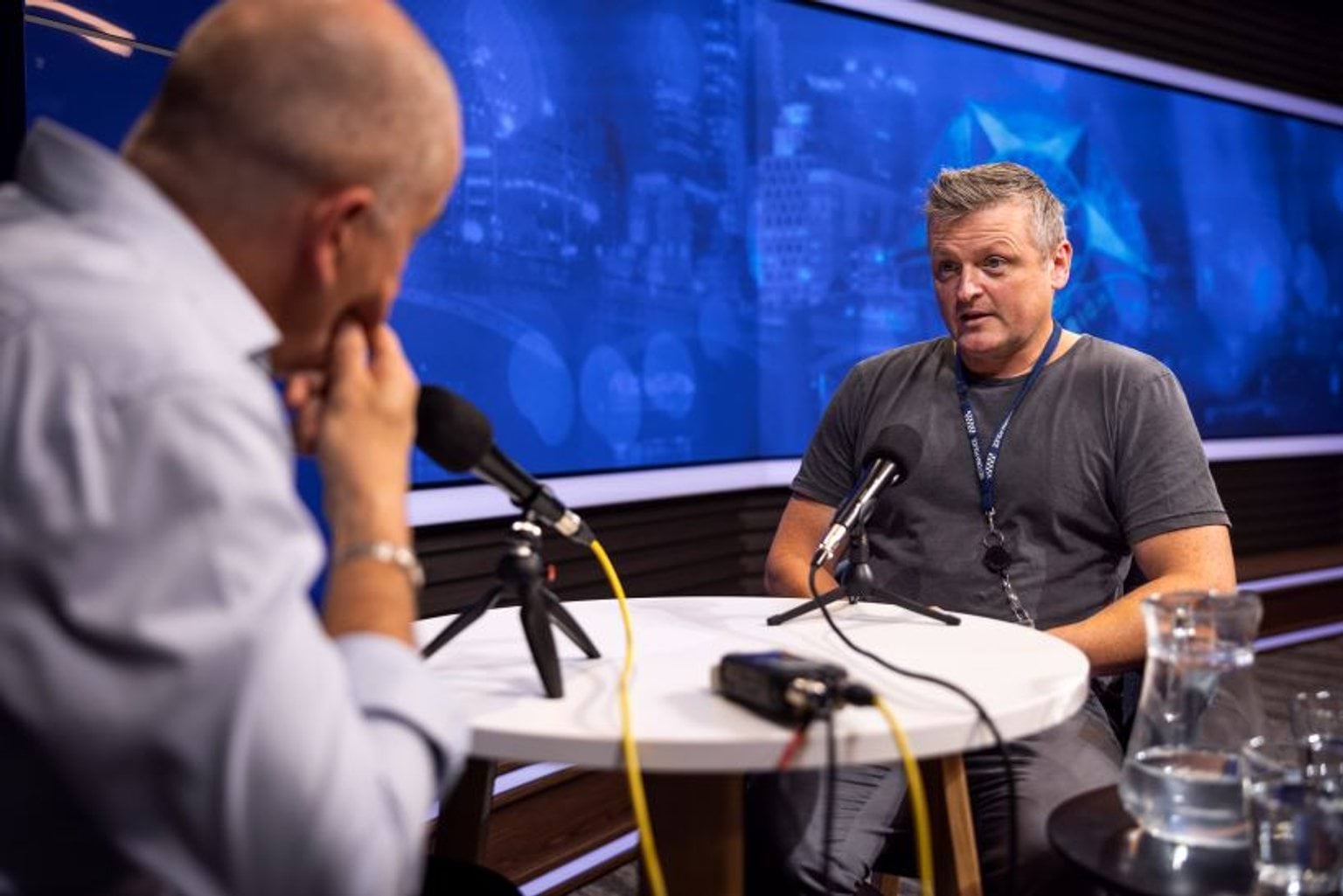
Listen to this episode and other episodes of Victoria Police's official podcast, Police Life: The Experts.
Transcript of Police Life: The Experts podcast, Season 4 Episode 5: Justice for James
Intro voiceover: You’re listening to Police Life: The Experts. A Victoria Police podcast shining a light on our people and their extraordinary skills.
[Ominous music plays]
Detective Inspector Paul Cripps: No witnesses, no CCTV, no dashcam footage, none of that stuff. I don't think there was as much CCTV around as there is now. Dashcams were unheard of, so there's just no witnesses, no one saw anything. So, we're just left with what's left at the scene.
People go, “Oh, where do I go?” But never give up. Never give up until you've exhausted every, every inquiry.
Someone's lost their life. They have mum and dad and brother, sister. It's important to them that we do as much as we can to hold the person that caused the death accountable for the death, and explain to them what actually happened.
Voiceover: On Sunday the 14 of July back in 2002, the Major Collision Investigation Unit arrived at the scene of the hit-run death of 20-year-old James Donnelly on Canterbury Road in the Melbourne suburb of Canterbury. Confronted with such scant evidence, the average person might have given up immediately on trying to find James’s killer.
But the two MCIU investigators there that day were anything but average. Their hunt for answers in this tragic case would eventually lead to Victorian laws being changed.
Detective Inspector Paul Cripps: Details very sketchy. A young man had been found on Canterbury Road. It looked like he'd been hit by a car, he'd been taken away by ambulance and there was a little bit of glass and debris at the scene, very, very little at that stage.
He was found at 5.41am and we established later he'd made a phone call at 4.24am. So sometime in that period he looked like he'd been hit by a car.
My name's Paul Cripps. I'm in a detective inspector at ED1, which works out of Forest Hill. So we cover Monash, Boroondara, Whitehorse and Manningham, so four PSAs. So at the time of this I was a sergeant at the Major Collision Unit working out of Brunswick.
Inspector Damien Madden: It was a wet – it had been raining overnight and so the roads were still wet. We arrived at the collision scene, I think Paul was already present.
The road had been obviously blocked off. It was just starting to get daylight, I think. It was you know, probably six or seven o'clock in the morning. And when you first approached the collision scene there really wasn't much to see.
I’m Inspector Damien Madden, I'm currently the local area commander at Hobson's Bay, so cover Altona and Williamstown. Back in 2002, I was a senior constable at the Major Collision Investigation Unit.
So James had been taken to hospital, so some of his clothing was present on the footpath at the intersection. But on first observation that's all you could see. I think there was some shoes on the road. James's shoes were on the road, but that was about it.
So James, young guy, growing up. He was 20 years of age. He'd been to a mate's party earlier that evening. So it was a twenty-first He had started walking home and he'd actually parted way with his mate probably only 150 metres prior to the collision scene.
His mate sort of turned off up a side street to head home and James kept walking along Canterbury Road to head towards home. James had a younger sister and he lived at home with his mum and dad.
Yeah, he was just a nice young guy, you know, doing the right thing, walking home after he'd had some alcohol at a party.
So the collision occurred on Canterbury Road in Canterbury, at the intersection of Victoria Avenue.
So it's two lanes in each direction. So, it's a reasonably major road that travels you know, east west out of the city. But it's a 60k zone, two lanes with a you know a dividing line down the middle, footpath, just a normal sort of not a residential street, there's clearly housing and so forth, but a little bit of a bigger main thoroughfare.
At that point, the inference was he'd been hit by a car. But you need to be able to work through and exactly identify was that correct? And then what car was involved. And you'll only work that out by collecting all the available evidence. So, if you don't get that right on the night, there's no coming back from that. You can't sort of have a second go at it.
Detective Inspector Paul Cripps: The first thing we do is obviously make sure the scene's sealed off as much as we can and then we start basically walking through the scene, seeing what evidence is at the scene and what we need to collect and what our approach was going to be.
So, walk through then try and photograph everything and then we use what's called a geodimeter to locate each piece of exhibit and where they are. So when later you can do a scale plan accurate to where everything is, and then the next step is to collect each one of those pieces of exhibit. Bits of glass, indicator lens, bits of paint, just the smallest bits of stuff you can find to collect.
It took a while. It wasn't quite hands and knees stuff because it was a nice black surface, but it was walking the road to make sure that you picked up everything you could.
Inspector Damien Madden: So you've got to spend the time and mark everything, photograph everything, it all gets labelled. And, you know, as it turns out, we were able to pretty much completely reconstruct an indicator lens from the car that had struck James.
We found some older plastic that was really faded, but we also found some really, really dark plastic, like it was quite new, which was really quite interesting. We were like, hang on, what's... it didn't make a lot of sense. We found a lot of white paint that, you know, like really small flecks and some larger pieces, some that look like it had clearly come off the car. And there might be a number of layers to it.
So, you know, that then helps you go, “Okay, well has the car that collided with James been involved in a previous crash?” and you know, we might be able to prove that by multiple layers of paint that matches exactly what we found at the scene and the car.
So, all of these things are really, really important to not only measure precisely where they are, because that then helps our reconstructionist, the engineer, work through and provide an expert opinion as to how the collision occurred, which way James was facing, how fast the car was going, it all paints a picture of exactly what occurred. Because at this point we don't know what occurred.
Detective Inspector Paul Cripps: Each little bit of evidence you pick up tells a little bit of a story. So, we could tell it was a white car because there's white paint. But there's lots of white cars. And contrary to popular belief, white paint is white paint, you know.
So, you've got to try and narrow it down and so we start with a white car and then we get the bits of plastic. So, well we might be able to do something, this might be a part number or whatever.
Another thing that was left at scene was his jacket and that had markings on the back that had white paint on the back. So that we're 100 per cent certain that he'd been hit from behind, and that he was hit by a white car, and that's all we knew when we left the scene.
[Sombre music plays]
Voiceover: James’s parents Kevin and Julia Donnelly that morning received the knock on the door that every parent dreads.
Inspector Damien Madden: I didn't have kids at that point, but I've got kids now and you worry when they go out to a party, you don't sleep well until they get home. You know, it's just one of those things as a parent, I think.
The relatives often just want to know what happened. Obviously having people held to account is absolutely very important, but they just want to know what happened with their loved one. And I think that's probably a lot of the drive from our unit is just trying to give the family those sort of answers.
Detective Inspector Paul Cripps: Because often you find, and I spent time with the Homicide Squad and Major Collision, that relatives’ thoughts are often worse than actually what happened. So, they actually want to know exactly what happened.
Did their relative suffer? Was it quick? All that sort of stuff, otherwise the imagination just runs wild.
Voiceover: Trying to find out exactly what happened to James in the very early hours of that Sunday morning involved computer recreations of the scene by renowned Victoria Police crash reconstructionist, the now-retired Detective Sergeant Peter Bellion. Damien explains that those recreations were central to the investigation.
[Sounds of distant, passing traffic play]
Inspector Damien Madden: James was walking away from the city, on the roadway, just a small distance out from the curb. And we're able to work that out essentially by the location of where debris was found. But absolutely also because there was a street sign, a no parking sign, on the nature strip that James had unfortunately collided with after he'd been hit with the car and through to his rest place.
And so that was critical to help us work backwards, to actually put him at the place where he was struck. He wasn't up on the footpath, the car didn't come up there and hit him and so forth. Critical in relation to trying to work through the speed of the vehicle as well.
And it equally helps dispel an offender's account. If they're all of a sudden trying to say, “Oh, he just ran out in front of the road and I had you know, couldn't do anything to avoid him”. Well, we were able to show that wasn't the case. James had been walking away from the traffic and had been hit from behind.
And so the critical bit for us was working through, “Well, why didn't that driver see him? Why didn't the driver swerve to avoid him?” And so then you start to sort of think through, “Well, was the driver drug or alcohol affected? Were they tired? Were they on their phone?” We did a lot of work to work through how much sight distance the driver would have.
So, we did lots of sort of reconstructions of driving a car through with various marker boards of the actual distance to clearly show that at the speed that he was struck, the driver would have had quite a substantial amount of time in order to see James and actually take some action and avoid him.
And what we're able to work through was that James would have been clearly visible for between 100 and 125 metres before he was actually struck.
The engineer was able to reconstruct that the car was travelling at about 43 kilometres an hour at the time of the collision. And it's a 60 kilometre hour zone, wet road. So, your average stopping distance at that sort of speed is 30 metres. So ample opportunity to take some sort of, to either emergency brake or steer around.
[Ominous music plays]
Voiceover: But while they could reconstruct what happened, they still needed to find who was responsible. The dozens of small fragments of an indicator lens collected from the crash scene gave them their first big breakthrough.
Detective Inspector Paul Cripps: When we got back to the office and I thought, what do I do now? Got this big piece of white paper and put all the bits then started putting together and the ladder wall together or use sticky tape. And I was thinking if only it was like the TV where you could put it on the computer and the computer would put it all together for you.
But it was manually putting it together and does this piece fit and they're all tiny little bits. Some of them are two or three millimetres bits size or half a millimetre. I don't think I've done a jigsaw since. But once we got that and we got a part number, we could then say – OK if we've got a part number, we can then make inquiries to identify what type of car it is.
Inspector Damien Madden: We worked out that particular indicator lens was made to go into a 1986 to a 1989 Nissan Navara. It could physically fit into a 1986 to 1992. There was just some cosmetic differences with the indicator that was later. But primarily that was that sort of three, four-year model period that we were looking for.
[Gloomy music plays]
Voiceover: Their excitement in finding out the kind of car involved in killing James Donnelly was quickly tempered when they found out there were more than 7000 white 1986 to 1989 Nissan Navaras in Victoria at the time. But even such a daunting number was never going to stop Damien and Paul.
Detective Inspector Paul Cripps: What we then do is okay, let's narrow that 7000 down to who's likely to be in the area at the time.
So, it's start small and then work out. So, we started with all those that lived Canterbury Road, put two roads either side of it, out from the city and then started zeroing in on all those that lived in that area and then arranged to start visiting them to inspect the cars to see if they've been involved in a collision.
And if once that had finished the next stage was to go further out and then further out and further out. So eventually if we hadn't had a result, we would have checked every Nissan Navarra that met the criteria before the file’s finished.
Inspector Damien Madden We'd been producing mail packs to go out to every what was called then the traffic management unit around the state. So, some information around what we needed them to do and what they needed to look for and the list of vehicles that were in their area that they needed to help us out with.
The really important bit at that point was to introduce ourselves to the family and actually explain as best we could what we knew at that point. We can't disclose everything, but at least put a face to a name, give them some understanding of what we knew and a commitment that we would do everything we could to find what happened to James.
And through that conversation, a terrible point in the family's life, Kevin, James's father and Julia actually were supportive of talking to the media, which is a really critical element for us. It's important that we get out as broadly as possible, “This is the car that we're looking for”, and really get that community support.
[Audio from 7 News plays]
Julia Donnelly: To have my son knocked down and left by the side of the road, like a dog to die, is just disgusting. And that hurts to know that, if they had have stopped, he may have been saved.
Kevin Donnelly: I don’t want retribution, I don’t think Julia does. What we want is to know what happened and who was responsible. The worst scenario is for somebody to lose a child and to never know the full story.
[Audio from 7 News ends]
Inspector Damien Madden: Kevin and Julia were able to really put a face and a personality to James and really appeal for that support, which I can only imagine would have been a really, really difficult thing to do. But I think throughout the whole investigation they were critical in helping us work through and understand what occurred.
Detective Inspector Paul Cripps: Hopefully the offender or the person of interest will see what his or her actions have had on the family and their conscience will get the better of them and they'll come and hand themselves in, or a member of the public will see the vehicle and report it to us.
Inspector Damien Madden: And in those early couple of days after the media appeal, we got a lot of calls to Crime Stoppers. And some that you really think, “Oh, this is the car”, you know, and you're running around urgently all over the eastern suburbs inspecting these cars and you sort of get your hopes up and then it's oh, dashed, you know, no, this is not it.
But it's one that you can actually rule off. And one that was, most times, it was on our higher priority list anyway to visit.
So yeah, it's there's lots of highs and lows you know, it's a process of asking a million questions and accepting you'll only hit the nail on the head for a couple, but the couple lead you to another question and more inquiries.
I didn't have a day off for 21 days. Everything was so full on, and you just couldn't afford to take a day off. It was critical that you kept going.
Detective Inspector Paul Cripps: Occasionally it's just like looking for a needle in a haystack. But, and I used to always say to the troops, if you search thoroughly and long enough you'll eventually find the needle. So, it's just a matter of making sure we persist and keep doing it.
Inspector Damien Madden: You actually start to become a bit of an expert as well around Nissan Navaras. You know, it's amazing you start seeing them everywhere, even when you're not working.
Detective Inspector Paul Cripps: It's an interesting comment Damien makes about seeing Nissan Navaras everywhere. I don't know if it's like when you buy a new car. You've never seen them ‘round, you buy a car, and they're everywhere. Nissan Navaras, I would have thought a very rare car, but whilst we're looking at this car, I'd never seen so many Nissan Navaras on the road driving home, driving to work, and you always say, “Oh, driver’s speeding up, oh, not that one, just write the rego down”. But you just see them everywhere. It's amazing how the mind sort of focuses on what you're looking for at the time.
[Sombre music plays]
Voiceover: Despite having police across the state helping out with inspecting the 7000 Nissan Navaras, the search was time consuming. So, Damien and Paul were working on other avenues at the same time. This included an appeal out to mechanics and smash repair businesses in the hopes that the driver visited one for repairs after the crash. But the promising leads were drying up.
Inspector Damien Madden: We're probably nearly a month after the collision and we're still looking madly at lots of cars but not having a lot of success. So, I made contact with Crime Stoppers to see if we could actually get – back in the day, you would actually get a video segment put on the media just to really sort of refresh it, I suppose, in people's minds of what we're looking for.
And whilst we didn't have a lot of success around, you know, the advice was it would take a while to get something like that underway. The person I spoke to was really helpful and said, oh, if you tried, there's this, what they call the hotline and it's a radio service that operates between wrecking yards.
So if you go into a particular yard and you're looking for a particular part and they don't have it, they'll put a broadcast over the radio and maybe another wrecker will have that.
So I got hold of the person that coordinates that and they put a broadcast over the hotline. And as luck would have it, a wrecker out in Campbellfield gave me a phone call and said a couple of weeks ago we had two guys come in. They were looking for exactly the parts that you you're interested in. So, a bonnet, a passenger side guard, a grill, the lower stone guard.
And she said the person when they rang didn't want to leave their number. She thought that was a bit odd. But then not long after that the two guys turned up. She showed them what she had, she gave them a price and it was a bit too expensive. So, she suggested, well you could actually contact SSS Auto Parts, which are an importer of non-genuine parts.
And so she rang SSS from the yard and was able to work through a price and provided that to the two guys. And they left. So, then we reached out to SSS Auto Parts and lo and behold, these two guys then went to the location in Campbellfield, I think it was. And they purchased parts, the exact parts that we were looking for that would repair the car.
Of course, then we do a whole range of other inquiries to try and work through and identify who those two people were, phone checks and looking for CCTV and a whole range of other aspects.
But interestingly when we went and saw the salesman at Campbellfield, he remembered the sale and said, “Oh, actually, one of the guys that bought those parts, I think it was a week later, actually returned one of the guards because he'd bought it for a king cab, not a dual cab”.
And I sort of said, “Okay, well could we perhaps have a look in the warehouse? Could we find that guard that he returned?” And so off we trot into the warehouse and there was only three there and two of them are nice in pristine packaging, and one's a bit sort of crumpled and you could see it had been opened. So, we opened that up and I sort of thought, I think there's some, you know, there's smudge marks and so forth over it. So we were able to take possession of the guard and we got that fingerprinted.
Voiceover: This is the best lead Damien and Paul have had in weeks, so they are desperate to find out who these two men were. But it will take time for the fingerprint results to come back.
Inspector Damien Madden: It's starting to tick the right boxes. These guys have bought the right parts. They've bought it a couple of weeks after the collision. They've taken some steps to sort of hide their identity is the initial thought. And you think, okay, we might be on to something here.
But clearly it's then trying to work through and actually identify them. And so the early stages we were challenged. There was no CCTV. We explored a couple of other avenues, but they didn't really come to fruition. I think the real luck, I suppose for us, is when we went to SSS and spoke to the salesman and were able to recover the guard, just in general chat there was, you know, “Look, if you see them again, grab the rego of the car, you know, and let us know”.
And lo and behold, the very next day the salesman rings me and he says, “You know, you won't believe this, but that guy that bought parts that you were interested in? He came in today and he bought parts for the same car, but the driver's side, not the passenger side”. So it's sort of pretty odd, you know, why is this person buying parts initially for what we were interested in, but then more parts. And thankfully the salesman obtained the rego of the car.
I still remember it, it was like maybe one or two o'clock in the afternoon and you get the information. So then all of a sudden you're madly doing all these intelligence inquiries to understand, okay, so what does this rego come up to and who does it come up to?
The car's owned by Alex Josefski. He's a chap, I think, in his 50s or 60s at that point. And we dive into his history, understand that he's got a driver's licence, where he lives, whether he's been in trouble with the police before.
So at that point it's around understanding, Well where does that person live, who else lives at that address, who owns a Nissan Navara?
So we make some initial inquiries, we don't get very far, but that afternoon one of the other sergeants and myself go out to this address and we talk to the registered owner, Alex Josefski, and we ask him who was driving his car that afternoon, and he tells us that it was his son, Philip.
Philip was actually at home with his father at that point, so we spoke to Philip, asked him about whether he owned a Nissan Navara, and he said he did. He bought it about seven months earlier.
And then we talked to him around, well, where is the car? And so he tells us that it's actually parked at his sister's place and it's in the garage and it's being repaired because he had a crash about a week earlier to the driver's side at the front.
So we ask him, “Okay, so yep, you're repairing that car at the moment?” and he says yes. And so, “Has the car been involved in any other collisions?” and he says, “No, not in the seven months that I've owned it. It's not been involved in any other crashes”. So, we said, “Okay, well, can we go and have a look at it?” And he says, sure. So, he goes with us to his sister's house and we look in the garage and there's the car. Mid repair for the driver's side damage.
[Eerie music plays]
Voiceover: But the MCIU investigators aren’t interested in the recent damage to the driver’s side.
Inspector Damien Madden: Your eyes go straight to the passenger side. And you start to see some new panels on the passenger side that don't align with the age of the passenger door, that don't align with other parts of the car. And straight away, and I can remember as clear as day now, I noticed that the passenger door had all these chips where it joined the front guard.
And so I'm thinking straight away, the front guard has been pushed rearwards and has taken chips of the paint away. So they've repaired the obvious parts, but they've not repaired, and as it turns out, it's been repaired basically by some people that are not experts and they've done the basics, but very quickly you can start to see that it's likely the car that's involved in the collision with James.
Detective Inspector Paul Cripps: So one of the important things, Peter Bellion, who was the reconstructionist, developed a animation of what he expected to happen to James when the car had hit, and it showed him being hit from behind, then sort of twisting up, shoulder hitting the top end of the bonnet, but also at the same time, when he first got hit, his leg would kick up and hit underneath what's called the stone guard or underneath the front of the car.
So then when we actually get the car, the damage that we see is very consistent or exactly the same as what we actually predicted based on the engineering. And then when we looked at the bottom of the stone guard, there was what's called striations, or it's markings from clothing. And then when they compared James's pants to that marking that was on the stone guard, it was exactly the same.
[Dynamic music plays]
Voiceover: After weeks of fishing for clues and only getting nibbles and no bites, the search for James’s killer now seems to explode with action. But Paul had been a detective at the Homicide Squad, working on some of the most serious and high-profile crimes of the day. He knew the risk in reeling things in too quickly.
Detective Inspector Paul Cripps: You’ve also got to be very careful, you don't want to overwind it and break it. So you've got to make sure you're very methodical and do everything correctly and don't break the line. I've been around at that stage long enough not to get that excited and probably approach it with a cynical lens and, unless it's right in front of me and I'm convinced, because otherwise you ride the roller coaster of emotions and you're up and down, up and down.
And when you get that little bit of bite, well okay, what could be an explanation that's innocent? Just to make sure we're not missing things and covering all the points off until you actually see the case. They have to be followed up and but needs to be done properly and thoroughly.
Part of my role at that stage is because I've been a detective and a sergeant is to teach, teach them how to conduct investigations and to be thorough and say, OK, and it's almost the little person on your shoulder, “Don't do that, yes do that, have you done this, have you done that, don't do that”. And sort of being the oversight and say, “OK, what have we missed? If we do that, what's going to happen?”
Yes, everyone's very happy we found the car but that's only half of it, or not even half of it, that's probably 25 per cent of it. Who was driving the car and why?
Inspector Damien Madden: The other important part though was when we got there and we're speaking to Philip, his sister's boyfriend was there and we speak to him, Chris is his name, and ask him about, what's the situation with the car. And so he says, “Oh yeah, yeah, I'm helping Philip fix it. To the driver's side”. We ask him, “Is well, has this been damaged before?”.
And he says, “Oh yeah, about four weeks ago. Philip tells me he ran into the back of a parked car and I helped him fix the passenger side”. And so Philip said, “Oh I’ve run into the back of a Toyota Rav4”.
And, of course, we do all the inquiries to show that we’ve got no record of that ever happening, we do all the inquiries around that local area where he said the crash happened.
But then you look at the car, and in order for that to be correct, all of the lower support brackets and so forth would’ve been damaged. You could show that they were the original parts, and they’ve not been played with.
And when you take the side guard off both the driver and the passenger side, on the passenger side, on the frame of the car, there was an angled impression such that the impact with James and his hips have essentially pushed the car downward and rearwards.
All of a sudden, you know, we're seeing damage that's consistent with the crash with James. We've got lies from Philip. Chris, he's quite open in talking to us around the context and what his involvement and so that really gives us enough to place Philip under arrest.
So, Philip was interviewed at Greensborough Police Station. He exercised his right to seek legal advice and decided to provide a no comment interview.
He presented as really, really quiet, really shy, didn't say a lot, maybe an introvert. He really stuck to himself, is what we sort of gleaned, I suppose, from talking to various people.
He was released without any charge on the night. Clearly it was really probably the start of our investigation around firstly proving that it was the car, but then secondly, who was actually driving?
So with Chris, he stepped through the fact that Philip had taken the car back to his home address at the time, which was in Westgarth, and then shortly thereafter had taken it out to Reservoir and his cousin was a spray painter. So, he'd taken it out to a repair place in Reservoir and got a quote for repairs.
And I think that was on the Monday. The collision occurred the early hours of the Sunday. And on the Tuesday we did the media conference and James's parents spoke.
And lo and behold, I think it was either late Tuesday or early Wednesday morning, the car disappeared from the repairer at Reservoir and was taken to Philip's sister's house and stored in the garage for a couple of weeks. And then as it plays out, he then makes the inquiries a couple of weeks later around the parts and they start fixing it.
Detective Inspector Paul Cripps: So, all that stuff is good evidence of a consciousness of guilt and he was probably driving the car. But when you look at putting something before the court you've got to exclude any hypothesis consistent with innocence. So yes, we could probably prove that car was involved in that collision.
We could probably, on his admissions, prove to a point that he'd had a collision. Was he driving at the time that James was killed? It sounds counterintuitive, but there's that gap in the story to prove 100 per cent that he was behind the wheel when it hit James.
We could prove he had a crash, we could prove the car was involved in the crash, but was it the same crash? And especially when you get before the court in front of a jury and you get some very well-paid barristers, can exclude some of those things and throw any hypothesis which is consistent with innocence then the jury would have to then take that theory.
[Ominous music plays]
Voiceover: With Philip Josefski now firming as their suspect, the two investigators were trying to find out what caused the crash and especially why Josefski may have decided to run from the scene.
Inspector Damien Madden: The offences that you're investigating initially are failing to stop at a collision scene, failing to render assistance, and then failing to report the collision to the police. So, if someone's injured, then you've got to do all of those things.
So, you're investigating those offences initially, but then you're looking more thoroughly around causation. So why did this person not stop? Were they speeding, were they fatigued, were they drug or alcohol affected, were they distracted?
So, we were investigating it around a culpable driving matter. So, the driver’s failing to keep a proper look out, their obligation as a driver to look ahead, to take steps to avoid a collision, and that we were saying that that was grossly negligent.
Detective Inspector Paul Cripps: It's probably not unrealistic to say a lot of the hit run drivers don't stop because they're drug or alcohol affected.
So, what we're trying to do was, well, can we prove that he was drug or alcohol affected? The evidence had been that he'd probably been at a party. Most people probably at that age would be drinking at a party. So, you start putting, well, he was at a party, he was probably drinking, he's driving down the road, he's hit someone, he hasn't stopped. It's a probability or possibility that he was drug or alcohol affected.
So we were trying to prove that he was, and we're looking at ways to be able to prove that, because one, answers for the family and two, the penalties for culpable driving are much higher than a fail to stop, fail to render resistance.
Voiceover: The maximum penalty for culpable driving causing death was 20 years in prison. But back in 2002, the maximum prison time for failing to stop at a collision was just two years.
Inspector Damien Madden: We were able to obviously speak to his mates and his relatives and establish that he was at home the night before, watching the footy and he'd had three or four stubbies of beer, heavy beer. So we knew he'd been drinking beforehand, and as the investigation progressed, we knew that he'd been invited to a birthday party that night at a bar in South Yarra.
So, it was then trying to establish, okay, was he there? And do we have any CCTV? And do we find him stumbling out and getting into the car? Unfortunately, due to the delay, we're a month down the track.
The CCTV back in 2002 didn’t last that long. And so, we're relying on being able to talk to guests that attended the party to understand did he actually turn up. And we know that just from accounts, it was sort of close to midnight and he'd still not actually driven to the party.
Two of his close mates lived in the eastern suburbs. And if you looked at where the where the party was at the bar in South Yarra, it was consistent with that he'd potentially been to the bar and was driving out to see his mates, or his mates were in the car. So it was trying to work through which one of those hypotheses were correct.
Voiceover: While some in Josefski’s circles were happy to talk to the police, those who knew him best seemed to be particularly guarded. Paul then leant on his experience as a Homicide Squad detective, where it was not uncommon to use surveillance technologies in an investigation.
Detective Inspector Paul Cripps: Once he's exercised his rights to say no comment to us in the interview, we can't formally ask him any more questions. But he can tell other people. So the whole idea was in how do we capture that? So that's when we went down the track of getting a telephone intercept on his phone and putting a listening device in the house.
Inspector Damien Madden: I wasn't aware of any other investigation previously where we'd taken the steps to put listening devices in, record telephones. Not a whole new world but very, very new I suppose from a collision perspective.
We started making inquiries internally around well how do we do this, what affidavit do we need to prepare, at what court does it need to go to?
Voiceover: To make sure listening device and phone tap resources are being used for the most important investigations, there is a strict criteria that must be met.
Inspector Damien Madden: And the experts that actually facilitate this internally were of a view, “Well I don't think you've got the right offences and no, we can't help you, we can't do this”.
Detective Inspector Paul Cripps: When there was some initial pushback to say, well, it's only a crash, I said, “Well, let's look at your level of your criteria involving a death. This is manslaughter and someone's died”.
This is actually, on their criteria, it's the highest criteria, so they needed to bump it up. I think once people went, “Oh, hang on, this is a death, someone has died, it's a criminal offence. Culpable driving’s basically manslaughter with a motor car”.
When people got that realisation that it was all well, we got bumped up the list, it was all guns blazing.
[Dynamic music plays]
Voiceover: Not long after the listening devices and telephone intercepts were up and running, the cracks began to appear in the wall of secrecy around Josefski. It began with his close friend Agostino Carideo.
Detective Inspector Paul Cripps: When we went and knocked on Agostino Carideo's address, we said, “We're here, we want to talk to you about a crash”, and that's all we said. And he said, “Oh”. We said, “Could you come down to the police station, down to Doncaster?” And he goes, “Oh, can I make my own way down there?” And we said, “Yeah, no worries, we'll meet you down there.”
Voiceover: As Paul and Damien were following Carideo to the station, they are paged by police monitoring Josefski’s phone.
Detective Inspector Paul Cripps: The pager said, “He's just rung him!” So he's rung Josefski and said, “They're here about you”. And we have never mentioned it to him. But he rang Josefski and said ‘Oh, the police are here about you”. So that's not evidence as much, but it shows that he's aware of, or partly aware of, this collision.
So, they were actually charged with perverting the course of justice because they told us lies. And we presented them as well as part of the committal. When he got back to the police station, we sat him down, we took a statement from him, and he when he left, he must have stopped on the steps of the police station when he rang Philip and said, “I've just told lies to the coppers, I've committed perjury for you”. So there's an admission straight up that he'd done the wrong thing.
Voiceover: Further captured conversations revealed Josefski colluding with his parents Alex and Lena, as well as Agostino Carideo and another friend Kymon Mitsilias to all tell lies to the police.
Inspector Damien Madden: What we learnt through just some of the comments, it was certainly possible that both Agostino and Kymon were in the car with him. That bit, I think that the challenge is we'll never know.
Detective Inspector Paul Cripps: So, what was coming over the phones with Kymon and Agostino, they were both coaching him. We couldn't prove they knew of the collision. They probably – we could prove that they knew he did something wrong. We couldn't prove exactly what they knew about the collision, but they were coaching him and telling him to tell lies and they were lying for him to us.
Inspector Damien Madden: But even his parents being dragged into it, you know, his mum wasn't well at that point, his dad was supporting his mum. In preparation for their statements, you know, they were sort of, they basically said, “We had no knowledge of the crash and we haven't been speaking to Philip about it”, but yet there's all this material that says otherwise.
Detective Inspector Paul Cripps: We knew we were on the right track, we're just struggling to get that evidence 100 per cent exactly what happened on the night.
Voiceover: The listening device in Josefski’s parents’ home even caught a damning conversation where he and his parents talk about whether the police had enough evidence to charge him and get him to court.
[Listening device audio plays]
Lena: If they haven’t got evidence, then they can’t get you to court. You charge them and bring them to court, no matter what.
Philip Josefski: They’re trying to do whatever they can to get me to court.
Lena: Yeah.
Philip Josefski: Obviously they haven’t got anything.
Lena: That’s right.
[Listening device audio ends]
Inspector Damien Madden: One of Philips' comments during a conversation about the collision was “Yeah, they know I did it, they can't prove it”.
[Listening device audio plays]
Alex Josefski: They know that you did it.
Philip Josefski: Yeah, but they can’t prove it. That’s the thing.
[Listening device audio ends]
Inspector Damien Madden: When you hear that, I sort of thought, we've got him. It was that acknowledgement that he thought he got away with it.
Voiceover: Damien and Paul then charged Josefski with culpable driving, failing to stop at a collision, failing to render assistance and conspiracy to pervert the course of justice. His parents and friends also had cases to answer for.
Detective Inspector Paul Cripps: Because Kymon and Agostino and mum and dad all told us lies, we charged them with perverting the course of justice. It's one thing to not assist the police, but that's another thing to actively try and counter the investigation. And that's what they were doing.
[Sombre music plays]
Voiceover: A three-week committal hearing was held so a magistrate could determine if there was enough evidence for the case to go to trial at the County Court. The magistrate decided to dismiss the culpable driving charge and commit Josefski to stand trial on all the other charges. Josefski and his co-accused then all pleaded guilty to the remaining charges.
Detective Inspector Paul Cripps: It was always going to be a struggle for the culpable driving, because we didn't have that last crucial bit of evidence. Yeah, it was frustrating, but I could put my hand on my heart and know that I'd done everything I could to try and prove it.
Voiceover: In April 2005, Philip Josefski was sentenced to prison for two years and three months but would be eligible for parole after just 10 months. For their part in covering up the crime, his parents were given nine-month suspended prison sentences and Agostino Carideo and Kymon Mitsilias were each fined $3000.
Detective Inspector Paul Cripps: The family were devastated by the sentence. At that time, part of our belief is someone, quite often, that someone who doesn't stop in a hit and kills someone and doesn't stop, it's probably because, in a good chance, they're intoxicated or something.
So the way the law was at the time, they get an advantage of running away, because if they stop, they could be breath tested, blood tested, drug tested, be charged with culpable driving. But because they've run away and done something worse, almost, they get the advantage of not having the blood test or breath test, so it's hard to prove the culpable driving.
So they didn't get the two – at that stage it was a maximum of two years imprisonment on that offence, where culpable driving was 20 years.
Voiceover: In a conversation with Paul at court straight after sentencing, James Donnelly’s father Kevin was seething over the outcome.
Detective Inspector Paul Cripps: He was very frustrated with the sentence and he said, “Well I can't say anything about it”. And I said to him, “Well, I can't, but you can”.
And he went out the front and gave a press conference and I still remember the words he used. It was something similar to, “We give up our rights to take our own justice. In the old days we'd throw a spear through the man's leg ourselves, but we expect the courts to do that on our behalf, and on this occasion they've failed us”.
And it was really, really powerful.
[Audio from 7 News report plays]
Kevin Donnelly: We’ve had two-and-a-half years of lying and deceit, and this person gets out in 10 months. I find it offensive. It’s a kick in the guts to our family and our friends.
Julia Donnelly: I feel broken. I mean, it’s just disgraceful. What price is a life?
[Audio from 7 News report end]
[Dynamic music plays]
Voiceover: The Director of Public Prosecutions also felt the sentence was too lenient and took the rare decision to appeal it, with the director himself Paul Coghlan appearing to personally argue the case. In doing so, the DPP had to follow what is known in the legal system as the cardinal rule.
Inspector Damien Madden: So, it says appeals by the DPP against sentence are in a special category of their own, because a Crown appeal exposes the person already sentenced to a form of double jeopardy. The Court of Appeal has followed the High Court in declaring that an appeal by the Crown should be brought only in the rare and exceptional case to establish some point of principle. So such manifest inadequacy as to constitute an error of principle.
Voiceover: The appeal was successful, with the non-parole period being raised from 10 months to 18 months, while the head sentence remained unchanged. But the sense of injustice was so significant that the Victorian Government decided to change the law. The maximum penalty for failing to stop at a collision resulting in death was increased from two years’ prison to 10 years.
Detective Inspector Paul Cripps: That's probably unheard of, that a sentence for an offence would be five times higher than it was previously.
Inspector Damien Madden: Nowadays you hear about a lot of laws that have been created after someone's poor experience. And I sort of see this as sort of James's law. We've actually got some change as a result of a terrible set of circumstances.
I think you become James's voice, by actually doing the best job you possibly can and investigating and working through what actually occurred, you can portray what happened to him. And it's critically important to be able to portray that, but equally support the family through that process and give them some answers as to what occurred.
Detective Inspector Paul Cripps: For a parent, there can probably be not much worse than a knock on the door by a member of the police force that, in the early hours of the morning and saying, “Your son, your daughter is not coming home, they've been killed”. So, I see our job, especially at the collision unit, is to try and help the family understand.
We're never going to get their son back or their daughter back, they will never move on from this. It'll always be in their minds, but to try and help them function or move on as best they can. I remember being somewhere once and someone said to me, one of the families said, “I'd hate to be doing your job”, and I looked at them and said, “Yeah, but I'd hate to be where you are”.
Now I think closure's a terrible word. It actually I don't think it explains what it actually gives. I don't think they ever get closure and say, “Oh, that book's closed, I've moved on”. It's how you move on best. And if you get them as many answers as possible so they can move on as best they can.
[Sombre music plays]
Voiceover: While Kevin and Julia Donnelly experienced profound grief, dismay and even disgust throughout the ordeal, they had only praise and gratitude for Damien Madden and Paul Cripps. In a letter she wrote to their Deputy Commissioner after the case finished, Julia could not thank them enough.
Voice actor reading as Julia Donnelly: They immediately worked swiftly and diligently in an attempt to track down the offender. In their dealings with us at this delicate and emotional time, they were understanding and compassionate and offered us their commitment to this task.
They made us feel so hopeful that justice would be done.
Their strength and optimism was so wonderful when ours had been profoundly shaken.
The police came to our home one evening with the product of their painstaking investigations – the re-created indicator light from the offending vehicle. It was made up of so many tiny fragments of yellow and white plastic stuck together.
We were amazed at the possibility of doing this and the fact that they were able to identify the model of the car!
Inspector Damien Madden: I was just extremely proud of one, the result in that we were able to actually identify the car and then put someone in the driver's seat.
But, two, it's amazing what you can achieve when you provide passionate, dedicated support for the family because they then helped us immensely around all of this other change. We helped them by actually being able to understand what occurred to James.
We're just really, really proud of the work that the unit and the people that are within the Collision Unit that do it day in, day out, you know, you're the middle of the road in country Victoria at four o'clock in the morning it's pouring down rain. And there you are. The team are out there doing that day in, day out, now.
Voiceover: That was the final episode of season four. Stay tuned in the future for season five.
Police Life: The Experts is a Victoria Police production.
Your host is Belinda Batty.
This episode was written by Jesse Wray-McCann.
It was produced by Jesse Wray-McCann and Nadine Lyford.
The senior producer was Ros Jaguar.
Voice acting in this episode by Tayla Thomas.
Audio production and original music by Mat Dwyer.
News content courtesy of the Seven Network.
Theme song by Veaceslav Draganov.
Executive produced by Charlie Morton.
This podcast was created by the Media, Communications and Engagement Department at Victoria Police.
Police Life: Our people, our stories
Police Life: Our people, our stories is where you'll find Victoria Police’s podcast and in-depth articles about police, protective services officers and support staff across the state.
Updated