- Published:
- Thursday 18 June 2026 at 9:00 am
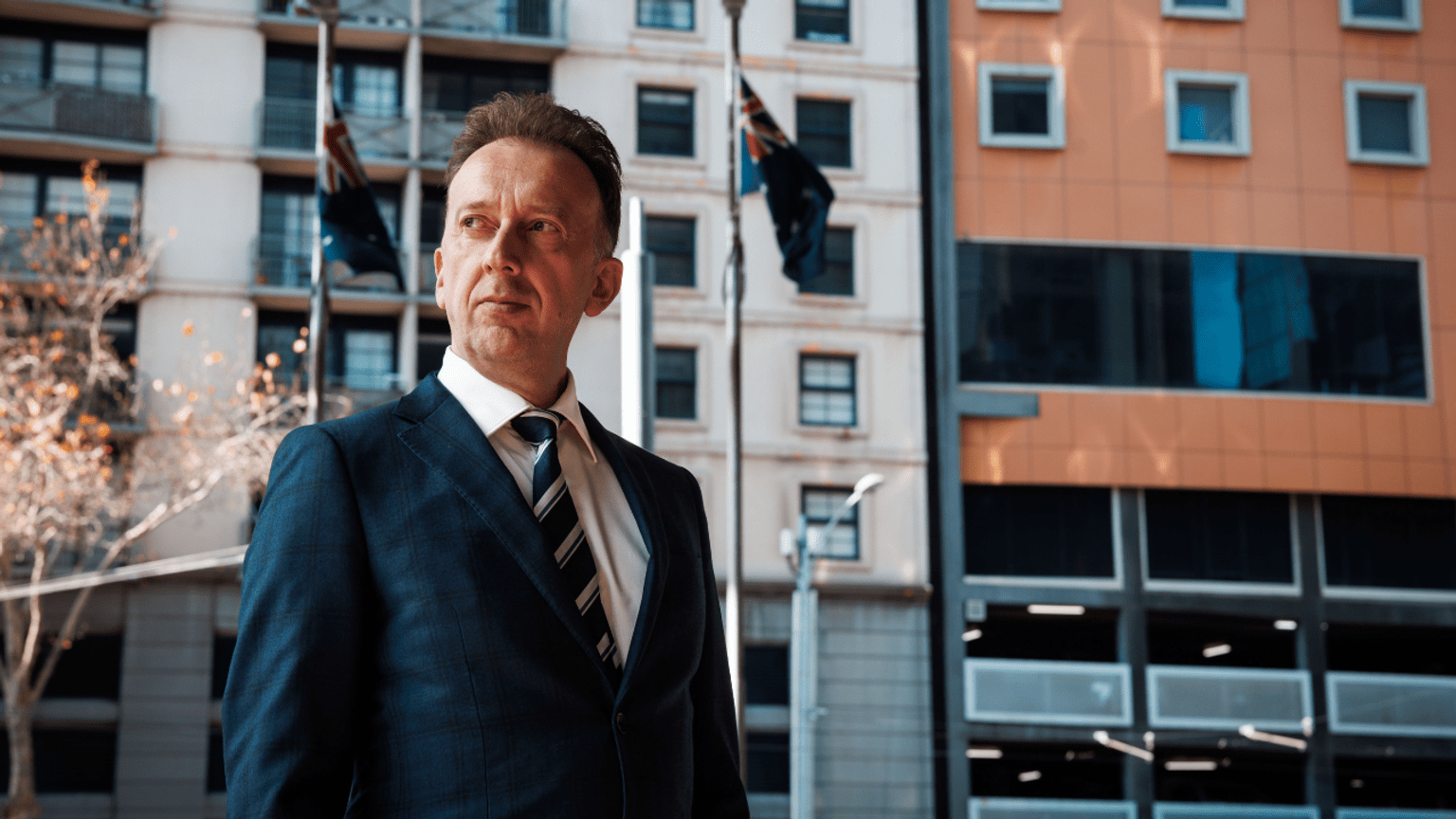
| Detective Sergeant Igor Rusmir came to Australia as a refugee in 2000. |
When civil war erupted in Yugoslavia in the early 1990s, Detective Sergeant Igor Rusmir was an 11-year-old Serbian boy whose dream in life was simply to fill his soccer sticker collection.
Igor, his parents and his younger sister were never ready for the trauma of war and the many years of chronic displacement it would bring.
But now, 26 years since he first arrived in Australia as a refugee with his family, he is still incredibly grateful to his adopted country for the life it has given him.
It’s a gratitude that led him to serve the community by becoming a police officer.
“In the 1980s, I grew up in what was probably the most liberal version of socialism in that part of the world, so things felt pretty free and as close to democracy as possible,” Igor said.
“I had a steady, comfortable and sheltered childhood.
“But then that basically ended one day when the civil war broke out in August 1991.
“We were at our holiday house for a weekend away and woke up to the sound of shelling in the distance and that was that.
“We never went back home to our apartment and that’s when my refugee days started.
“After a few days, Dad and my uncle went back to our apartment just to grab some basics and come back.
“But one of our neighbours recognised Dad’s car and he got grabbed by the local militia, arrested and tortured for the next month.
“We had no idea if he was alive.
“And that was just the start of the war.”
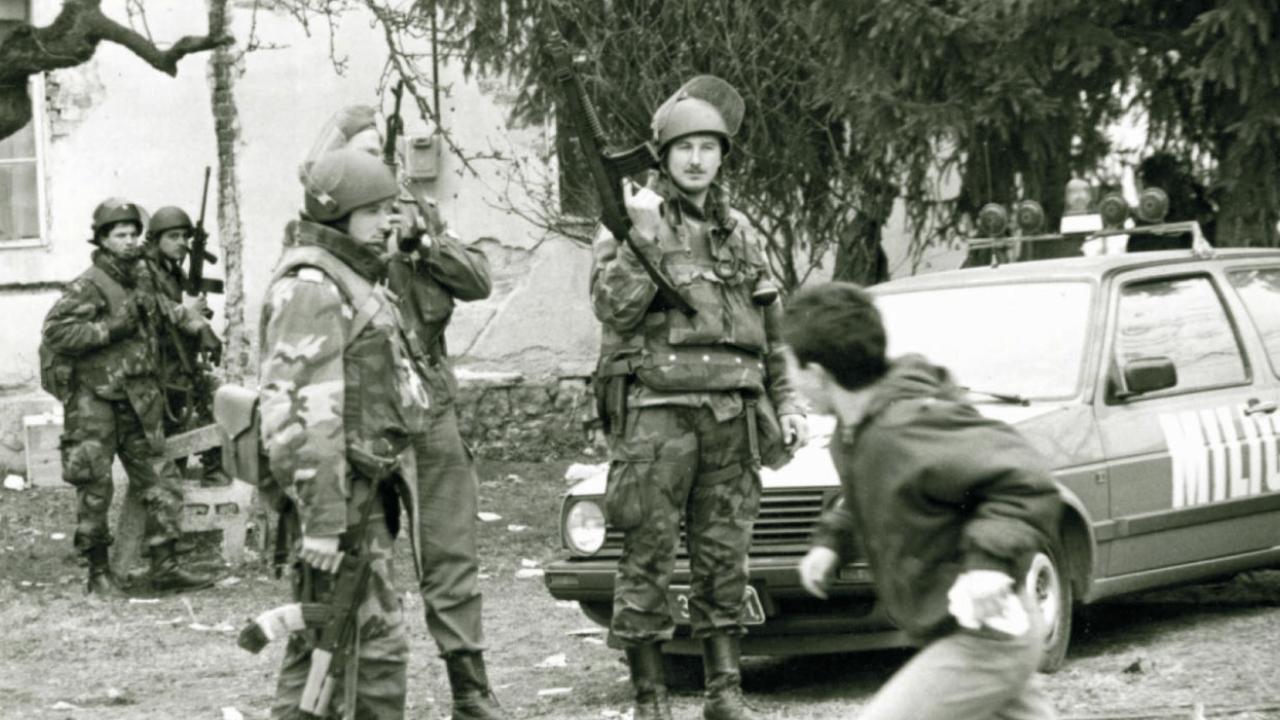
| Hostilities broke out in Igor’s hometown of Pakrac in 1991. |
Igor’s father eventually made it back to his family and they then kept moving wherever they could, just to stay alive.
Over the next almost 10 years, they would live in different parts of Serbia, Bosnia and Croatia.
Between the ages of 11 and 19, Igor had to change schools 13 times and move houses even more.
“I remember at one point we were forced to live in a nursing home somewhere in southern Serbia, but you had to do whatever you could just to survive,” he said.
“Those years were tough because there was no electricity, there was no running water, no phones and we lived like that for four years.
“I remember in early 1994, the electricity started coming on for about half an hour a day.
“All the kids would just be screaming on the street, ‘The electricity's on!’ and everyone would run home to watch TV for half an hour.
“But the electricity would be allocated to different villages at different times.
“There would be times where we would put our TV in a wheelbarrow and wheel it to the next village so we could watch TV because it was their turn for the electricity but they didn’t have a TV.
“It was a crazy way of living.”
Life in Australia
The Rusmirs applied for asylum in many countries, eventually being granted refugee status in Australia, where they fled to in 2000, when Igor was 19.
“My parents only had the equivalent of 300 Australian dollars to their name, but I could not wait to get to Australia,” Igor said.
“I remember holding on to that visa like it was a lottery ticket.”
They were allocated housing commission accommodation in Springvale, where they lived for the first three months of their new lives.
“It was run down, it was August and it was freezing, but I remember telling the woman from immigration, who helped us settle in, about how much I loved it,” Igor said.
“I was like, ‘This is just the best ever’, but she said, ‘Igor, this is definitely not the best’, but I go, ‘No, no, this is good. Just leave me here, I'll be happy’.
“She said, ‘No, there are so much better things out there here in Australia’, but I said, ‘I believe you, but I don't think you're picking up what I'm putting down. This is amazing compared to what I’ve gone through’.”
Igor’s father started working for Australia Post shortly after arriving in Australia, and Igor followed him, eventually earning a spot as a self-employed contractor with the organisation.
Working for himself meant Igor had no annual leave or sick leave and, after several years, the appeal of being a police officer with Victoria Police and its job stability stood out to him.
Giving thanks
But when he joined the Victoria Police Academy as a recruit in 2009, the motivation that stood out above all others was sheer thankfulness.
“I was, and still am, grateful to this country for giving me a chance, for taking us in and putting us up as a family for those three months in Springvale,” he said.
“It’s something I never want to take for granted.
“When I joined, I said to myself, ‘If I’m going to do this as a career, then it’s my chance to give as much as I can and that can be my contribution back to Australia’.”
Igor found his first two years working in general duties to be challenging and he struggled to find his feet.
He considered quitting, but persevered and then began to settle in, especially once he started doing secondments in units with a more investigative focus.
“I found that the investigation side of things kind of ties in with my war years,” he said.
“Because, in those times when there was nothing to do, playing chess was the only thing we could do.
“So the analytical and strategic side of playing chess helped me in investigations because you have to carefully think about how you might approach a job.”
Igor became such a good investigator that he was rewarded in 2019 with Victoria Police’s highest annual investigative honour, the Mick Miller Detective of the Year Award.
The accolade was for a ground-breaking investigation he did at the Major Drug Squad into an illicit fentanyl trafficker who was operating on the darknet.
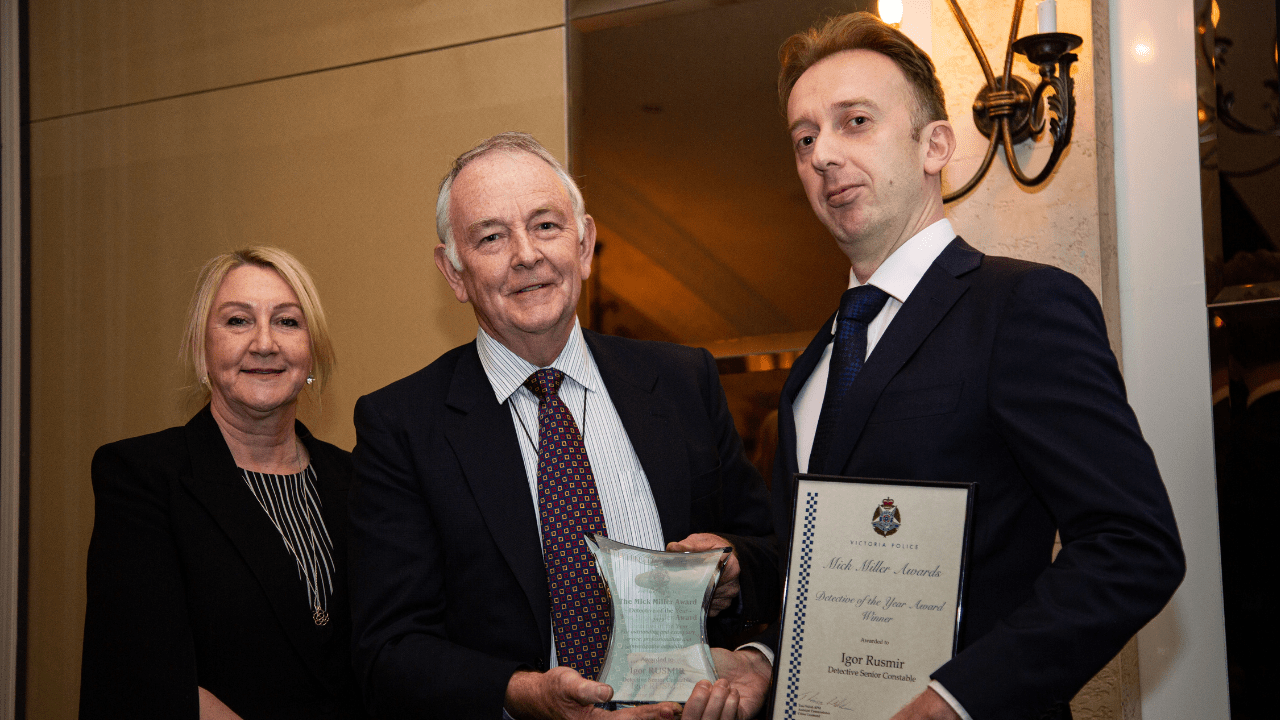
| Igor (right) is presented with the 2019 Mick Miller Detective of the Year Award by Deputy Commissioner Wendy Steendam (left) and Geoff Miller (son of Mick Miller). |
Although he would never again want to go through the horrors of war and life as a refugee, Igor is still thankful for how it has shaped him.
“I think one of my greatest strengths as a police officer is probably building rapport with people from different communities, speaking to anyone at their level, regardless of their background or education,” he said.
“I think I have a much greater understanding of people and what is going on for them behind the scenes.
“My own experience helps me be more empathetic, because I know that a person’s life is never as straightforward as it appears to be and that there might be things in their history that are driving them today.”
Editorial Jesse Wray-McCann
Photography Jesse Wray-McCann
Subscribe to Police Life: Our people, our stories
Get real police stories delivered straight to your inbox. Come behind the scenes and get a rare insight into the life and duties of Victoria Police's workforce of more than 20,000 dedicated people.
Email policelife-mgr@police.vic.gov.au to unsubscribe at any time.
To find out more about our privacy policy and how we store information, visit our Privacy page.
Updated