For 35 years, Robert Mather’s mystery disappearance hung heavily over his family. And for 35 years, various Victoria Police investigators tried to find answers in this missing person cold case.
That was until two determined country detectives grabbed hold of the case and would not let go until they solved it.
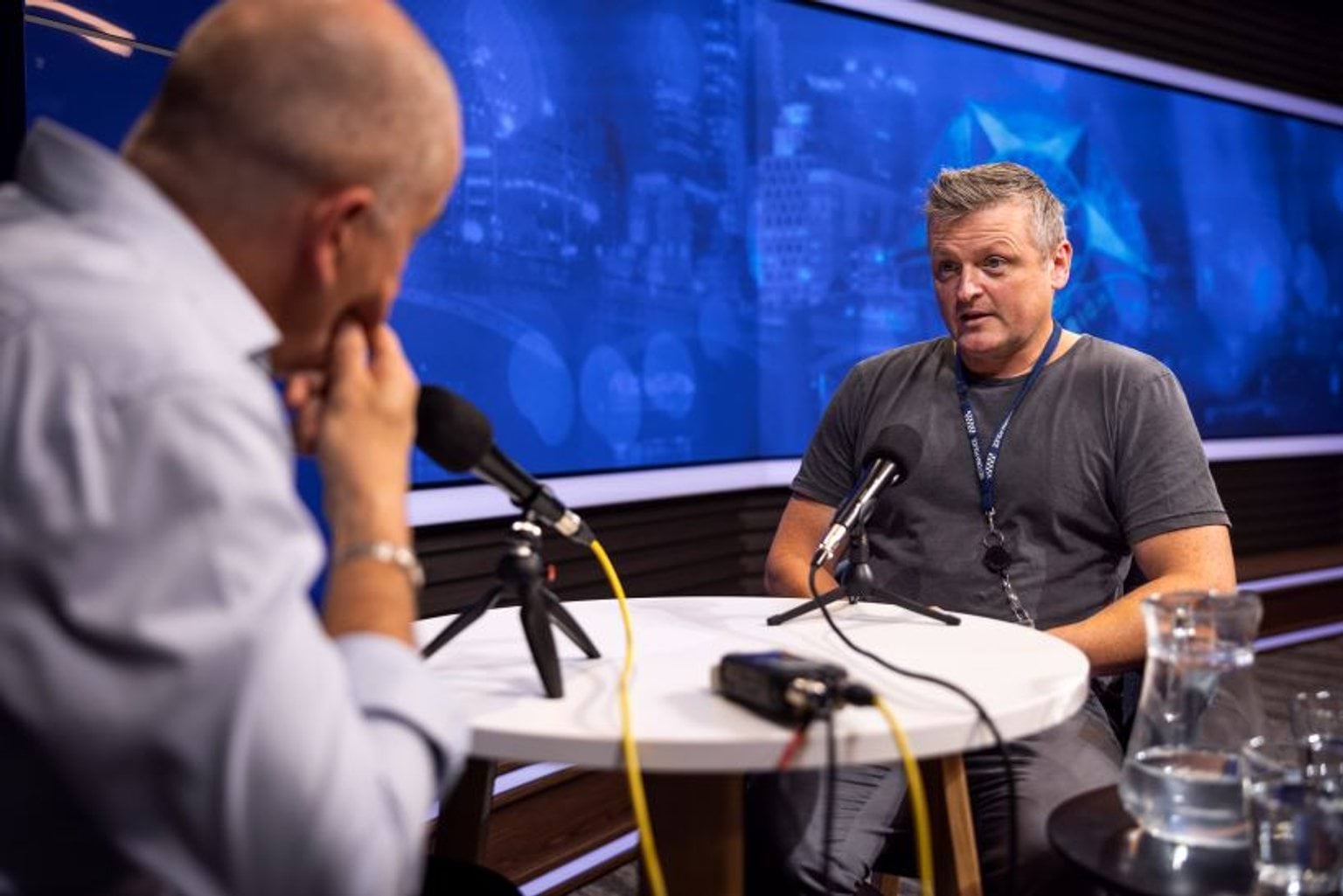
Listen to this episode and other episodes of Victoria Police's official podcast, Police Life: The Experts.
Transcript of Police Life: The Experts podcast, Season 4 Episode 4: A missing man’s long road home
Voiceover [Intro]: You're listening to Police Life: The Experts. A Victoria Police podcast, shining a light on our people, and their extraordinary skills.
[Reflective, mysterious music plays]
Detective Sergeant Mick Van Der Heyden: When you look at a photo of someone, you think, ‘This guy's missing’. He's almost looking out of the photo at you and it's up to me now 'cause I'm the one with the file in my hand. The responsibility sits with me.
Detective Senior Constable Mick Fowler: This is why I joined. This is what I joined to do. It doesn't happen very often, that feeling, that absolute kind of euphoric feeling. It's a great feeling.
Voiceover: There’s a saying in policing: failure to search is failure to find. This is critical in missing persons investigations that remain active for decades. Advances in technology are now bringing answers to loved ones, but success always begins with curious police casting fresh eyes over old cases.
Detective Sergeant Mick Van Der Heyden: My name is Michael Van Der Heyden. I'm a Detective Sergeant, Victoria Police for 17 years. So I started at Latrobe Valley as my detective sergeant role at the end of 2020. When I was going through some admin within the first few months of my time there, I did come across this old job.
So I start reading through and I think oh, someone's been missing for 35 years, but wasn't reported missing for a little bit, and then nothing is on the system 'cause it was all typewriters back then, and I wanna maybe have a bit more of a look at this. And fresh eyes, I think that always helps in any circumstance.
Fresh eyes have a look at something and may pick up on something that's been missed or something that's changed that can be done. So yeah, I got stuck into it.
I think most investigators just have that curious mind about something a little bit different. We have our contemporary investigations that we're actively doing but, me, personally, I always like to have something else to chip away at on the side, and if I can have an influence on it, great. If I can't, well, I've had a go at it.
[Mysterious music plays]
Voiceover: The missing person was Robert Mather. Robert was 35 years old at the time of his disappearance. Last seen in Perth, the thrice-married father of four had grown up in the Gippsland Region, east of Melbourne.
Detective Sergeant Mick Van Der Heyden: Robert's been missing since 1986. It's now at the time, 2021, like, what's going on with this?
That's how my mind was operating. It wouldn't have been a situation where I'd be able to just put it away 'cause my mind would just be ticking over thinking, ‘What's the go with this job? I've got to get it out.’
Like, I wouldn't be able to sleep at night, you know what I mean? I just wanted to have a look at it.
So a missing person report in the 1980s, this one seemed pretty stock-standard, run-of-the-mill document, taken by a member who worked out at Broadford. So Robert, the missing person, had been reported by his wife Norma. She said that he'd been due home, and there was a basic narrative about, Robert had been in Perth working, stated he was coming home, hasn't been seen.
I'm gonna make some inquiries. I'll send a, I think it was they're calling like a Teledex or a telegram, to some other agencies to see if they've heard from him. Obviously, emails didn't exist in the current format back then.
So pretty basic inquiries as you'd expect for what was essentially a run-of-the-mill missing person report from 1986.
He'd left Victoria to seek work in Perth as a painter. He went with a mate and he'd spoken to his mum about returning to Victoria to collect a cheque and he'd never turned up. He was in the army for a few years. He had a training accident out at Healesville where he had done a knee injury and that required medical intervention. He was medically discharged as a result of that knee injury.
His mum had called him and said that the local solicitor's office had received this cheque from the ADF on his behalf, essentially like a compensation-type payout. She said, "You need to come and collect this cheque from the solicitor's office in Moe". So that was a catalyst for him to say, “I'm coming home."
His mother had told him that she will pay for an airfare to get him home, but he refused. He was a knockabout bloke. He said, "No, no, that's fine, I'll get myself home. I'll hitchhike, jump in with a truck and, yeah, I'll be home in two days, so I'll see you then". And that was the last she heard from him.
And that was the last time anyone had actually spoken to him that we're aware of.
[Ominous music plays]
Voiceover: But Broadford in central Victoria, where his wife lived and made the original missing person report, is a long way from the Latrobe Valley in Eastern Victoria.
Detective Sergeant Mick Van Der Heyden: So the thought process at the time was that his last known destination was the solicitor's office in Moe. And that is the only reason it landed in our office. And I think there had been some conjecture about, well, who's taking primacy of this over the years because he doesn't live in the Valley. He's never been in the Valley, essentially. He's only coming to Moe to pick up a bit of paper. Why are we doing this job?
But I kinda saw it as well, he kinda grew up just over the border in Trafalgar, which is Baw Baw, that's right next door to the Valley. And his parents were from Trafalgar and his sister and his brother-in-law still lived in Trafalgar. His parents were buried in Moe in the cemetery. Well, we might as well retain it.
[Sombre music plays]
Voiceover: Mick Van Der Heyden was working on Robert’s case while helping run the rest of the many cases at the Latrobe Crime Investigation Unit, based in Morwell, so he needed back up.
Detective Senior Constable Mick Fowler: My name's Michael Fowler, Victoria Police for 12 years and Detective Senior Constable, I'm at Warragul Crime Investigation Unit at the moment.
So I'd just returned from secondment at the Missing Persons Squad. I'd been there for six months. And I walked back into the CI office at Morwell and it was probably nearly the first time I met Mick and he introduced himself and said, "I've got one that we're gonna have a look at". And he gave me the case file to read over and we got started from there.
Voiceover: They were new to each other but the two detectives would form a tight partnership, perhaps because their motivations to join Victoria Police were strikingly similar. They shared a role model, a fictional TV detective, PJ Hasham, from Blue Heelers.
Detective Sergeant Mick Van Der Heyden: I used to watch Blue Heelers, you know, in the ‘90s as a kid or a teenager and I do have ambitions of one day being like PJ Hasham maybe in a one-man detective station and that would be cool.
Detective Senior Constable Mick Fowler: Mick and I are virtually the same age and I grew up watching Blue Heelers as well. PJ Hasham was who I wanted to be. But I followed the family line of work and I became a carpenter.
Detective Sergeant Mick Van Der Heyden: I tried to join when I was 18 but didn't get through due to sort of life experience, being a bit young. So in the meantime I delivered some furniture, including down the Latrobe Valley way. I used to stack watermelons out of a factory in Dandenong South with some mates, which was fun. Didn't see a lot of future in that though.
And then I started working for a company and built caravans, that probably took up the bulk of my time for five or six years, before I eventually joined when I was yeah, 24. I turned 25 when I was in the Academy.
Detective Senior Constable Mick Fowler: I went and travelled the world, travelled Australia, worked as a carpenter, all over the place, North Queensland, Perth, Darwin, New Zealand, and then got to about 28 and thought, what am I doing? And I wanna go back and do what I wanted to be doing when I was a kid. So joined and here we are.
[Mysterious music plays]
Voiceover: The two recruits were country boys but did their time learning different skills in the city, and found they had a liking for missing persons cases. Both have done short stints at the Missing Persons Squad, a specialised unit that investigates suspicious disappearances where murder is a strong possibility.
Detective Sergeant Mick Van Der Heyden: I'd only done a short time at Missing Persons for a particular investigation. However, during that time there, I definitely felt that the stakes were quite higher ‘cause you're dealing with death essentially. We're not dealing with people that don't want to be found, we're dealing with people that have actually died and haven't been found.
So every avenue that we explore was to the actual nth degree. I just learnt a lot of, I guess, of those little tricks of the trade through some of my colleagues that were actually at the Missing Persons unit when I was there. And just the, I guess, element of pursuing every single lead as far as it possibly could go before we moved on to the next one.
I feel like you do forget that sometimes what's normal for us is so out of the ordinary for, you know, a general member of the public who has no knowledge on what it is we actually do on a daily basis and yeah, when you mention, "Oh yeah, I'm just chipping away at a missing person's case", and your family friend says, "Oh tell me about that", and you see their eyes light up, going, "Oh my god, that's amazing. Like that is so cool". I think, oh actually it's actually not bad, is it? Like we're actually getting paid to do this.
Detective Senior Constable Mick Fowler: I did a six-month secondment at the Missing Persons Squad. So I've had quite a bit to do with people who have unfortunately passed away for various circumstances, but the family, the relationship with the families is for me the biggest thing when it comes to people who have died.
Trying to help manage families through that situation and through court processes and through inquests and having the empathy and the, not the understanding 'cause I don't understand what they're going through, but having the ability to empathise with them and be there for them, I think's one of the most important things that you can do.
[Mysterious music plays]
Voiceover: When they first read through the file on Robert Mather, it seemed likely that he had died. But how he had died and where his remains had ended up were the questions that these investigators had to answer.
Detective Senior Constable Mick Fowler: This job had sat in the cold case bucket with Latrobe CIU for over thirty years and nobody had been able to crack it. A lot of much smarter detectives than Mick and I had had a look at it and nobody had been able to crack it.
That piques my interest very much. You know, I like a challenge. I like to look at things and think, "What can I do differently? What can I do? What can we do? What can we look at that nobody else has looked at?"
We didn't initially believe that it was suspicious. You don't rule anything out, but there was certainly nothing jumping out at us in the case file that we thought it was suspicious.
Very much just a headscratcher about where he'd gone. We thought that there was still some avenues of inquiry over in Perth that we needed to have a look at. The person that he was last known to be living with had never been spoken to, or if he had been spoken to, there was no record of it. So that was one of the first things that we thought about that needed to be looked at.
Detective Sergeant Mick Van Der Heyden: We just sat down and I'd already kind of mapped out, I think, a couple things that we should be doing. I was going into leave at the time and I said, "Oh look, I've got a few thoughts, like a few dot pointers of what we can do. These are what I've done at the moment. Are you happy to kind of keep going with it whilst I when I go into leave?".
For me, I have no patience. I just want to get things done. So I could have waited, you know, years. But I was like, let's just get this done. "Can you get that done? I'm only going on leave for a a month or something, but can you do this, this and this?". In hindsight, yeah, it probably didn't need to be done that quick, but I think that's a bit of my human nature. I just want things done.
Detective Senior Constable Mick Fowler: One of the first things that I did was, we'd identified about the National Missing Persons Database. And the fact that there is hundreds, if not thousands, of unidentified remains all over Australia with DNA profiles sitting on this database, and we've got family members that have never provided DNA for comparison.
So whilst Mick was on leave I went and visited a number of the family members, Robert's children, and Robert's sister in Trafalgar. So I visited family and I took I think four different DNA samples from various family members, male and female, for addition to the database for comparison against Robert. So that was something that hadn't been done that we felt was vital to be done.
[Tense music plays]
Voiceover: The National Missing Persons and Victim System is a database where police and forensic examiners across Australia can search and compare long-term missing persons against unidentified human remains.
The family also provided a photograph of Robert that put a face to the investigation.
Detective Senior Constable Mick Fowler: The picture of Robert in his army greens, looking quite strong and healthy, and he reminded me a little bit of my Dad, with the moustache and you know, the 1980s hair. It humanised him and you realised that it's not just a 35-year-old manila folder that you've pulled out of a dusty box, that he was actually a real person that had real family.
There's a picture on the wall behind Robert of one of his children, and you know, then I'm now meeting those children as adults and they're seeking answers about where Dad is.
There wasn't much confidence from the family initially. They had heard it all before. They'd also gone a very long time without hearing anything. So in the background, in the investigation file that Mick was talking about earlier, we'd seen a number of, we call them proof of life checks that had been done.
It's ticking boxes overt the years, Medicare checks, bank checks, Births, Deaths and Marriages checks and all of those for well over a decade that had been kind of looked at had turned up nothing. And in the meantime, the family hadn't heard anything from anybody.
So when I turned up on the door requesting DNA and a sit down and a coffee and an introduction as to who I was and who we were, and there was a bit of skepticism, but there was also a bit of hurt that the organisation they felt hadn't been keeping them in the loop with what had or hadn't been going on.
The language that you use is very, very important. You can't go in making promises that, "I will find Robert, I will find your loved one". You can’t, you can't make promises that you can't keep. So you use the word, you know, "I'll leave no stone unturned". And yeah, the family may have heard that multiple times before, but I don't doubt that at the time for those investigators that did have the file ten years, twenty years, thirty years ago, that was the truth for them.
That to the best of their ability and the best of their knowledge and the best scientific advancements at the time, that they did leave no stone unturned. But that's cold comfort for the family when they get no answers out of that.
The advancements in DNA from the early 1980s where it was virtually non-existent to 2021, the advancements were massive and we felt that it was worth a shot, and utilising the available technology as it was in 2021 to the best of our ability.
This newly formed National Missing Persons Database that was linking unidentified human remains from across the country was brand new in 2021. So we were at the forefront of of trying to utilise the technology.
The DNA samples had been taken, they'd been submitted to VIFM, the Victorian Institute of Forensic Medicine, who were the Victorian overseers of the National Missing Persons Database. The samples had been submitted, we were waiting to see whether there were any hits with any unidentified human remains from around the country.
Voiceover: Meanwhile, not satisfied with being idle in this investigation, our detectives followed every rabbit down every hole. They even went as far as seeking Mather’s dental records from the Australian Army so they could be uploaded to the national database.
Detective Senior Constable Mick Fowler: That was a fairly laborious process to obtain those records. A little bit like the Victoria Police records of the 1980s, the Australian Army's records of the 1980s were all in cardboard boxes in a storage facility in Queensland. And just to get approval to obtain the records, we had to show legitimate reason to be able to obtain the records and then for the army to actually go and physically locate the records, digitise them themselves and then provide them to us was about an eight-month process.
Detective Sergeant Mick Van Der Heyden: There's still more that we can do and that included even just the taking of the statements, I believe, from the family members. Like I drove out to Geelong and saw Haley and took her DNA.
Voiceover: Haley was Robert’s daughter who had grown up thinking there was a possibility that her father had abandoned her.
Detective Sergeant Mick Van Der Heyden: She'd never had her statement taken, albeit she was young at the time he went missing, but there'd been, you know, 30 plus years in between.
Same thing, just a lot of resistance and “I don't know why you're bothering with this because you know, no one else has done anything about it and he probably just walked out and left us anyway". At that stage it wasn't even an inquest brief. So he'd been missing for 35 years and after that amount of time there should be an inquest brief, but there was not. There's no coroner's case number or anything. He's just missing. So it was speaking with the Coroner's Court of Victoria about what's the process for us to submit an inquest brief for someone who's been missing for this amount of time to essentially prove that he's passed away and the circumstances so which leads to yeah, we need statements.
We need to go see Norma, we need to see the children. I went to Frankston and saw his son, took his statement, took his DNA, just to get a background on his life, because you can't present an inquest brief just saying Robert was 35 years old in the army, he went to Perth, he never came home. You need a background. You need to tell his story to the best of your ability.
I didn't think that he seemed to be the sort of person who would just abandon his children. He seemed to actually really care for his kids.
On his way to Perth, he stopped in Broadford and saw Norma and their two daughters they had together, and he brought a doll's house that he'd bought from the local shop to give to his daughter for her birthday.That doesn't scream to me as someone who is then going to go to Perth for eight months or a year and then say, you know what, I don't ever want to see anyone ever again.
Voiceover: This assumption was, to some extent, guesswork. Mick Van Der Heyden couldn’t be sure what Robert Mather was thinking as he began the 3500-kilometre journey to Victoria. But perhaps his former housemate in Perth did and he’d never been spoken to.
Detective Sergeant Mick Van Der Heyden: It's all good and well to say, “Why didn't you just get the local coppers to go knock on the door?” They have no buy-in and they have no investment in this job. However, if we go and do it ourselves, we're the ones that know what we're talking about, we know what questions to ask, we know what responses we're looking for, and then how those responses are delivered to us would then give us the next avenue.
Because we had thoughts of, well, let's go speak to this bloke. Whilst we're there, let's go check the house that they lived at. Because nothing's off the table here. Because at the time we said he's missing. We're not sure if he's been murdered or if he's just died or what's happened.
They lived at this house which is in 2021 had turned into a dental surgery. And the building still remained. Like it was in a main part of Perth and our thoughts were well, let's go check under this place, because it was on it was on stumps. So like let's go have a look underneath. How there could be something there. We don't know. You know, we discussed about you know, forensic searching of inside the building.
That probably wasn't really feasible, you know, been renovated that many times. Like if there was, you know, for example, blood in the house, probably not going be present anymore, like flooring would have been changed and walls painted and walls removed, that sort of stuff. But they were all considerations for us. And also even the yard of this place. Well let's speak to the locals and we had a contact that were given to.
So we spoke with the Missing Persons Unit in Victoria, the boss of them, of their unit, gave us a contact for the boss of the Missing Persons Unit base out of Perth and he was going be our point of call for any services we needed whilst we were over there, including a search of a yard if needed, or a potential arrest of this person if he decided to get something off his conscience when we knocked on his door, because nothing's off the table.
I think we discussed cold call, like as just turn up because we're just theorising if he has actually killed this guy, we don't want to give him the heads up that, hey, 35 years later, we're on to you, mate. Give him an opportunity to take off or do something silly or get rid of evidence that he might still be you know in possession of personal belongings or who knows.
So our thoughts we've identified where he lives, we've had the local detectives confirm that, with some surveillance. Let's just go bang on his door and say, “Hey mate, we're here. We're from Victoria, we're speaking about Robert. What do you know?” And just see what the reaction is. Because like I said, like he could have turned around and said, “Oh my god, that's taken you 35 years. I can't believe it's taken that long. Yeah, this is what happened.” Or he may turn around and say, “Oh yeah, that dude, he just took off and never saw him again”. We didn't know.
In a CIU office, any interstate trip is pretty rare. Not all of our crooks will flee interstate, and if they do, it'd have to be a pretty serious offence for us to go up and grab them. So yeah, pretty rare to do a trip of that nature. But we got no resistance. I mean, I put the report in and I said this is what we've progressed and this is what we're proposing to do, and our bosses were very supportive.
They said, “Yeah, go get the job done”. Unfortunately, yeah, the COVID restrictions put a little bit of an end to it. Missed out on the Perth trip.
Detective Senior Constable Mick Fowler: Our application to enter Western Australia was denied because of the COVID restrictions and we did actually put a request into the West Australian government to seek an exemption for entering WA, but they had the ring of steel of all ring of steels in Western Australia at the time and we were denied entry.
But then within twenty-four hours I believe we had a result from the dental records.
Senior Constable Trevor Schneider: My name is Senior Constable Trevor Schneider. I'm a police officer with the Missing Persons Investigation Section of the South Australian Police and I've been a police officer for about 23 years.
In 2018, the South Australian Police launched Operation Persevere as part of the Missing Persons Investigation section. And it was really a renewed approach to the investigation and management of all long-term missing persons and unidentified human remains within this state.
And as part of this operation, all the unidentified human remains that we were aware of were audited and modern contemporary forensic techniques and investigational techniques considered to progress these investigations in collaboration with Forensic Science SA and the state coroner's office.
Voiceover: About a week after the Victorian detectives had Robert’s dental records added to the National Missing Persons and Victim System, South Australia Police uploaded records of an unidentified human skull that had been found in 1995. Mick Van Der Heyden got an automatic email advising that the two records matched. He was on the phone to Trevor Schneider in Adelaide as soon as he could.
[Sound of telephone ringing and being answered]
[Recreated telephone call between Mick Van Der Heyden and Trevor Schnieder]
Detective Sergeant Mick Van Der Heyden: Mate, you've got this unidentified human skull. I've got an email here. What's the go? Tell me about your job?
Senior Constable Trevor Schneider: Yes on Wednesday, the eleventh of January 1995, a farmer was operating his tractor on his property, approximately 10 kilometres from Ceduna, on the west coast of South Australia's Eyre Peninsula. He observed a skull which he thought looked different from other skulls he had seen, and so he on a closer inspection realised that it was a human skull, and that was found in a patch of mallee scrub approximately 100 metres north of the Eyre Highway.
He immediately called the local police who attended the scene and then subsequently made arrangements for the crime scene police at the time and anthropological staff to fly from Adelaide the next day to attend the scene.
Death was probably in the range of sort of five to seven years and there was no suspicious circumstances which could be identified at the time in relation to his passing.
Nobody in the area matched those sort of physical characteristics or the time period that this person had gone. So it was I guess discounted that he was a local missing person or anyone who was known in that area.
Detective Sergeant Mick Van Der Heyden: This guy's name is actually Robert Mather and we're shocked that he's actually in South Australia. We thought he was going to be in Victoria or Western Australia. We actually considered South Australia, but thought no, he's skipped through it.
Senior Constable Trevor Schneider: It's quite a very isolated area. There's not much between – farmhouses are very – or stations are very set far apart from each other. And it is quite a barren landscape and particularly in summertime it can get very, very hot out there and in wintertime equally very cold at nights.
I guess one as soon as it starts to get hot, it doesn't have a large rainfall out there, it is very dry. Once you're out of the township, there's not a great deal of resources that you can utilise. And it can be a very barren and unforgiving place.
Detective Sergeant Mick Van Der Heyden: That 100 per cent fits in with the story we were given that he'd left on foot, caught it hitchhiking with a truck in 1986. Nine years later, remains are found off the Nullarbor, on his way home to Victoria, and the state of his remains are consistent with the time frame.
[Sound of telephone being hung up]
Detective Sergeant Mick Van Der Heyden: So it was a very professional but excitable phone call from both ends.
The email chain essentially, everyone's involved in it all of a sudden, because everyone's now interested because there's something big happening. Because like we discussed, it's only a brand-new system, this National Missing Persons Database.
So Trevor's bosses were linked into the emails, my bosses were linked into the emails, missing persons squad bosses were linked into the emails, and it all sort of said that I think it happened quite quickly in South Australia where they wanted 100 per cent confirmation that these unidentified remains were in fact Robert.
So they had a forensic endodontist conduct their own analysis like that day of these records who confirmed yes, 100 per cent that skull belongs to Robert. And that was submitted to the coroner in South Australia who accepted those findings like instantly. So it was all very quick. And amongst that is yeah, emails to and from between Detective Schneider and us, and yeah, phone calls over the course of a day or two just confirming certain things.
We're able to provide each other with our backgrounds as to what our particular investigation involved and what theirs with their particular investigation involved.
Voiceover: Mick Van Der Heyden could not wait to Tell Mick Fowler the good news.
Detective Sergeant Mick Van Der Heyden: Where I sat in the office I was at the back end and he was at the front end and he'd been cc'd in all these emails but he hadn't been in the office and when I knew he was coming in at say 9am, I said to the boys down that end, I said, When Mick gets in, don't let him log on, tell him to come straight down and see me.I got to talk to him about something really important.
And he came down and I was like, “Oh, have you checked your emails?” He's like, “Nah, mate, they told me to come straight down and see you” and then yeah, I went from there and it's like, “mate, solved”. He was like “Bullshit!”. I was like, yeah, solved.
Trevor was able to provide us with some amazing information and reports from 1995 and examined all the remains, recovered almost all of them except for you know, some of the smaller bones, which was put down to animal intervention. And the pathologist had conducted an analysis of the remains and they were unable to find any obvious cause of death, so there was no obvious trauma to the bones, so no gunshot wounds.
Didn't appear to be any stab wounds that had nicked a bone, no fractures indicating some type of serious assault had occurred. However, yeah, like that doesn't rule out a suspicious death, but it kind of rules out your major causes if we were to think that there was a second person involved in the death of Robert.
Detective Senior Constable Mick Fowler: Both Mick and I have travelled the Nullarbor. I've travelled in Nullarbor many times. I know what it's like at that time of year. I wouldn't want to be out hitchhiking home from Western Australia in those temperatures, stinking hot during the day and freezing cold at night.
And the impression that I got was of somebody trying to get home to his family, somebody probably not with too many dollars in his pocket who's trying to get home in any way he can. And being about 10 kilometres east of Ceduna, maybe the truck driver that had driven him from Perth had dropped him off in Ceduna and he was walking until he found his next ride, which took him to 10 kms out and he had to have a sit down under a tree to get out of the the heat of the day and whether or not exhaustion got to him.
Yeah, look we we envisage all options. We look at all options to for consideration. But there were no obvious signs of trauma or damage to his remains. So we look at was heat an issue, especially when you consider that there was no clothing found with him and just whether under heat stroke he'd decided to take his clothes off.
But yeah, consistent with somebody walking trying to get home and sitting under a tree with heat stroke.
Voiceover: The mean September temperature for Ceduna ranges from about 8 degrees to only 21 degrees, so the heat stroke theory does have its limits, so investigators are still open to further information about how Robert Mather ended up under that shady tree in the desert.
Detective Sergeant Mick Van Der Heyden: The course of time is, is pretty damaging with these sorts of investigations, and when you're appealing to the public, oh, "Did anybody pick up a person in 1986 in Perth and drive them across the Nullarbor?" Is that person even alive? Is that person in the country? Is that person even hearing this story? Does that person even remember doing that? It’s near on impossible.
It's not, you know, completely out of the question, but that's not, that person's never been identified. If there's one person or multiple people, you could have made it from Perth to Norseman, then Norseman to, you know, the border and then the border to Ceduna.
There could have been multiple people involved. It could have been one truck, yeah, dropped him at Ceduna and he's you know, he's gone south, so Robert's continued east. We just don't know.
I'd love it if someone came forward and said, "Hey, I heard that podcast, I actually picked that bloke up. I remember him because he had a limp in his leg. He said he was going home. You know, he's ex army, he had a moustache. You know, everyone called him Bob and he was a good fellow and I dropped him off at Ceduna and this is what happened." If someone did that, that would be absolutely unreal, for sure. So please come forward.
Voiceover: The job wasn’t over until the investigators could tell the story of what happened to Robert Mather to his family.
[Sombre music plays]
Detective Sergeant Mick Van Der Heyden: So I went to his sister's house in Trafalgar. She was our main point of contact for the investigation initially. And it's essentially delivering a death message, which is never pleasant. I've had to do that about only, luckily, three or four times in my career.
And even though it was thirty-five years later, it doesn't make it any easier to tell someone that we've confirmed that, you know, your brother has actually died and this is what's happened. So she was devastated.
Even though she would say, "Yeah, I always thought he probably was dead." To actually formally hear that and it's confirmed is devastating 'cause, ‘He was my brother and I loved him and I've missed him.’ He's missed out on you know, weddings and everything. So yeah, I did that.
And yeah, we then spoke to Norma, who is Robert's wife, and gave her the news. Same thing, very emotional, very upset. Conflicting emotions about happiness and grief, accepting what she'd always thought all along, that he probably was dead, but also concerned about passing that message on to her daughters, one of her daughters in particular, had struggled throughout her adult life or her teenage years and adult life because of Robert's disappearance.
So Norma was very concerned about breaking that news to her, because she'd held on to that glimmer of hope that her dad would come home and and be with her one day. So, yeah, a lot of moving parts and a lot of you know a lot of emotion attached to delivering these sorts of messages, albeit thirty-five years later.
[Reflective music plays]
Voiceover: In November 2021, Robert Glenn Mather was laid to rest in a simple grave in Creswick that included a plaque recognising his army service and a depiction of the tree where his remains were found.
Detective Senior Constable Mick Fowler: He was treated with a lot of respect, to get him home and he's at home where he should be. And I was really, really pleased with the respect that we were able to show him, especially considering he served his country.
Voiceover: And the investigators who had brought Robert home were proud to be invited to his funeral.
Detective Senior Constable Mick Fowler: To be invited to a funeral. That's only happened twice, three times for me in my career. But yeah, it's one of the most satisfying parts of this, to have a family turn around and go through what they've been through but still think to invite you to the funeral is, is huge. The job satisfaction with that is massive.
A level of closure for them, I think, that that they'd been really striving for for a long period of time. I mean, this was siblings across multiple marriages that had really never had anything to do with each other, that were all feeling the same way, that all thought that Dad had essentially abandoned them.
And for them all to have the realisation that he hadn't abandoned them, that he was coming home to them, I think really brought them closer together. Probably yeah, a sense of closeness that they'd never felt.
[Reflective, uplifting music plays]
Detective Sergeant Mick Van Der Heyden: The four adult children, two of which hadn't actually seen each other for twenty-five years until the day of the funeral. There was a photo that we took of the four kids with their arms around each other and that photo wouldn't have occurred had not have been for our involvement and that's satisfying for me personally, yeah.
That’s not to take away from the fact that this was, you know, it's a tragedy. It's, someone's lost their husband, children have lost their father, and at the time it was thirty-five years. But it is good to get that sense of closure and they now have a story to tell their own kids.
I saw Haley in person again at the funeral of Robert and completely different attitude and demeanour regarding her thoughts on, on Robert. She hugged me, she was pregnant and she had told me that, you know, she's saddened that her dad isn't going to be experiencing being a grandfather with her child.
But you know, she'd spent her entire life thinking that her dad had abandoned her and didn't want to be part of her life, to now know that he was actually on his way home, you know, to be with the girls, and the children. She said it's just completely changed her outlook on her entire life, on how she views her family, how she remembers her dad, and yeah, what thoughts she has about him in general.
Going from a quite negative experience of growing up, saying "My dad walked out, never came home", to "My dad, he was actually coming home and he died", you know, "I'm actually a child to a father who's passed away", you know, it completely changes her outlook on everything.
From a realistic point of view, we look at this as black and white and we know instantly this person's passed away. It's just a matter of when and how and why.
For the family, they have that little glimmer of hope that that's not the case. They want their dad or their husband or their brother to just come home and be like, "I'm home, this is what happened to me". But yeah, I can't put myself in their shoes 'cause it would be heartbreaking to to have those thoughts and especially for that amount of time, thirty-five years, would be horrendous. That's a yeah, that's a generation of heartache.
I still look at that every now and then, like I've still got, you know, the folder saved in my, in my computer, and I just sometimes think, if we didn't involve ourselves. Like, this poor guy, like when you look at a photo of someone, you think this guy's missing, like he's almost looking out of the photo at you and it's up to me now 'cause I'm the one with the file in my hand.
The responsibility sits with me and it's not a comfortable feeling to then say, ‘You know what? I can't be bothered. I'll do something else today.’
Voiceover: The co-operation with South Australia Police was crucial in identifying Robert Mather and bringing him home. This success will lead to further successes with other cold cases.
Detective Sergeant Mick Van Der Heyden: They've been amazing. Trevor was yeah, very easy to deal with, and you know, cooperative in a sense of information exchange. And yeah, I think they were in a similar position to us where, maybe there was a bit of a push for, let's investigate some of these unsolved remains, unidentified remains, and get them on the new database. As was I guess Victoria, going through the similar sort of push with that new system.
So I think pretty similar circumstances where I haven't met Trevor, but I envisage that he just has that inquisitive mind as well for him to be involved in these sorts of investigations to begin with, let alone have some really good knowledge about what's actually happened on this particular event, not just as just a piece of paper in front of him. He knows exactly the circumstances surrounding the recovery of this person's remains.
Sen Const Trevor Schneider: Yeah, it is very special. Anytime you can provide some answers to a family with a missing loved one about what's happened to them, whether that's a recent case or whether that's a historical one. Because certainly the families of missing people live with that ambiguous loss of not knowing what happened to their loved one for long period of time in some cases.
And that can have a real debilitating effect on their entire life and can affect so many facets of it. Certainly for our efforts to try and return somebody, or provide someone with some answers in Robert's case, Mick shared some of that information with me previously about what the family have gone through over the last thirty-five years of not knowing, and then to be able to provide them with some answers to, so that they're aware that Robert was actually on his way home to see them.
He didn't take conscious steps to abandon them or leave or do anything else. He was actually travelling from Perth back to Victoria and for, and unfortunately, didn't make it. But his intention was to return to his family. So that's, that was quite special and certainly something that stuck with me.
Voiceover: Solving Robert Mathers’ case became a career highlight for the investigators.
Detective Sergeant Mick Van Der Heyden: Yeah, so after the funeral of Robert, I actually had a family trip planned in a caravan to go around Australia with yeah, my wife and kids and some family friends. And a good friend of mine who's now passed away, was so interested in this particular investigation.
He was, he was seventy. You know, loved old school coppers and loved talking about the job, and always asking me what I'm up to. And I told him about this particular incident and said we were going past Ceduna where Robert was found, and he was coming on the trip, and he was just over the moon.
He's like, ‘I'm coming’, you know, ‘Don't leave without me. We've got to stop at the tree’. So we had the actual coordinates from Trevor and stopped on the side of the Eyre Highway and, you know, walked the hundred metres into the scrub and I had the original scene photos and I was holding it, you know, against the backgrounds and I found the tree 'cause it had like a particular shape to the tea tree.
And yeah, we found exactly where Robert had been located. And I still remember standing there, I was in my Akubra and singlet and shorts and there would have been probably fifteen of us, all family and friends, and I essentially gave them a story. This is, this is what happened, and this is where he was found and these are the circumstances. I felt like I was on a a tour guide.
Detective Senior Constable Mick Fowler: Yeah, so my parents did a trip around Australia as well not long after and a little bit like Mick’s talking about, my mum in particular was very invested in this investigation, me talking about it when I'd see them, what we'd, where we were at with it.
And so on their trip around Australia I gave them the GPS coordinates and they stopped and visited Robert's tree, and took some photos, and so yeah. It just kinda shows the impact that these investigations can have and the interest, obviously we're here doing a podcast, the interest that these investigations have with the public and that extends even to our families that, you know, are well versed in what we do for work, that maybe not interested in the run-of-the-mill day to day jobs, but investigations like this that are one out of the box holds a bit of a fascination for people.
Voiceover: The solving of Robert Mather’s disappearance is a sign of the times. DNA technology and the sharing of information between state and federal police forces will mean that other cold cases will be solved in the coming years.
Key to that success will be the relatives of loved ones providing familial DNA samples to police as Robert’s family did.
Detective Sergeant Mick Van Der Heyden: It’s unreal. The assets we have at our disposal these days are very much superior to what was available to some of the detectives decades ago, so we are very fortunate that technology has developed to the degree it’s at now, and it’s only going to get better.
I have no doubt that a lot of unidentified remains that are in storage or under investigation across the country are probably going to be solved. It may be 10 years away, but with this advancement of geneaology and DNA, the limits that they can go to are constantly being expanded, I believe, through scientific research. So more and more of these will be solved and attached to those jobs are the families like what we’ve gone through. So it’s not just solving that job you’re actually changing the course of other people’s lives.
Voiceover: Police Life: The Experts is a Victoria Police production.
Your host is Belinda Batty.
A special thanks in this episode to South Australia Police.
This episode was written by Adam Shand.
It was produced by Adam Shand, Danielle Ford and Jesse Wray-McCann.
The senior producer was Ros Jaguar.
Audio production and original music by Mat Dwyer.
Theme song by Veaceslav Draganov.
Executive produced by Charlie Morton.
This podcast was created by the Media, Communications and Engagement Department at Victoria Police.
To learn more about the work of Victoria Police, go to police.vic.gov.au.
Victorian missing persons
Find out more about how to report a missing person, or let us know if you have any information that could help us.
View our current missing persons list to see if you recognise a name or a face.
Police Life: Our people, our stories
Police Life: Our people, our stories is where you'll find Victoria Police’s podcast and in-depth articles about police, protective services officers and support staff across the state.
Updated