
- Date:
- 14 Sep 2026
The Victoria Police Aboriginal Inclusion Action Plan 2026–2029 (Action Plan) is part of the Victoria Police Workforce Diversity and Inclusion Framework 2023–2030 (Framework).
Message from Chief Commissioner Mike Bush CNZM
As a New Zealander, I have long understood the profound strength a society gains when it honours the culture, language and enduring rights of its First Peoples. Here in Victoria, we stand at an important moment in our shared history. Victoria’s commitment to Treaty and self-determination invites every public institution, including Victoria Police, to reflect deeply on our past and play an active role in shaping a more just future.
Aboriginal and Torres Strait Islander employees from across the state came together for our most recent Aboriginal and Torres Strait Islander Employee Forum. Colleagues spoke with honesty about the cultural load they often carry, the expectations placed on them in community and policing. They voiced the need for workplaces where identity is not only respected but also protected. These conversations made clear that cultural safety is not an abstract principle, it is a responsibility we must embed in every part of our organisation.
The insights shared at the Forum and the commitment of the Dunguludja Yapaneyput Aboriginal Employee Network (DYAEN) and Council are the foundation of this Action Plan. It has been a privilege to work alongside our First Peoples employees in shaping a path forward that recognises truth, acknowledges harm, and centers the voices of those with lived experience.
Building strong relationships with our Aboriginal and Torres Strait Islander colleagues is essential to meaningful self-determination within Victoria Police. I offer my deep respect and gratitude to all past and present members. Their leadership and influence continue to guide us toward a safer and more inclusive workplace.
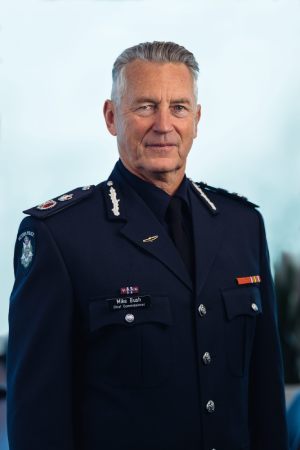
Mike Bush CNZM
Chief Commissioner
Victoria Police
Message from Assistant Commissioner Michael Grainger
As Network Command Champion, it’s my privilege to support DYAEN in exercising self-determination and providing the lived experience, leadership and advice that have shaped this Inclusion Action Plan. I am committed to fostering shared ownership and accountability for the outcomes it sets out.
This Action Plan provides a foundation for moving towards self-determination and cultural safety in our organisation and in the services we provide to Aboriginal communities.
Working alongside the network has been both a privilege and a learning experience. I have seen firsthand the commitment and care invested in developing this plan and its priorities of culture and leadership.
The Aboriginal Employee Self-Determination Reform Working Group has brought together diverse voices and perspectives from across the organisation, ensuring this plan reflects the experiences and highest aspirations of our employees.
My vision is to see Victoria Police continue to learn from the past, acknowledge the harms that have occurred and build on the progress already made. By working in genuine partnership, with care and respect, we can create an environment where Aboriginal employees are empowered, heard and supported.
Our workforce is strengthened by its diversity and advancing self-determination gives each of us the opportunity to reflect, learn and contribute to a safer, more inclusive organisation and community.
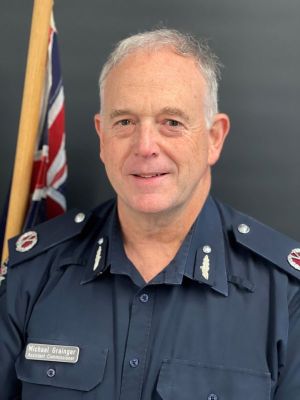
Michael Grainger APM
Assistant Commissioner &
Dunguludja Yapeneyput Aboriginal Employee Network
Command Champion
Recognition of contribution
The artwork for the Action Plan was designed by Gary Saunders, a proud Bangerang, Wiradjuri, Yorta Yorta and Dja Dja Wurrung man.
The name ’Dunguludja Yapaneyput’, (Strong Together, Yorta Yorta language) was gifted to the Dunguludja Yapaneyput Aboriginal Employee Network (DYAEN) by Aunty Zeta Thomson, a proud Wurundjeri and Yorta Yorta Woman.
Gary Saunders also created the artwork and logo used by DYAEN.
Aboriginal Inclusion Action Plan 2026-2029: What is Aboriginal self-determination?
It is important to recognise Aboriginal people have self-governed for thousands of years under complex systems of traditional lore, long before colonial law was introduced.
While Aboriginal self-determination means different things to different people, the United Nations Declaration on the Rights of Indigenous Peoples (UNDRIP) describes self-determination as the ability for Indigenous people to freely determine their political status and pursue their economic, social and cultural development. It also describes self-determination as a right that relates to groups of people, not only individuals.
The Aboriginal Justice Caucus has been clear in Burra Lotjpa Dunguludja - Victorian Aboriginal Justice Agreement (AJA4), that Aboriginal self-determination is a matter for Aboriginal people. Therefore, the process of furthering self-determination in justice must be led by Aboriginal people in Victoria.
Aboriginal self-determination encompasses a spectrum of rights that includes to:
- not be discriminated against
- enjoy language, culture and heritage
- land and natural resources
- have access to the necessities of life and be economically self-sufficient
- make decisions that impact their lives from a position of wellbeing and empowerment
- ‘grassroots community’ having ownership and responsibility for their own affairs and their own communities, including through designing and delivering policy and services on their own terms, setting their own funding priorities and holding their service providers accountable.
Aboriginal self-determination is also protected in law. The right to self-determination is protected under international law by the UNDRIP.
In Victoria, Aboriginal cultural rights under the Charter of Human Rights and Responsibilities Act 2006 (the Charter) also extend to the concept of self-determination. The Charter sets out distinct rights for Aboriginal people and the special importance of human rights for Aboriginal people, with diverse spiritual, social, cultural and economic relationships with their traditional lands and waters including the right to self-determination.
Protecting these rights in law means that all public authorities including Victoria Police must work in partnership with Aboriginal communities when engaging in work that affects Aboriginal people.
Victoria Police is committed to working in partnership with Aboriginal people to ensure our service delivery response is culturally safe and responsive to the rights of Aboriginal people.
Victoria Police Self-Determination Framework Operating Model
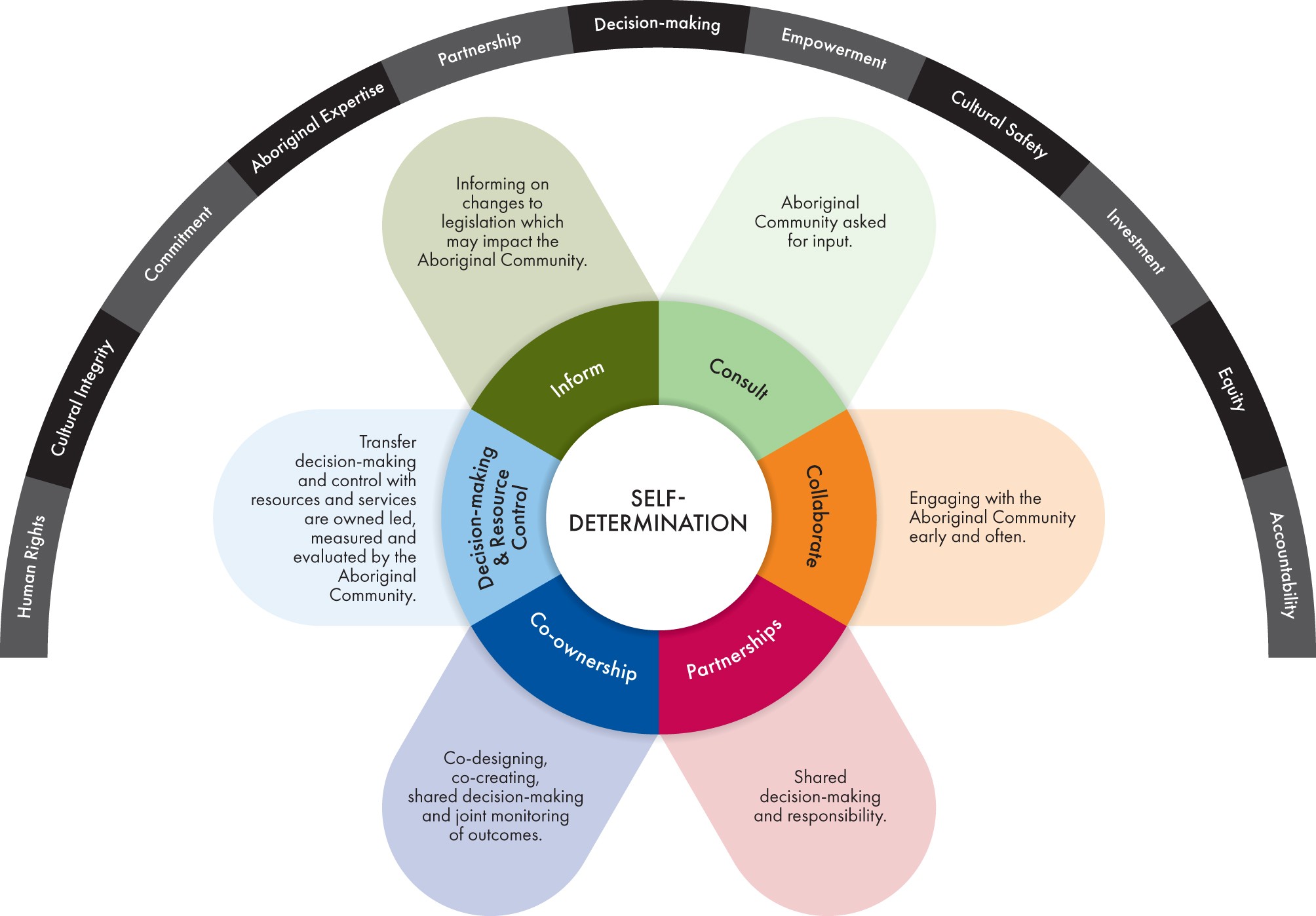
Aboriginal Employee Self-Determination Reform Working Group
The Aboriginal Self-Determination Reform Working Group (SDWG) was comprised of key Aboriginal employees of Victoria Police. They led the work to support self-determination that impacts Aboriginal employees including employment and cultural safety across the organisation.
The SDWG membership consisted of:
- Inspector Stephen Braithwaite, Co-chair, Dunguludja Yapaneyput Aboriginal Employee Network Council (DYAENC)
- Mick Coombes, Executive Treaty Coordinator, Priority and Safer Communities Division (PSCD)
- Aunty Eva-Jo Edwards, Aboriginal Community Liaison Officer (ACLO)
- Selina Grizos, DYAENC
- Sue Hine, Co-chair, DYAENC
- Jacqui Marion, Manager, Aboriginal Community Portfolio, PSCD
- Shane Roberts, DYAENC
- Inspector Christian Wake, DYAENC.
Aboriginal Inclusion Action Plan 2026-2029: The journey so far
The Victoria Police Workforce Diversity and Inclusion Framework 2023–2030 and the Aboriginal and Torres Strait Islander Inclusion Action Plan 2023–2025 set the organisational goals, direction and vision for reform.
Key initiatives implemented under the Aboriginal and Torres Strait Islander Inclusion Action Plan 2023–2025 include:
- a review of Aboriginal applicant and attraction strategies
- development and pilot of an Aboriginal Employee Mentoring Program
- establishing an annual Aboriginal employee forum
- establishing a Self-Determination Reform Working Group to support self-determination reform across the organisation
- establishing a centralised Aboriginal Community Liaison Officer (ACLO) coordination function.
First Peoples Mentoring Pilot Program
Victoria Police and DYAEN formed a partnership with the Victorian Public Sector Commission (VPSC), and the Department of Jobs, Skills, Industries and Regions (DJSIR). Yimburu Consulting was engaged to develop a culturally safe mentoring program to encourage career growth and leadership skills for Aboriginal employees.
The First Peoples Mentoring Pilot Program, funded through the Barring Djinang First Peoples Workforce Development Framework, aims to support the professional development, leadership capability and wellbeing of Aboriginal employees across the Victorian Public Sector.
The program provides a structured mentoring relationship that supports participants to:
- explore career pathways and leadership development
- strengthen confidence and professional networks
- reflect on workplace experiences and opportunities
- develop practical strategies to navigate systems and structures within the Victorian Public Sector.
Looking ahead, this partnership represents a shared, long-term commitment to strengthening the Victorian Public Sector through the empowerment of Aboriginal and Torres Strait Islander people. By continuing to work together, we are investing in culturally safe leadership pathways that honour lived experience, community connection and self-determination. This mentoring program is not just about individual development today, but about building a strong, supported pipeline of First Peoples leaders for the future. Together, we are laying foundations for sustainable change, deeper collaboration and a public sector where Aboriginal and Torres Strait Islander employees can thrive, lead and shape outcomes for generations to come.
Sue Hine PSM
Proud Tommeginne woman, North West Tasmania
Dunguludja Yapaneyput Aboriginal Employee Network
DYAEN was established to provide a culturally safe and supportive network and improve organisational awareness of the Aboriginal workforce. One of the key responsibilities of the network is to provide a structured forum for discussion.
The annual DYAEN forum is a supportive and consultative gathering to raise workplace issues in a culturally safe environment. It also provides the opportunity for Aboriginal employees to freely share their experiences and participate in professional development opportunities.
The forum has been held since 2022. DYAENC has been responsible for organising and running the forum with support from Our People since 2024.
Connection is the heart of this forum, it’s the hidden value you can’t see. Connection is a lot of things to Aboriginal people. Our mob comes from all over Australia, bringing different cultures, perspectives and ways of doing things. Yarning together about culture builds belonging and strengthens us as a collective. All the things we talk about in these forums: Treaty, Yoorrook, self-determination and cultural safety are solidified in this action plan. Hearing from Executive Sponsors and Command Champions about why their involvement in the Network matters to them personally is important. It shows Victoria Police’s commitment and supports our Network to thrive. When people feel supported to attend the forum, they return to their workplaces energised, connected and better equipped to do their jobs continuing strong work for mob and community.
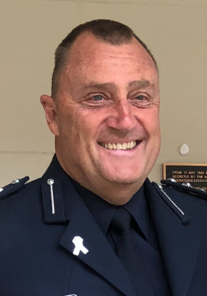
Inspector Stephen Braithwaite
Proud Brayakaulung man, Gunai/Kurnai country in Gippsland
Aboriginal Cultural Awareness Training
Aboriginal Cultural Awareness Training (ACAT) is mandatory for all Victoria Police employees. This addresses the Chief Commissioner’s Statement of Commitment (SoC) Actions 23, 24, 25 and 26 that resulted from his appearance at the Yoorrook Justice Commission hearing in May 2023. ACAT has previously been delivered through the Priority and Safer Communities Division in a face-to-face environment.
This will transition to an online training module with the introduction of ACAT2 from 30 June 2026. Foundation ACAT will continue to be delivered face-to face to recruits during their training at the Police Academy.
Embedding ACAT across the organisation strengthens Victoria Police’s capacity to deliver culturally informed, respectful and appropriate service responses to the Victorian Aboriginal community. The training also supports staff to reflect on their own assumptions and practices and apply learnings in meaningful and practical ways within their roles. This contributes to improved engagement, trust and outcomes for Aboriginal peoples accessing our services.
ACAT has been reviewed and updated to ensure it reflects contemporary Victorian Aboriginal community issues, priorities and perspectives, including Statewide Treaty and Yoorrook Justice Commission. Enhancements to the training content and delivery as an online module ensures the program continues to meet organisational needs while aligning with best practice learnings.
I am a proud Bidjara woman from South-West Queensland, from a small outback town Augathella. I have lived and worked on Bunurong and Wurundjeri Country for most of my life. As the Senior Aboriginal Specialist Educator, I have been delivering Aboriginal Cultural Awareness Training (ACAT) to Police Recruits, Protective Services Officers, and Police Custody Officers at the Police Academy, for the past two years. Delivery of ACAT supports recruits develop Cultural Awareness, respect and practical skills needed to proactively engage with the Aboriginal community. Victoria Police acknowledges community engagement plays a vital role in making a meaningful difference in the community and supports this through culturally informed practices and respectful engagement. I am committed to making a positive contribution supporting the organisation’s commitments to the Aboriginal Reform Agenda and ‘A Safe Victoria’, which sets out Community First priorities and outcomes to achieve together in delivering proactive policing services to the Aboriginal community.
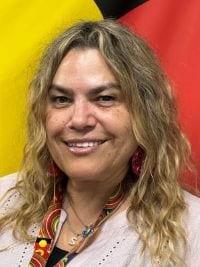
Selina Grizos
Proud Bidjara woman
Aboriginal Inclusion Action Plan 2026-2029: Strategic alignment
Since the release of the Aboriginal and Torres Strait Islander Inclusion Action Plan 2023–2025, important changes have occurred within Victoria Police, these include:
- The Chief Commissioner’s appearance at the Yoorrook Justice Commission’s Hearing on 8 May 2023, including his apology to the Victorian Aboriginal community for past injustices on behalf of Victoria Police.
- Chief Commissioner’s Shield unveiling on 8 May 2024 at Victoria Police Centre. The Shield was presented to the Chief Commissioner by the Yoorrook Justice Commission and he committed to displaying the shield to serve as a reminder to all employees of Victoria Police’s duty to protect Aboriginal communities and families.
- Chief Commissioner’s Formal Apology to Stolen Generations on 24 May 2024.
- Implementation of Chief Commissioner’s SoC 79 actions covering broad themes of monitoring and accountability, cultural competence and human rights. Establishment of the First Peoples Committee as a Tier 1 Commitment to provide oversight of the implementation of the 79 SoC actions.
- All SoC actions were acquitted by the First Peoples Committee on 17 December 2025.
- Yoorrook Justice Commission’s Reports and Recommendations.
- Commencement of the Statewide Treaty Act 2025 on 1 May 2026.
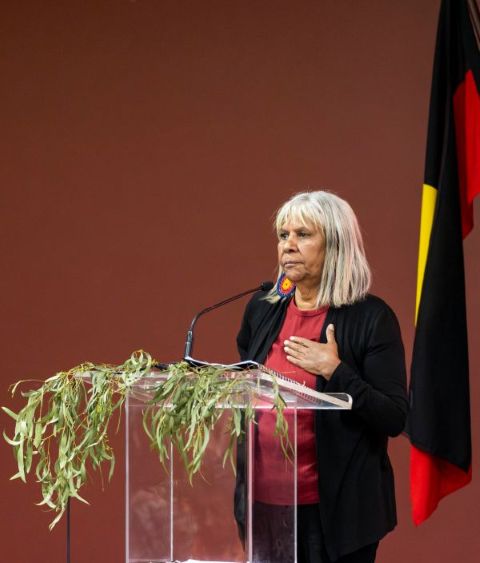
The Action Plan sets out a commitment to build on the achievements of the 2023–2025 Inclusion Action Plan, in partnership with DYAEN and the Aboriginal Portfolio Reference Group (APRG) and is supported by the Victoria Police Workforce Diversity and Inclusion Framework 2023–2030. The Action Plan is also underpinned by the Victorian Public Sector’s Barring Djinang First Peoples Workforce Development Framework 2024–2028 (Barring Djinang Phase 2).
Our vision is consistent with best practice guidelines, being aligned to Victorian government strategies, initiatives, and legislative frameworks, including:
- The Statewide Treaty Act 2025 and Statewide Treaty: First Peoples’ Assembly of Victoria Ltd and State of Victoria
- Victorian Aboriginal Affairs Framework (VAAF)
- Victorian Aboriginal and Local Government Strategy 2021–2026: Pathway to Stronger Partnerships
- Korin Korin Balit-Djak: Aboriginal health, wellbeing and safety strategic plan 2017–2027
- Balit Murrup: Aboriginal Social and Emotional Wellbeing Framework (2017–2027)
- Equal Opportunity Act 2010
- Charter of Human Rights and Responsibilities Act 2006.
Victoria Police acknowledges the importance of Aboriginal employees’ cultural knowledge in achieving self-determination across the organisation. We will also work towards self-determination in partnership with our internal and external partners, including APRG and DYAENC.
Self-determination, cultural safety and inclusion for all Aboriginal employees will also be supported by the Equal, Safe & Strong Victoria Police Gender Equality Strategy 2020–2030, and the Victoria Police Gender Equality, Diversity and Inclusion Action Plan 2026–2029 (GEDI).
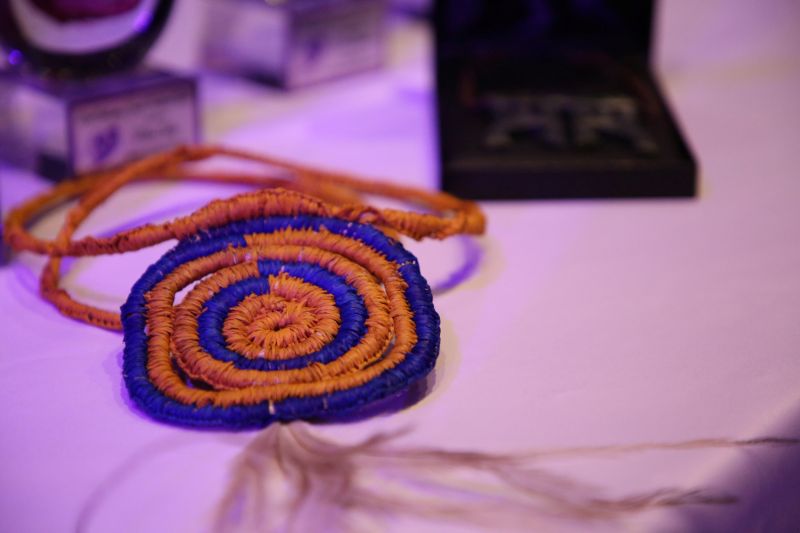
Australiasian Council of Women in Policing First Nations and Indigenous Award
Artist Stacey Edwards, proud Taungerung/Boon Wurrung/Bunurong woman with traditional connections to the Melbourne region was commissioned to create this piece for the Australasian Council of Women in Policing (ACWAP) First Nations and Indigenous Award in 2025.
The spiral shape was chosen to illustrate the coming together of police and community, represented by the colour blue known as ‘blue mob’ with the ochre yellow representing the wider community.
Emu feathers represent a deep spiritual and physical connection to the land and Ancestors in Aboriginal culture, serving as symbols of resilience, spiritual insight and knowledge. The Emu is a totemic animal and its feathers symbolise hard work and humility.
Aboriginal Inclusion Action Plan 2026-2029: Aboriginal Community Liaison Officer program
Aboriginal Community Liaison Officers (ACLOs) play a pivotal role as liaison between the Victorian Aboriginal community and Victoria Police.
They are community representatives within the organisation. Victoria Police currently has a state-wide ACLO workforce of 17, located in both regional and metropolitan areas. The ACLO role has proven capability to assist police to provide effective service delivery and positively influence perceptions of community safety for Aboriginal Victorians.
The ACLO Program was implemented in 2005 to address Recommendation 231 of the Royal Commission into Aboriginal Deaths in Custody (RCIADIC).
Aunty Eva-Jo
Aunty Eva-Jo has lived in Melbourne since 1969 after being removed from her family in Swan Hill and taken to Allambie Reception Centre. She was institutionalised for 13 years.
From these beginnings, Aunty Eva-Jo has committed to helping Stolen Generations survivors. From her induction onto the Aboriginal Honour Roll in 2022, she is described as ‘an emotional healer and inspirational storyteller’.
Aunty Eva-Jo has worked with Aboriginal communities for nearly 40 years to empower the lives of Aboriginal people. Victoria Police was honoured to secure the services of Aunty Eva-Jo as an ACLO in 2024.
I look at the role differently to other ACLOs, for me it’s grassroots. I’m heavily involved in my community and come from a strong family line. It’s also my history. I’ve worked across justice, child protection, health and education. My passion will always be stolen generation survivors. I build strong relationships with my community and Victoria Police to help people get past the uniform. There are layers of trauma with the uniform that go back generations. My role is to yarn with and be in community to build strong foundations. Showing people there’s someone inside the police uniform: somebody’s father, brother or sister. I explain to community what the police can help them with. Community and police call me when they require assistance for various matters. I assist police and community with outstanding warrants, help our women and community by empowering them to report family violence. Previously, they were frightened their partners would be sent to jail, now they feel more confident to report. I believe you make change one person at a time. You meet one good police officer and that changes your perception. Being an ACLO is also fun, I assist in organising basketball, golf and cricket matches, normal things with police to show they’re human. I also like to invite my police members to community events. We’re finding community members often remember police out of their uniforms. That’s due to the fun community activities we organise that show they’re people.
Aunty Eva-Jo Edwards
Proud Bunerong/Boonwurrung/Bunurong, Yorta Yorta and Mutti Mutti woman
Aboriginal Complaints Support Officer
Since the Aboriginal Complaints Support Officer (ACSO) position in Professional Standards was established in October 2023, Victoria Police has strengthened the support available to Aboriginal and Torres Strait Islander people throughout the complaints process. The ACSO helps people understand and navigate the complaints system, provides specialist advice on complaint handling and investigations, and promotes culturally safe and responsive practices.
The role also works closely with Aboriginal communities and stakeholder groups to better understand people’s experiences, identify opportunities for improvement, and help ensure the complaints process is culturally safe and reflective of community expectations.
This dedicated role has been an important step towards building trust and improving the experience of Aboriginal and Torres Strait Islander people who engage with the police complaints system.
Aboriginal Inclusion Action Plan 2026-2029: Recognising Aboriginal employees
Victoria Police Aboriginal Service Medal (VPASM)
In October 2024 Victoria Police held the inaugural VPASM ceremony for Aboriginal employees who were recognised for their sustained or significant service and were presented their VPASM by Chief Commissioner Shane Patton APM.
The introduction of the VPASM is part of a wider effort to acknowledge the unique duality embodied by these employees who honour their heritage while serving within Victoria Police.
Medal design and symbolism
The VPASM design process was led by DYAENC with support from the Aboriginal Justice Caucus and Melbourne Museum’s Bunjilaka Aboriginal Cultural Centre.
The VPASM incorporates elements that symbolise the rich cultures of Aboriginal people and the values of Victoria Police.
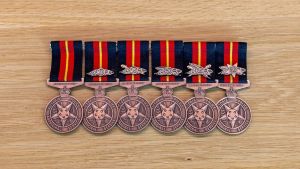
Five-pointed star
The star connects to the emblem of Victoria Police, signifying the unity and shared purpose between the organisation and Aboriginal employees.
The star is adorned by designs found on possum skin cloaks and shields, representing traditional Aboriginal art forms. These designs depict songlines, which are pathways of knowledge that are passed down through generations.
Possum skin rugs and shields traditionally provide protection, signifying the strength derived from cultural heritage.

Five people sitting in a circle
The U-shaped symbols represent individuals sitting together, emphasising inclusivity and non-binary identification. It signifies unity and the collective effort of police and community coming together to address issues.
The circle symbolises the resilience of being together, the connection to culture, and the shared leadership in fostering strong community ties.

Lore spears
Traditionally used in punishment and protection, these spears symbolise cultural preservation and the respected roles within Aboriginal communities. In parallel, Victoria Police upholds the law, using force when necessary to protect the community.
The spears represent the authority and respect required to maintain cultural and legal order.

Two feathers
The feathers symbolise the connection to Aboriginal dreaming, reflecting the deep spiritual ties to culture. Dreaming represents the creation stories and spiritual beliefs that guide Aboriginal people.
The feathers acknowledge that while dreaming varies across nations, it universally signifies the close ties to culture, lore, family and songlines. It represents the spiritual guidance and protection provided by ancestral beings.

Aboriginal Inclusion Action Plan 2026-2029: Our approach and partners
Our approach
Our approach to consulting and implementing the Action Plan.
Consultation and engagement
This Action Plan was developed by:
- building on the foundations of the 2023–2025 action plan including:
- action closure reports
- Yilki Guludun Tagai (YGT) Review recommendations
- staff feedback from 2023 and 2025 People Matter Surveys
- feedback from 2023, 2024 and 2025 DYAEN forums
- consultation and feedback through targeted surveys, direct engagement via email, meetings, and other forums from key stakeholders including the SDWG, APRG and other employees across the organisation
- review of research and best practice guidance.
Areas of focus prioritised by stakeholders were:
- cultural safety
- professional development
- self-determination.
As a living document, additional initiatives will be included in response to:
- future People Matter Surveys
- continuous workforce data analysis and reporting
- feedback from Aboriginal employees and stakeholders both current and future engagement opportunities
- any new measures, indicators or goals developed across the Victorian Public Sector.
Implementation
Responsibility for the initiatives in the Action Plan will be assigned to designated action owners within Victoria Police as identified in the Action Table.
Our People will provide ongoing leadership, coordination, support and expertise. The initiatives will be reviewed and updated annually to ensure they remain aligned to the needs of the workforce and Victoria Police.
Our People is responsible for delivering assigned initiatives and for maintaining oversight of the Action Plan including:
- supporting Action Owners with implementation of initiatives through the application of the Monitoring, Evaluation and Learning Framework
- reporting progress against the Action Plan through consultation and engagement with APRG and DYAENC
- the Action Plan is a standing agenda item for all APRG meetings.
Senior leadership support and advocacy
Executive Sponsors and Command Champions will continue to be engaged to strengthen a shared sense of ownership to outcomes and will provide their expertise in support of implementation.
Our partners
Our partners in developing the Action Plan.
- Victoria Police Aboriginal Portfolio Reference Group (APRG)
- Aboriginal Justice Caucus
- Aboriginal Justice Forum
- Dunguludja Yapaneyput Aboriginal Employee Network Council (DYAENC)
- Dunguludja Yapaneyput Aboriginal Employee Network (DYAEN)
- Aboriginal Community Portfolio, Priority and Safer Communities Division
- Professional Standards Command
- Victorian Public Sector Commission, First Peoples Workforce Development
- Community and Public Sector Union (CPSU)
- The Police Association of Victoria (TPAV)
Aboriginal Inclusion Action Plan 2026-2029: The path forward and actions
The path forward
The journey towards our vision for Aboriginal inclusion in Victoria Police continues on from the previous achievements with the actions outlined in this Action Plan. Engagement of Aboriginal employees in the development of this Action Plan builds on the pathway to self-determination emphasising the strengths, culture, rights and partnerships for a more inclusive organisation.
The identified actions in the Action Plan address three key focus areas that underpin Victoria Police’s A Safe Victoria Strategy and Community First: Our Operating Model:
- Aboriginal Cultural Safety and supportive workplaces
- Aboriginal leadership
- policies, processes and systems.
Actions
Workplace culture
| Action | Embed cultural safety in the workplace |
| Initiatives | Develop an Aboriginal Cultural Safety Statement, with supporting tools and guidance. Embed Aboriginal Cultural Safety Statement in ACAT through engagement with PSCD. Develop structure and process to consider and address matters of cultural safety impacting on employees. |
| Owner | Our People. |
| Evidence/Measures | ACAT includes specific content about cultural safety and obligations. Targeted training delivered to responsible Senior Managers. Course participant feedback. People Matter Survey satisfaction indicators for learning. Voluntary reporting of Aboriginality in workforce data. |
Aboriginal leadership
| Action | Enhance professional development and career progression |
| Initiatives | Sustain and improve participation in the VPSC mentoring program for Aboriginal employees. Develop and implement strategies to enhance:
|
| Owner | Our People. |
| Evidence/Measures | Full Victoria Police allocation of places occupied in each year of the program. The number of targeted webinars for Aboriginal people. The number of applicants who identify as Aboriginal. The proportion of applicants who request to have a dedicated support person. The conversion rate of applicants who identify as Aboriginal to police, PSO and VPS employees. The number of employees who identify as Aboriginal and their proportion of the Victoria Police workforce, including their rank/classification. |
Policies, processes and systems - Self-determination framework
| Action | Operationalise a self-determination framework for Aboriginal employees |
| Initiatives | Develop self-determination policy and processes. |
| Owner | Our People. |
| Evidence/Measures | Self-determination policy and processes published. Decisions on matters impacting on Aboriginal employees made in compliance with policy and processes. Improved People Matter Survey culture indicators. |
Policies, processes and systems - Aboriginal employees
| Action | Tailor the needs of Aboriginal employees from other cohorts |
| Initiatives | Implement policy and procedure for handling of Confirmation of Aboriginality. Research ways to support Aboriginal employees to manage the impact of colonial load including the establishment of Colonial Load Leave entitlement (as aligned to Monash University policy). |
| Owner | Our People. |
| Evidence/Measures | Complies with requirements of First Peoples’ Assembly. Confirmation of Aboriginality is a requirement for Designated positions. Senior Aboriginal community representation on Designated recruitment and selection panels. Best practice supports and entitlements implemented. |
Aboriginal Inclusion Action Plan 2026-2029: Glossary
We define key terms below and acknowledge that people have different definitions. Language changes and continues to evolve.
| Key term | Description |
|---|---|
| Aboriginal and Torres Strait Islander | An Aboriginal or Torres Strait Islander person is:
|
| Aboriginal Cultural Safety | An environment that is safe for Aboriginal people, where there is no assault, challenge or denial of their identity and experience. Cultural safety is about individuals, organisations and systems being aware of the impact of their own culture and cultural values on Aboriginal people, while creating and maintaining an environment where all people are treated in a culturally respectful manner. |
| Colonial Load | The invisible, often unpaid burden and emotional labour placed on Aboriginal employees and community members by institutions and non-Aboriginal colleagues. This includes the expectation to educate others on Aboriginal history, deliver Acknowledgements of Country, and represent the entirety of Aboriginal perspectives. |
| Colonisation | Colonisation is the act of one country or power taking control of another territory and its people, usually by force. It involves establishing settlements, exploiting local resources, and imposing the controlling nation’s culture and government on the Indigenous population |
| Discrimination | The unjust or prejudicial treatment of different categories of people, especially on the grounds of race, age, gender, sexual orientation or disability. |
| Discriminatory workplace harm | This term covers any way a person experiences discrimination, harm or violence based on protected characteristics within the Equal Opportunity Act 2010 (Vic). |
| Intersectionality | A theoretical approach that understands the interconnected nature of social categorisations – such as gender, sexual orientation, ethnicity, language, religion, class, socioeconomic status, gender identity, ability or age – which create overlapping and interdependent systems of discrimination or disadvantage for either an individual or group Everybody matters. (Inclusion and Equity Statement) |
| Stereotype | A stereotype is a fixed, overly simple, and often untrue belief that many people have about a particular group of people. It is an assumption that everyone in that group acts, thinks, or looks the same way, ignoring individual differences. (Merriam-Webster) |
| Workplace harm | Workplace harm is defined as any physical or psychological injury, illness, or disease caused by hazards in the work environment, whether resulting from a single event or long-term exposure. It includes physical injuries (e.g., cuts, strains) and psychological harm (e.g., stress, anxiety) caused by bullying, harassment, or violence. (Safe Work Australia website) |