- Published:
- Monday 27 July 2026 at 11:00 am
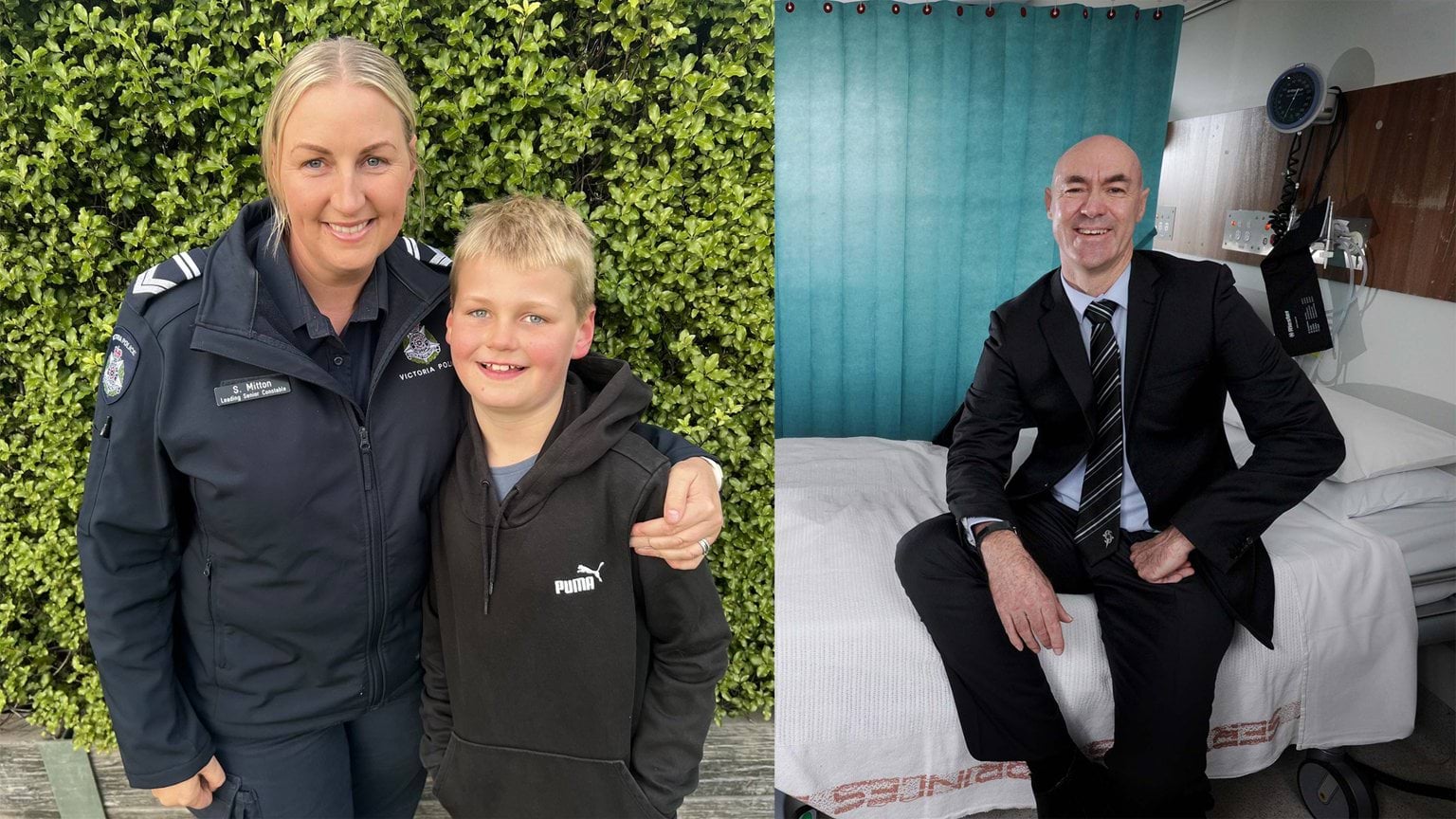
| Ldg Sen Const Sandi Mitton's son Max and Det Sgt Jason Wallace both received life-saving liver transplants. |
Leading Senior Constable Sandi Mitton spent weeks by her then 19-month-old son Max’s hospital bed before getting the call that would save his life.
For Detective Sergeant Jason Wallace, it was his own future that depended on a phone call and the generosity of a stranger.
Although their circumstances were very different, both lives were changed forever by organ donation.
This DonateLife Week, which runs from 26 July to 1 August, Sandi and Jason are sharing their personal experiences with organ donation to show how one decision can change lives and create futures that once seemed impossible.
A mother’s gratitude
In 2019, life was busy but ordinary for Sandi and her young family when her youngest son, Max, suddenly became unwell.
What initially seemed like a minor illness quickly escalated.
“I took him to the doctor because he wasn’t himself – grumpy, clingy and not eating, which wasn’t like him at all,” Sandi said.
Doctors believed it was most likely a virus and sent Max home, advising Sandi to return if his condition worsened.
“A few days later the whites of his eyes turned yellow, and he became really jaundiced, so I took him back to the doctor for blood tests,” she said.
The results came back later the same day and revealed abnormal liver function.
“One of his numbers was 5800 and normal is about 50,” Sandi said.
Max, then 19 months old, was urgently flown from Hamilton, where the family live and Sandi works at the local police station, to Melbourne’s Royal Children’s Hospital.
After extensive testing, he was diagnosed with acute liver disease.
For three weeks, Sandi and her husband waited while doctors monitored Max in the hope his liver would recover. Instead, his condition deteriorated into liver failure.
“It’s so scary watching your child in that state,” Sandi said.
“He was getting sicker and sicker. He was losing weight and becoming more and more yellow.”
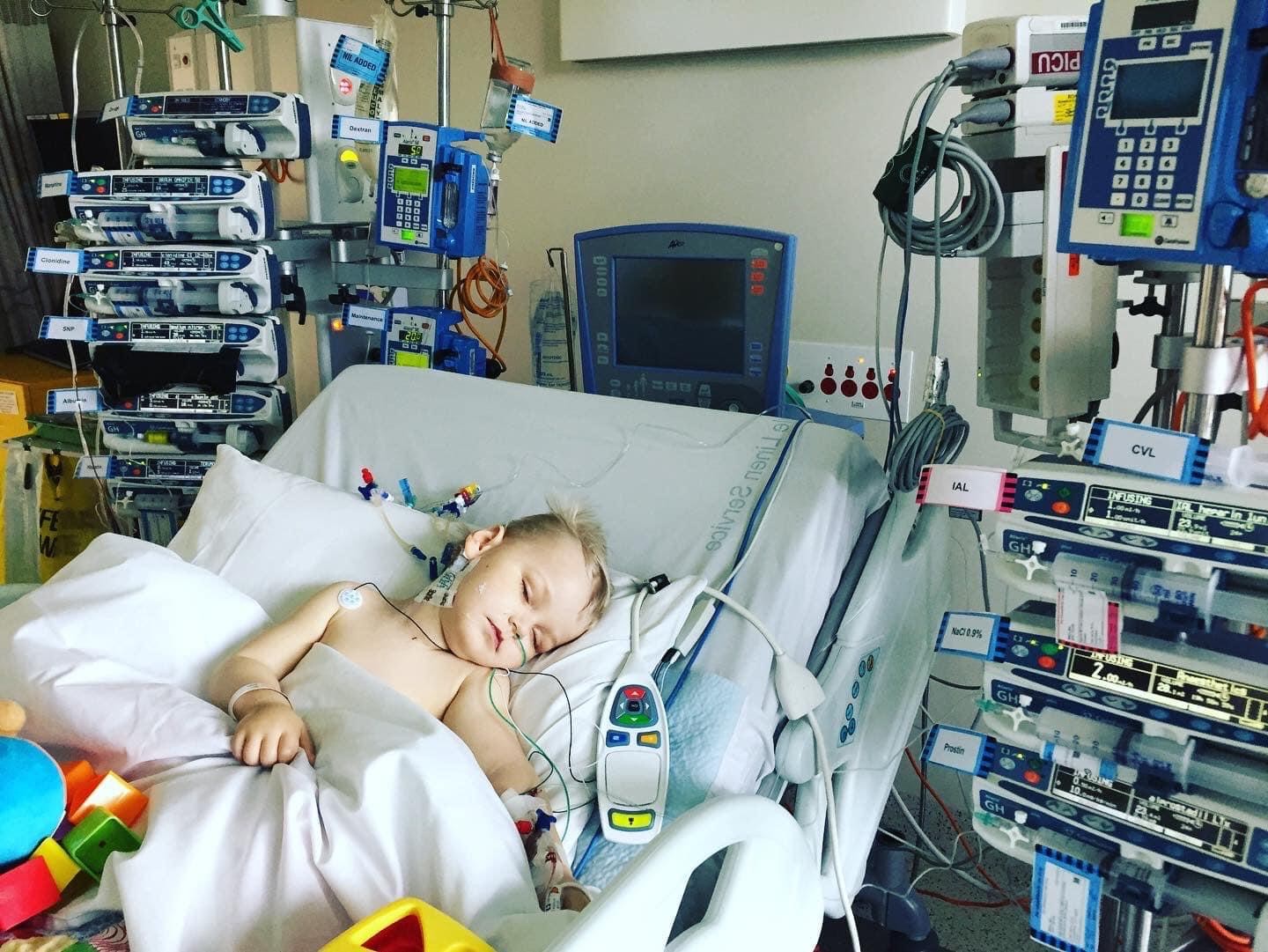
| Doctors monitored Max's condition for three weeks in the hope that his liver would recover. |
Max was placed on the transplant waiting list while Sandi prepared to become a living donor if a suitable organ could not be found in time.
Surgery for both mother and son had already been scheduled when, just days before it was due to proceed, a donor liver became available.
“It was such a mix of emotions,” she said.
“We were relieved because I didn't have to undergo surgery and could stay with Max.
“But at the same time, some poor family was experiencing something so tragic for us to be given this opportunity.”
Within hours, Max was undergoing a 10-hour, life-saving transplant operation.
While the operation was successful, the months that followed were far from easy.
Max spent weeks in intensive care and remained in Melbourne for months as doctors monitored his recovery and managed complications affecting his immune system.
The experience was emotionally and physically exhausting for both Sandi and her husband.
“Lenny, my older son, ‘holidayed’ with family while my husband and I were at the hospital with Max,” she said.
“Once Max was discharged, we stayed at Ronald McDonald House for several months so we could remain close to the hospital.”
Alongside support from family and friends, Sandi said she received an outpouring of support from colleagues across Victoria Police.
“Not only from my station out here, but I had calls from so many people across the organisation checking on my welfare,” she said.
Today, Max is eight years old. He loves school, plays sport and enjoys life like any other child.
“You wouldn't even know he's had a liver transplant,” Sandi said.
“He's tall, he's loving school, he plays sport and he's going really well.”
Every birthday, sporting match and school milestone is a reminder of the extraordinary gift the family received.
“Without the person who donated their liver, Max might not be here,” she said.
“We will forever be grateful for that gift and their selfless decision.”
A life-changing call
Organ donation also became a matter of life and death for Brimbank Crime Investigation Unit Detective Sergeant Jason Wallace.
In 2013, he was fit, active and preparing for what he hoped would be the next chapter of his policing career.
At the time, he was working at the Homicide Squad while completing the Search and Rescue qualification course.
“I’d been training for the course and was probably the fittest and healthiest I’d ever been,” he said.
Then, seemingly out of nowhere, he became seriously ill.
Diagnosed with an autoimmune disease, Jason's liver function deteriorated rapidly.
Within months, he was moving between hospital wards and specialist appointments as doctors worked to manage his condition.
By the end of 2013, he had been placed on the liver transplant waiting list.
He remembers seeing transplant patients during his first hospital admission and struggling to believe he belonged there.
“I remember looking at other patients who seemed far sicker than me and thinking, ‘Why am I here?’,” he said.
“I can honestly say that three months later, I was sitting in that chair looking exactly the same as they did.”
As his condition worsened, he waited for the call that could save his life. It came in April 2014.
Jason underwent a liver transplant at the Austin Hospital, beginning a recovery journey that would take months.
His partner, Leading Senior Constable Jen Papic, took extended leave to care for him before and after the surgery.
The organisation he had dedicated his career to was there for him as well.
“Colleagues visited me in hospital, my supervisors stayed in touch throughout my recovery and worked with me to ease me back in to work duties once I’d recovered enough,” he said.
“I was supposed to have six months off after surgery, but by the five-month mark boredom had set in and they were great at organising some work I could do from home.”
The transplant saved Jason's life, but it also forced him to reassess his future.
Medical assessments ruled out certain physical activities, bringing an end to his Search and Rescue ambitions.
While disappointing, it gave him a new perspective on what mattered most.
“I won’t say it wasn’t hard to take, I’d put a lot of work into Search and Rescue, but on the flip side, I was alive,” Jason said.
“You get a new appreciation for what’s important in life, so after a few more years in Homicide, I decided to apply for a detective sergeant role in the western suburbs and haven’t looked back.
“It’s a great crew out here and my work-life balance is fantastic.”
Recovery didn’t end for Jason when he left hospital.
More than a decade later, he still attends regular specialist appointments and takes daily medication to manage life with a transplanted organ.
But the transplant also gave him opportunities he otherwise would never have had.
As part of his rehabilitation, he trained for and completed the Kokoda Track with colleagues in 2015.
A year later, he and Jen welcomed their daughter into the world.
“If I didn't have the transplant, I wouldn't be here, which means my daughter wouldn’t be here,” he said.
Jason said his experience highlights why conversations about organ donation are so important.
“It probably doesn't cross most people's minds until it affects them or someone they love,” he said.
“The biggest thing is having that conversation with your family, so they know what your wishes are.”
A second chance
Today, Sandi gets to watch Max thrive, while Jason is enjoying his second chance at life and watching his own daughter grow up.
Neither outcome would have been possible without organ donation.
Research provided by DonateLife shows people working in socially minded professions, including emergency services, are often more willing to consider organ and tissue donation.
Victoria Police DonateLife Week spokesperson Assistant Commissioner Mick Hermans said police see firsthand how quickly lives can change and the profound impact people can have when they come together to help others.
“As police, we regularly witness people at their most vulnerable and see the life-changing difference that compassion and generosity can make,” AC Hermans said.
“Supporting others is at the heart of what we do, and organ donation is another way people can make a lasting difference.”
AC Hermans said Sandi and Jason’s stories are a reminder that organ donation is ultimately about saving lives.
“It takes only a minute to register, but that decision could one day give someone else a second chance at life,” he said.
“Their journeys are a powerful reminder that even in moments of unimaginable loss, one decision can create a legacy of hope that lives on in the lives of others.”
To register as an organ and tissue donor, visit the DonateLife website. Most importantly, tell your family about your decision.
Editorial Danielle Ford
Photography Supplied
Subscribe to Police Life: Our people, our stories
Get real police stories delivered straight to your inbox. Come behind the scenes and get a rare insight into the life and duties of Victoria Police's workforce of more than 20,000 dedicated people.
Email policelife-mgr@police.vic.gov.au to unsubscribe at any time.
To find out more about our privacy policy and how we store information, visit our Privacy page.
Updated