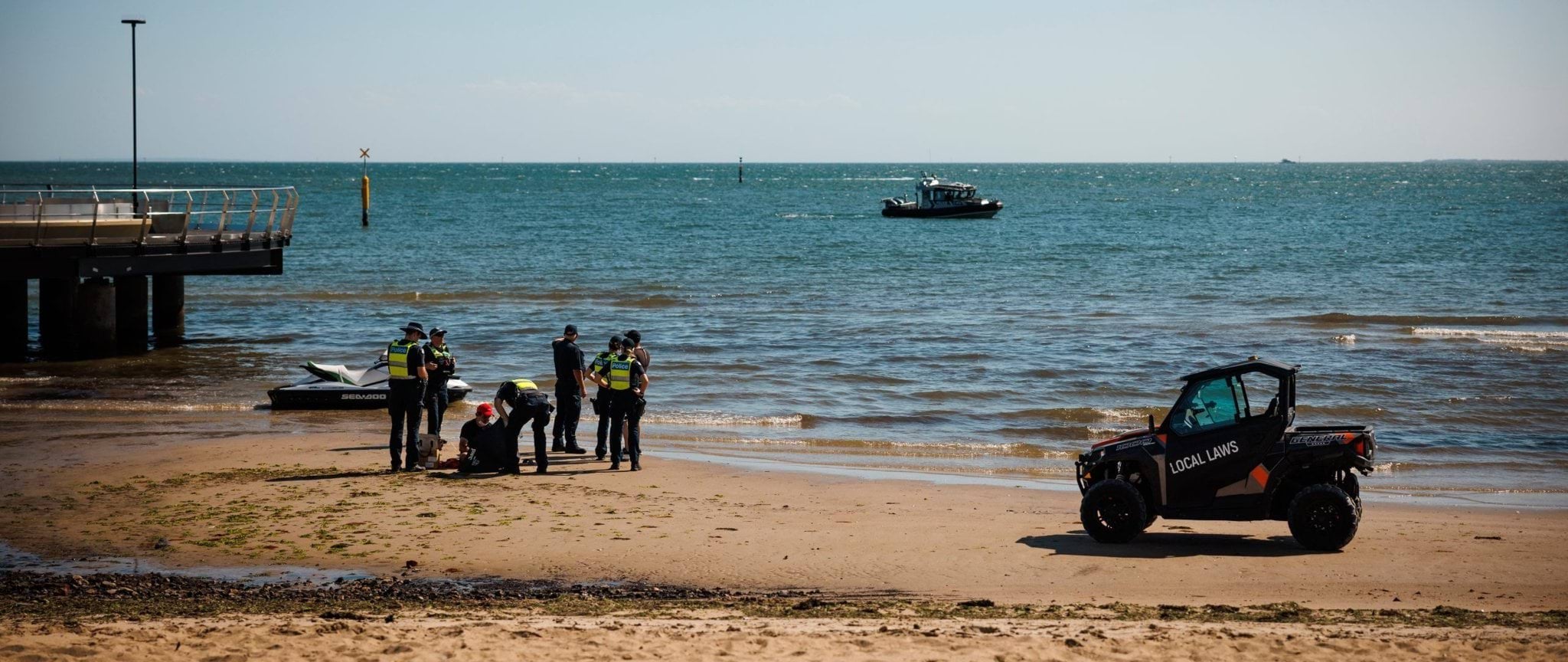
Victoria's waterways can be very unpredictable, especially in hot and windy conditions.
Before going out to the water, take steps to ensure that you and your friends and family know how to stay safe.
Swimming with children
Always supervise children around water. It only takes 20 seconds for a child to drown.
Keep in mind:
- always keep children 10 years of age and younger in your line of sight
- always keep children under 5 years old within arm's reach.
Beach safety
While enjoying a day at the beach, always remember to:
- swim between the red and yellow flags
- swim with a friend.
If you are not feeling comfortable in the water, you can alert a lifeguard to assist you back to shore by:
- Staying calm, raising your arm in the air and waving it from side to side. This will attract the attention of a lifeguard who will be able to come to your assistance.
- Conserving your energy by floating on your back and staying calm. This will ensure you have the energy to remain afloat until assistance arrives.
Fishing
You can enjoy fishing in many different kinds of waterways across Victoria. Waterways include:
- banks
- shores
- piers
- platforms.
To stay safe, we recommend you use the following checklist:
- check water and weather conditions before you go
- always tell friends or family of your plans, where you are going and when you will be returning
- never fish alone, always fish with a friend
- wear a personal flotation device and carry safety gear and a first aid kit
- wear appropriate clothing with non-slip soles
- watch the water at all times as conditions can change dramatically in a short time.
For more information about safety and licences, visit the Victorian Fisheries Authority.
Rivers and creeks
Inland waterways in Victoria include rivers, lakes, dams, lagoons, channels, and creeks.
Though they can seem like still and safe water, they can be very dangerous if not you are not taking the right precautions.
While spending time at an inland waterway:
- check the weather forecast at on the Bureau of Meteorology website and watch for changing conditions
- read safety signs to understand dangers
- wear a life jacket when boating
- drink alcohol responsibly around water and other water activities
- always swim with a friend
- learn how to save a life by doing a CPR or a first aid course
- be aware of unstable edges on river banks, dam banks and lakes
- remember that inland waterways have many hidden dangers such as submerged objects, debris and strong currents
- be aware of the effects of cold water on your body
- never overestimate your abilities and never underestimate the risks
- be prepared for unexpected falls into water
- refresh your water safety skills including personal survival techniques, swimming skills and water safety knowledge.
Visit Royal Life Saving Australia's river safety page to find out more.
International visitors and migrants
Tourists and recent migrants to Victoria can be at a greater risk of drowning in Victoria’s waterways. Differences in swimming ability and water safety knowledge can affect decision making in the water.
Victorian water and weather conditions can be unpredictable. Circumstances can change quickly, even the most confident swimmer must take care.
When visiting Victorian beaches, rivers or waterways, ensure you understand the risks, and how to stay safe. Lifesaving Victoria provides information on beach and water way safety in a variety of languages.
Before you go into the water:
- obey all signs and directions around the water ways you are in
- if you can’t swim avoid going into the water and never swim alone
- only swim in patrolled areas, such as beaches with lifeguards.
Learn how to swim
All Victorian newcomers, visitors and Victorians should learn how to swim, and get basic water safety skills before going into the water.
Lifesaving Victoria run educational programs to teach people of all ages and backgrounds about water safety:
- children aged five to 14 - Lifesaving Education Programs
- migrants, refugees, and international students and tourists - Multicultural Educational Programs.
Updated